Tesla Starts FSD v15 Rollout to First-Wave Customers
TREE NEWS reports: Tesla has begun deploying version 15 of its Full Self-Driving (FSD) software to an initial group of customers, marking the latest iteration of its advanced driver-assistance system. The update introduces changes to the driving AI and visualizations, but customers using FSD still must actively supervise the vehicle at all times. CEO Elon Musk has targeted December for a wider release of the software.
What’s New in v15
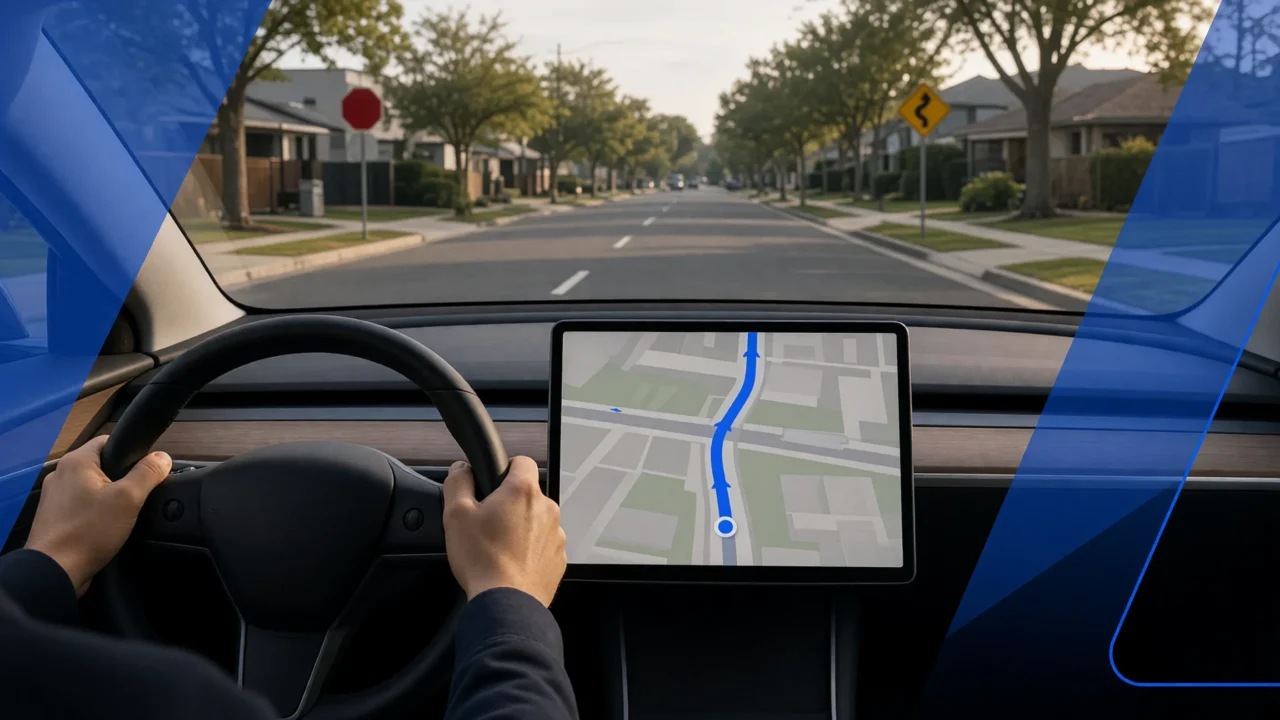
The v15 update focuses on improvements to the neural networks that power Tesla’s driving decisions and the on-screen visualizations that show drivers what the system perceives. While these enhancements may make the system feel more capable, Tesla continues to classify FSD as a Level 2 driver-assistance feature, requiring hands on the wheel and eyes on the road. The company has not yet achieved the regulatory approvals or technical milestones needed for unsupervised autonomous driving.
Industry Implications
Tesla’s iterative approach to FSD highlights the gap between marketing promises and regulatory reality. The company has long promised that its vehicles would soon drive themselves, but the rollout of v15 with mandatory supervision underscores that true autonomy remains elusive. For the broader AI and automotive industries, this signals that deploying AI in safety-critical physical systems is far more complex than in digital environments.
From a crypto and blockchain perspective, Tesla’s progress—or lack thereof—has indirect implications for decentralized physical infrastructure networks (DePIN) and AI compute marketplaces. Projects building on-chain AI agents or autonomous vehicle data marketplaces often point to Tesla as a benchmark. A slower path to autonomy could temper expectations for related tokenized AI infrastructure plays, while any breakthrough would likely accelerate interest in decentralized compute and sensor-data monetization.
Forward-Looking Perspective
Musk’s December target for wider availability will be closely watched. If Tesla can expand FSD v15 without increasing accident rates, it may strengthen its case for regulatory exceptions and further AI investment. However, until supervision is removed, FSD remains an advanced assistance feature rather than a robotaxi solution. For crypto investors, the key takeaway is that AI in the physical world is advancing incrementally—and that decentralized networks hoping to support such systems must plan for a long, regulated runway.