News Brief
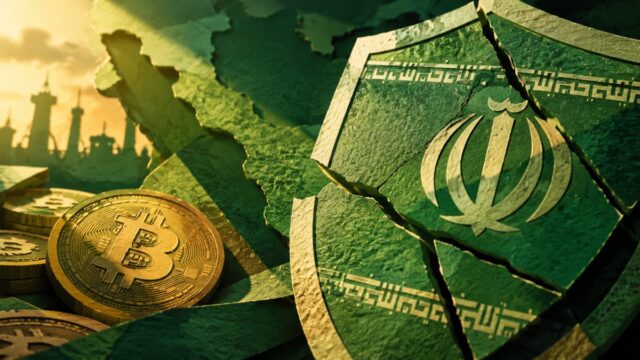
TREE NEWS reports: On September 2, President Donald Trump declared that the US-Iran agreement is ‘worthless,’ stating that Washington has given Tehran multiple opportunities without achieving desired results. The remarks underscore a hardening US stance on Iran, with no immediate response from Iranian officials.
Industry Analysis
While not a direct crypto or blockchain story, this geopolitical development carries significant implications for global markets, including digital assets. Oil price volatility is the most immediate transmission channel—any escalation in the Middle East typically spikes crude prices, which historically correlates with risk-off sentiment across equities and cryptocurrencies alike.
For crypto markets, the key concern is liquidity tightening. Rising energy costs can exacerbate inflation, prompting the Federal Reserve to maintain higher interest rates for longer. This environment dampens appetite for speculative assets, including Bitcoin and altcoins. Conversely, geopolitical uncertainty often strengthens Bitcoin’s narrative as ‘digital gold’—a hedge against fiat debasement and political instability.
Additionally, the broader macro backdrop matters for institutional adoption. If US-Iran tensions lead to sanctions or financial fragmentation, it could accelerate interest in neutral, borderless settlement layers. However, near-term price action is likely to be driven by traditional risk dynamics rather than crypto-specific fundamentals.
Forward-Looking Perspective
Markets should monitor two triggers: first, any concrete military or diplomatic escalation that pushes Brent above $90; second, the Fed’s response to potential supply-side shocks. For crypto investors, this means positioning for volatility—both upside from safe-haven flows and downside from macro risk-off. The coming weeks will test whether Bitcoin behaves more like a risk asset or a geopolitical hedge.