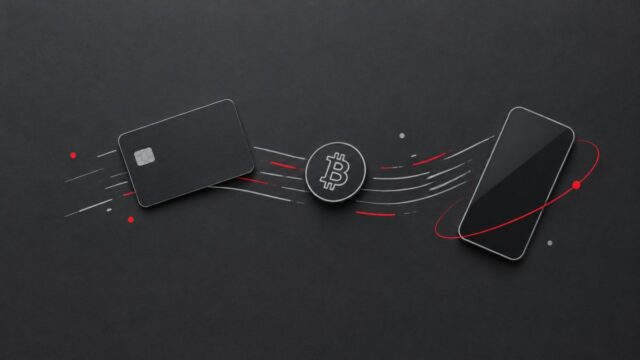
Stablecoins and the 24/7 Gap: How Machine-Speed Payments Are Forcing Banks to Adapt
TREE NEWS reports: News Summary: A new analysis from BeInCrypto highlights a critical disconnect in global payments: while AI-driven corporate systems can evaluate trade flows, verify contracts, and trigger cross-border payouts in seconds, the underlying correspondent banking infrastructure still operates on traditional banking hours, causing payments to sit in queues for days. This timing gap is becoming a key driver for stablecoin adoption in cross-border transactions.
Industry Analysis
The core issue is not speed of initiation but speed of settlement. Corporate software has evolved to operate at machine speed, but the legacy financial rails—SWIFT, correspondent banking networks—remain bound by time zones, cut-off times, and manual reconciliation processes. This mismatch creates operational inefficiencies and capital drag for multinational corporations.
Stablecoins, particularly those pegged to major fiat currencies like USD, offer a 24/7 settlement layer that operates on blockchain networks. By tokenizing dollars on-chain, companies can bypass the correspondent banking queue entirely, settling transactions in minutes rather than days. This is not just a theoretical advantage; real-world pilots and production deployments by major financial institutions are already demonstrating the efficiency gains.
However, the shift is not without challenges. Regulatory clarity remains a hurdle, as stablecoin issuers face varying rules across jurisdictions. Additionally, the liquidity and redemption mechanisms of stablecoins need to be robust to ensure they can handle large institutional flows without de-pegging.
The implications for the broader crypto ecosystem are significant. As stablecoins become the settlement layer for corporate payments, they also become a bridge for traditional finance into DeFi. This could accelerate the tokenization of real-world assets (RWA) as companies seek to put their cash and receivables to work in on-chain yield-generating protocols.
Forward-Looking Perspective
We are likely to see a bifurcation in the payments landscape. For high-value, time-sensitive transactions, stablecoins will increasingly become the default. For lower-value, less time-critical payments, traditional rails may persist due to cost and familiarity. But as AI agents become more prevalent in corporate operations, the demand for instant settlement will only grow, pushing more volume onto blockchain networks.
The banks that adapt will not disappear; they will evolve into custodians and gateways for stablecoin flows. Those that resist may find themselves marginalized as the financial infrastructure of the future operates at machine speed, not banking hours.