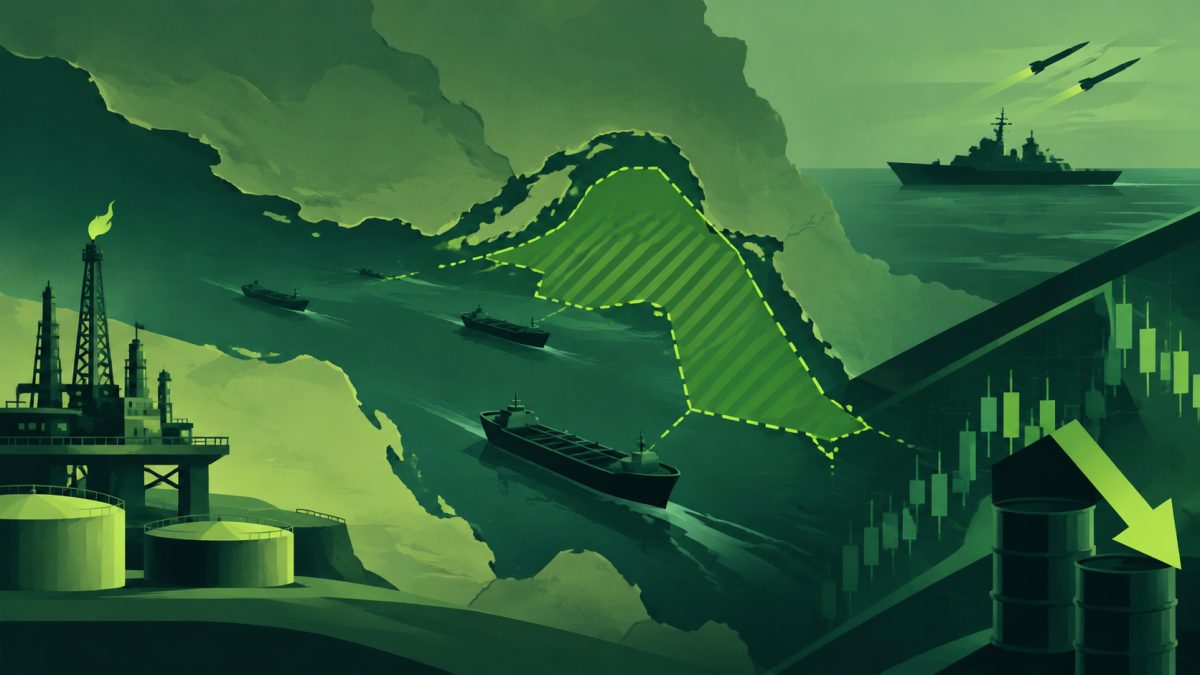
Iran Announces Imminent ‘No-Go Zone’ in Strait of Hormuz
TREE NEWS reports: In a significant escalation of Middle East tensions, Iran’s Supreme National Security Council Secretary, Ali Rezaei, announced on Tuesday that Tehran will declare a ‘no-go zone’ in the Strait of Hormuz within the coming days. The zone, will extend from the U.S. naval blockade line into parts of the Persian Gulf. Any vessel entering this zone would be subject to Iranian sanctions, and Iran claims it has the capability to monitor and even sink U.S. ships, though it has refrained due to environmental concerns over oil spills.
Rezaei also dismissed U.S. claims that the strait remains open as ‘pure lies,’ and revealed that Iran and Oman are set to sign an agreement within days on navigational charts for the strait, potentially formalizing a new regulatory framework.
In parallel, Iranian Parliament Speaker Mohammad Bagheri Ghalibaf declared that the era of ‘proportional response’ is over. He stated that Iran’s recent strikes on U.S. bases were ‘just the beginning’ and that any future actions against Iranian interests would meet ‘more rapid, more severe, and more painful’ retaliation. Ghalibaf asserted that the U.S. leadership is now ‘in a bind,’ resorting to ’empty rhetoric and AI-generated images’ to mask the reality on the battlefield.
Market Impact: A Looming Supply Shock
The Strait of Hormuz is the world’s most critical oil chokepoint, with roughly 20% of global petroleum consumption passing through its waters daily. Any disruption, even a credible threat, has immediate and profound implications for energy markets.
- Oil & Commodities: An actual closure or even a prolonged disruption could send Brent and WTI crude prices soaring, potentially testing historical highs. Gold and other safe-haven commodities would likely see increased inflows as investors hedge against geopolitical risk.
- Stocks: Energy equities, particularly oil majors and service companies, would rally. Conversely, airline and transportation stocks, which are highly sensitive to fuel costs, would face downward pressure. Broader equity indices, especially in Asia and Europe, which rely heavily on Middle Eastern oil, could experience significant volatility and sell-offs.
- Bonds: A geopolitical crisis typically drives a flight to quality, with investors flocking to U.S. Treasuries and other safe-haven government bonds, pushing yields lower. However, if the crisis exacerbates inflation fears via higher energy prices, longer-dated yields might rise on expectations of more hawkish central bank policy.
- Currencies: The U.S. dollar and Swiss franc would likely strengthen as safe-havens. Oil-importing currencies like the Japanese yen and Indian rupee could weaken. Conversely, oil-exporting currencies such as the Canadian dollar and Norwegian krone may see support.
- Crypto: Bitcoin and other cryptocurrencies have increasingly been viewed as a hedge against geopolitical and monetary instability, though their correlation with risk assets often leads to initial sell-offs. However, in a sustained crisis, crypto could attract capital seeking an alternative to traditional financial systems, especially if sanctions and capital controls are discussed.
Why This Matters for Investors
This is not merely a regional conflict; it is a direct challenge to the global energy security architecture. The U.S. and its allies have repeatedly stated their commitment to keeping the strait open, and any Iranian attempt to enforce a ‘no-go zone’ could trigger a direct military confrontation. The situation is compounded by Iran’s announcement of a new agreement with Oman, which could legitimize Iran’s control over the strait and complicate international naval operations.
Investors must now brace for a new era of heightened geopolitical risk, where the ‘rules of the game’ have indeed changed. The ‘proportional response’ era is over, and Iran’s rhetoric suggests a willingness to escalate rapidly. This could lead to sustained volatility in energy markets, supply chain disruptions, and a reassessment of risk premiums across asset classes.
Key Takeaways for Investors
- Energy Exposure: Consider increasing exposure to energy equities and commodities as a hedge against supply disruptions.
- Safe Havens: Maintain allocations to gold, U.S. Treasuries, and other safe-haven assets to cushion portfolio volatility.
- Monitor Diplomatic Channels: Watch for any signs of de-escalation, such as renewed nuclear talks or international mediation, which could quickly reverse market moves.
- Scenario Planning: Prepare for both a ‘short-term spike’ scenario (if the situation stabilizes) and a ‘prolonged crisis’ scenario (if conflict erupts), with corresponding adjustments to portfolio risk.