Investors Trade the Fed Path, Not Bitcoin: Why $80K Remains a Ceiling
News Summary
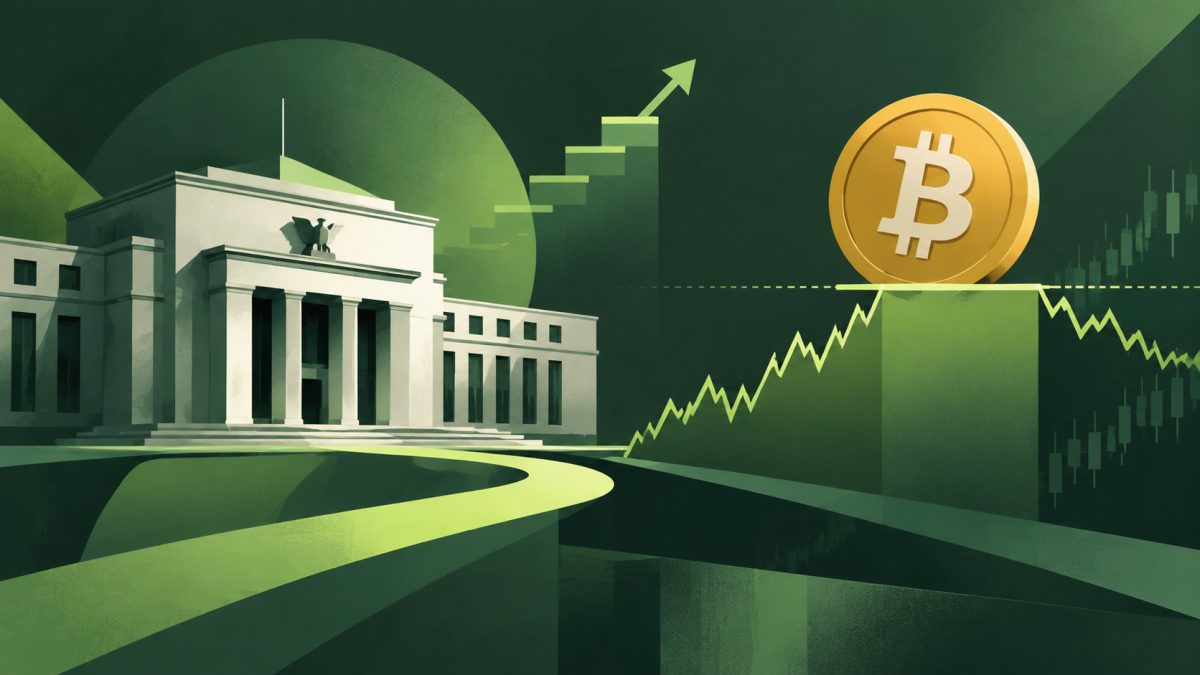
TREE NEWS reports: Bitcoin’s price action is increasingly tethered to Federal Reserve policy expectations, head of research at CoinShares. While Bitcoin exhibits gold-like market characteristics, monetary policy remains the primary obstacle preventing a breakout above $80,000. Butterfill emphasizes that investors are not abandoning crypto but merely trading the interest-rate trajectory. Data from digital asset flows confirm this: hawkish remarks from Fed Governor Kevin Warsh at Jackson Hole triggered ~$100 million in outflows, while dovish comments from Governor Christopher Waller about disinflation reversed sentiment, driving inflows to $1 billion by September 4. Market odds for a 25bp rate hike at the September 16 FOMC meeting stand at ~60% per CME futures.
Industry Analysis
The correlation between Fed policy and crypto flows has intensified, marking a shift in how institutional investors treat digital assets. Butterfill’s observation that investors are ‘trading the rate path’ rather than exiting suggests a maturing market where macro factors dominate short-term price discovery. The $80,000 resistance level is not a technical barrier but a psychological one, tied to expectations of tighter liquidity. When the market priced in a higher chance of a hike, outflows followed; when a pause seemed more likely, inflows surged. This sensitivity underscores that Bitcoin’s ‘digital gold’ narrative is currently overshadowed by its role as a high-beta macro asset.
For fund managers, the implication is clear: crypto allocations are now managed with the same macro lens as equities or commodities. The rapid reversal of flows—from $100 million out to $1 billion in—demonstrates how quickly sentiment can shift with Fed communication. This also explains why Bitcoin has struggled to sustain rallies beyond key levels, as each attempt is met with profit-taking when rate expectations tighten.
Forward-Looking Perspective
Looking ahead, the September FOMC meeting will be a critical catalyst. If the Fed pauses, as Waller suggests, Bitcoin could test the $80,000 range again. However, if a hike occurs, expect renewed outflows and a potential retest of lower support. Beyond the immediate decision, the market will parse forward guidance for signals on the terminal rate. In the medium term, if inflation continues to cool, the macro headwind could turn into a tailwind, allowing Bitcoin to decouple from rate sensitivity and resume its store-of-value narrative. Until then, traders should watch Fed speakers and economic data closely—they are the true drivers of crypto flows.