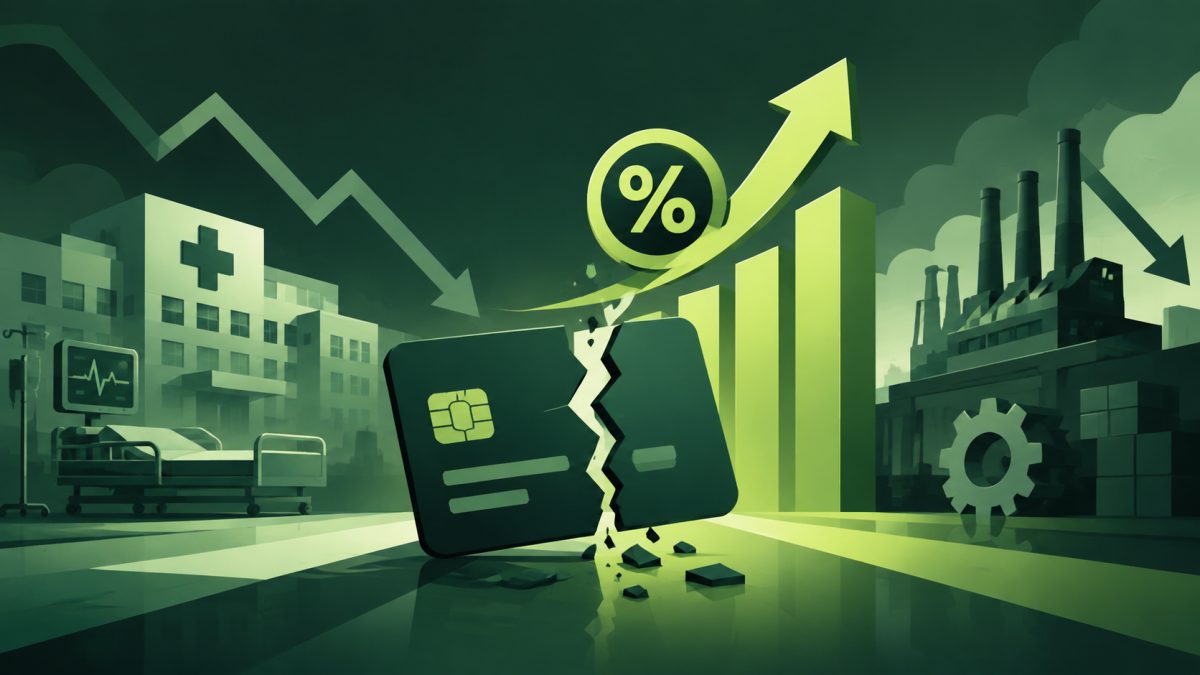
Private Credit Stress Reaches Unprecedented Levels
TREE NEWS reports: The US private credit market’s trailing 12-month default rate climbed to 6.3% by the end of August, surpassing July’s previous record of 6.1% and marking the highest level since data collection began. The report, which tracks 1,300 borrowers, also recorded the largest number of single-month default events over the past year. Fitch’s North American private credit head, Lyle Margolis, attributed the deterioration to uncertainty over interest rates and inflation, which has stifled transaction liquidity and made it harder for lenders to sell distressed portfolio companies before loan maturities.
Maturity Extensions Dominate Default Structures
August recorded 14 default events, 11 of which involved first-time defaulters and three repeat offenders. Over the past year, 89 default events have been logged, with interest payment deferrals and payment-in-kind (PIK) arrangements accounting for 47% of the total. Stress-driven maturity extensions represented 45% of August’s defaults, the largest single category for the third consecutive month. These structural features suggest borrowers and lenders are increasingly relying on debt restructuring to avoid immediate default, though such maneuvers still count as defaults under Fitch’s rating framework.
Sector Divergence: Healthcare and Industrials Lead, Software Shines
Healthcare, industrials, and manufacturing posted the highest sector default rates at 9.9% in August, up from 9.5% in July. In stark contrast, the technology software sector saw its default rate fall to 0.6% from 1.2% the previous month, maintaining the lowest default rate among all Fitch-rated industries. This divergence indicates that while AI-related investor sentiment has pressured software valuations, it has not yet materially impacted credit quality in that sector.
Market Implications: Credit Risk Contagion and Asset Repricing
The record-high default rate signals broadening credit risk exposure in private credit assets, with potential spillover effects across markets:
- Equities: Financials and asset managers with significant private credit exposure could face pressure, while sectors reliant on leveraged lending—such as healthcare and industrials—may see earnings downgrades.
- Bonds: Rising defaults could widen credit spreads in high-yield and leveraged loan markets, particularly for issuers with upcoming maturities. PIK arrangements may mask near-term stress but defer losses.
- Crypto: Risk-off sentiment could weigh on speculative assets, though crypto markets have recently shown resilience to traditional credit stress. Any broader liquidity crunch could trigger deleveraging in crypto lending markets.
- Commodities: Industrial metals may face demand concerns if credit stress slows business investment, while gold could benefit from safe-haven flows.
- Currencies: The US dollar may strengthen on risk aversion, though a prolonged credit downturn could eventually weigh on US growth expectations and weaken the currency.
Key Takeaways for Investors
- Private credit default rates are at historic highs, with stress concentrated in healthcare, industrials, and manufacturing.
- Maturity extensions and PIK arrangements are delaying—not preventing—credit losses, masking underlying weakness.
- Software remains a relative safe haven within private credit, with default rates falling to 0.6% despite AI-related valuation pressures.
- Investors should monitor refinancing conditions and liquidity in private credit funds, as restricted exit options could amplify mark-to-market losses.
- Diversification across sectors and a focus on credit quality will be critical as the cycle matures.