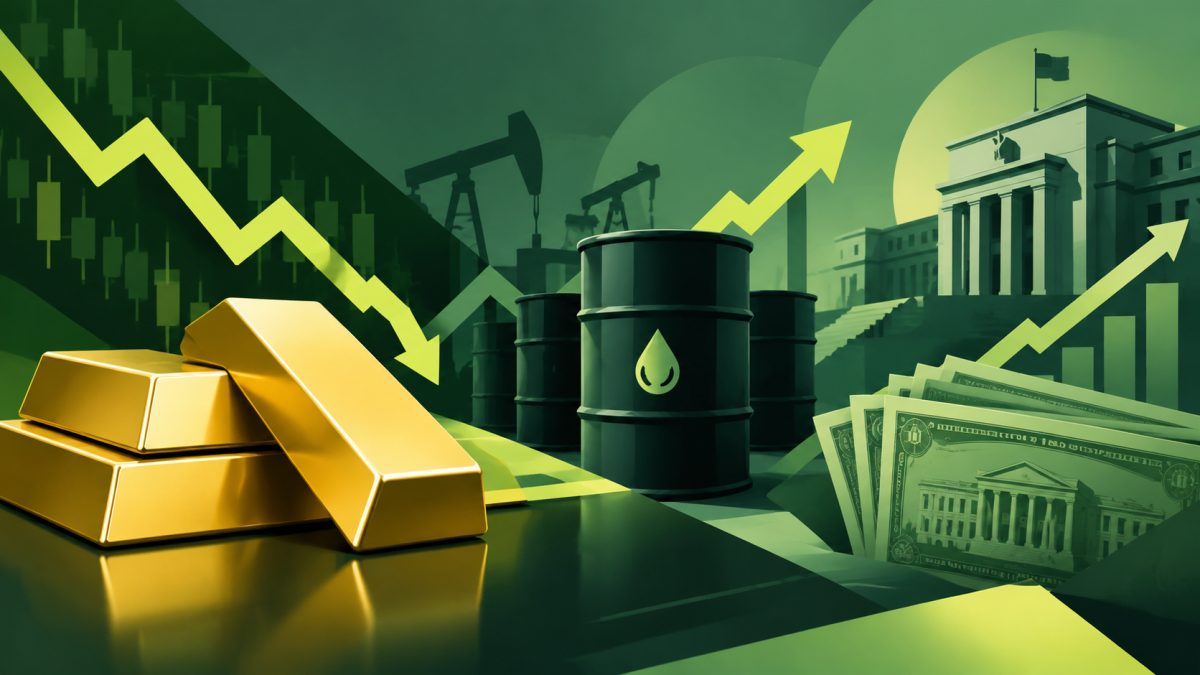
Gold Under Pressure as Oil and Yields Reprice the Fed Path
TREE NEWS reports: Gold prices fell sharply as a rally in crude oil and a renewed climb in U.S. Treasury yields combined to revive expectations that the Federal Reserve may need to raise interest rates again — or at minimum keep policy tighter for longer — to contain a fresh wave of inflation pressure.
The move rippled across asset classes: bullion, which pays no yield, becomes less attractive when real interest rates rise, while higher energy costs feed directly into headline inflation and complicate the central bank’s path toward easing. The result has been a rapid repricing of rate expectations in futures markets, with traders trimming bets on near-term cuts and, in some contracts, assigning fresh probability to another hike.
Why Oil and Yields Are Moving Together
The catalyst is a familiar one: supply-side stress in energy markets. Geopolitical risk premiums, constrained supply and resilient demand have pushed crude benchmarks higher, and that strength is spilling into the broader inflation outlook. Bond markets have responded by selling off at the front end of the curve, lifting two-year yields — the maturity most sensitive to Fed policy — while the long end has been more restrained, hinting at a market that sees near-term inflation risk but longer-term growth concern.
- Front-end yields: Rising two-year yields raise the opportunity cost of holding gold.
- Breakevens: Inflation breakevens widening suggest markets are pricing stickier price pressure.
- Dollar: A firmer dollar, driven by rate differentials, adds a second headwind for bullion priced in USD.
Market Implications Across Asset Classes
Stocks
Equities face a two-sided problem. Higher energy costs squeeze margins for consumer-facing and transport-heavy sectors, while rising discount rates pressure long-duration growth and technology names. Energy producers are a relative bright spot, and defensive sectors such as utilities and consumer staples may attract rotation — though utilities are themselves rate-sensitive. The net effect is likely to be a market that rewards pricing power and punishes leverage.
Bonds
The front end of the Treasury curve remains the battleground. If incoming inflation data confirms the oil-driven impulse, expect further bear flattening — short yields rising faster than long yields. That would extend the pain for holders of short-duration bonds and could keep mortgage rates elevated, weighing on housing activity.
Crypto
Digital assets remain correlated with risk appetite and liquidity conditions. A hawkish repricing is typically a headwind for bitcoin and the broader crypto complex, as tighter financial conditions reduce speculative appetite. That said, crypto has at times traded as an inflation-hedge narrative, and a sustained oil-driven inflation scare could revive that bid — though it would likely be a secondary effect behind the dominant liquidity story.
Commodities
Energy remains the epicenter, but the read-through matters for industrial metals and agriculture, where higher input costs can pass through to consumer prices. Gold’s slide is notable precisely because it runs against its traditional inflation-hedge role — a reminder that in a rate-driven regime, real yields often dominate.
Currencies
Rate differentials favor the dollar in the near term. Commodity-linked currencies may find support from stronger energy prices, but that support can be offset if global growth expectations weaken. The yen remains caught between widening rate differentials and intervention risk.
Key Takeaways for Investors
- Watch the data, not the narrative: The next CPI and PCE prints will determine whether the oil move is a blip or a trend.
- Gold’s weakness is a signal: When gold falls on inflation news, the market is telling you real rates, not inflation, are in control.
- Position for volatility: Energy-led inflation shocks tend to produce choppy, headline-driven markets. Balance sheets matter more than beta.
- Diversification still works: The divergence between energy, bonds and bullion underscores why a single-asset inflation hedge is rarely sufficient.
The bigger question is whether this is a temporary energy spike or the start of a more durable inflation regime. Until that is resolved, expect macro data — not earnings — to drive the tape.