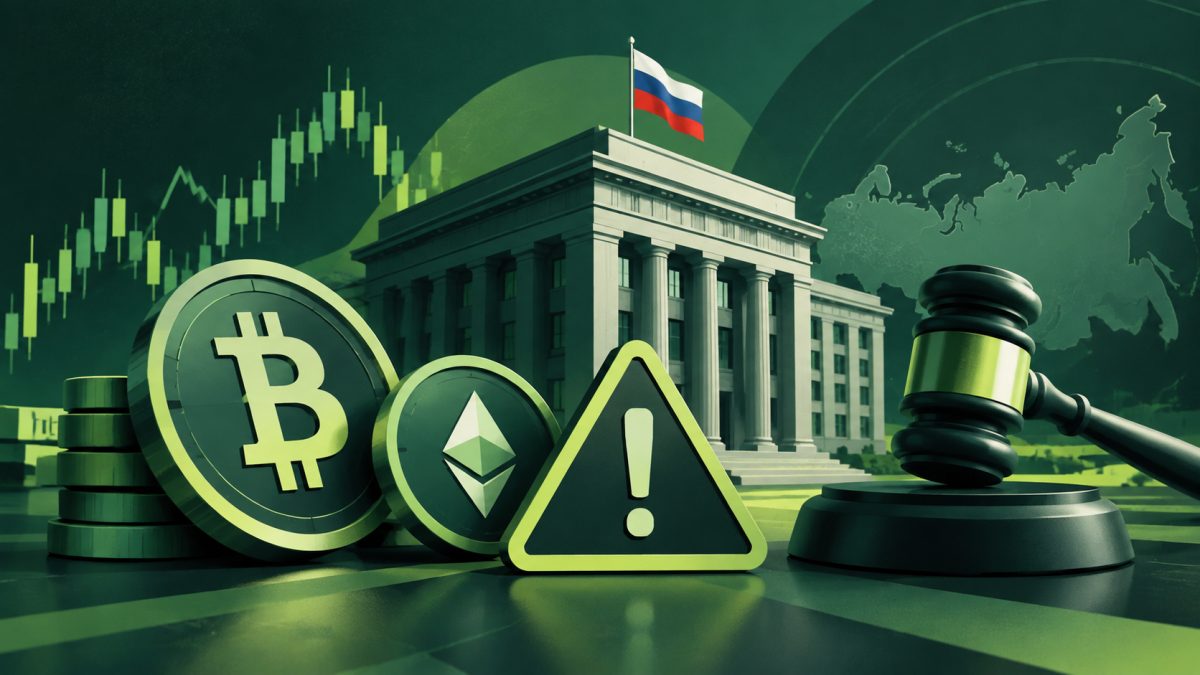
Russia’s Central Bank Flags Crypto as Financial Market Risk, Pushes Criminal Liability
TREE NEWS reports: Russia’s central bank has added cryptocurrencies to its official list of financial market risks, warning that growing use of stablecoins and other digital assets by Russian citizens is eroding the role of the national currency. In its outline of the main directions for the Russian financial market through 2027 and 2028–2029, the regulator said digital currency investments carry the risk of total loss, with no responsible party or guarantee backing them.
Key Concerns
- Currency substitution: The central bank worries that stablecoins are increasingly used as a substitute for the ruble in domestic and cross-border payments.
- Enforcement limits: Because crypto circulates beyond any single jurisdiction, national restrictions and bans become less effective, the bank argued.
- Shadow markets: The absence of unified global regulation creates fertile ground for illicit or unregulated markets.
The regulator proposed criminal liability for organizing the circulation of digital currencies without a license, and administrative liability for licensed market participants that breach the rules. The stance is notable given Russia’s broader ambivalence toward crypto: the country has experimented with crypto in cross-border settlements to bypass sanctions, while the central bank has long advocated a restrictive approach at home.
Analysis and Implications
The move reflects a widening divide between the Bank of Russia’s monetary sovereignty concerns and the Kremlin’s tactical use of digital assets for sanctions evasion and international trade. By framing stablecoins as a systemic risk to the ruble, the central bank is laying the groundwork for tighter domestic controls — potentially including penalties for unlicensed circulation and stricter reporting requirements for exchanges and brokers.
For the crypto industry, the signal is mixed. On one hand, Russia remains a major market for mining and peer-to-peer trading. On the other, the prospect of criminal liability for unlicensed activity could push more activity underground or offshore, reducing transparency and increasing compliance risk for global platforms that serve Russian users.
The emphasis on the lack of a responsible party echoes long-standing central bank critiques of decentralized assets. Yet the same argument could equally apply to the bank’s own fiat currency, which relies on state trust rather than collateral. The real tension is not about guarantees but about control: stablecoins denominated in dollars or other foreign currencies threaten to displace the ruble in everyday use, especially where banking access is limited or cross-border payments are constrained.
Forward-Looking Perspective
Expect Russia to pursue a dual-track policy: tolerate crypto for sanctioned cross-border trade while tightening domestic oversight. The proposed criminal and administrative liabilities could materialize in legislation over the next few years, alongside expanded use of the digital ruble. Globally, the stance adds to a patchwork of national approaches — from the EU’s MiCA to Singapore’s licensing regime — reinforcing the central bank’s own point that fragmented rules push activity into less regulated corners.



