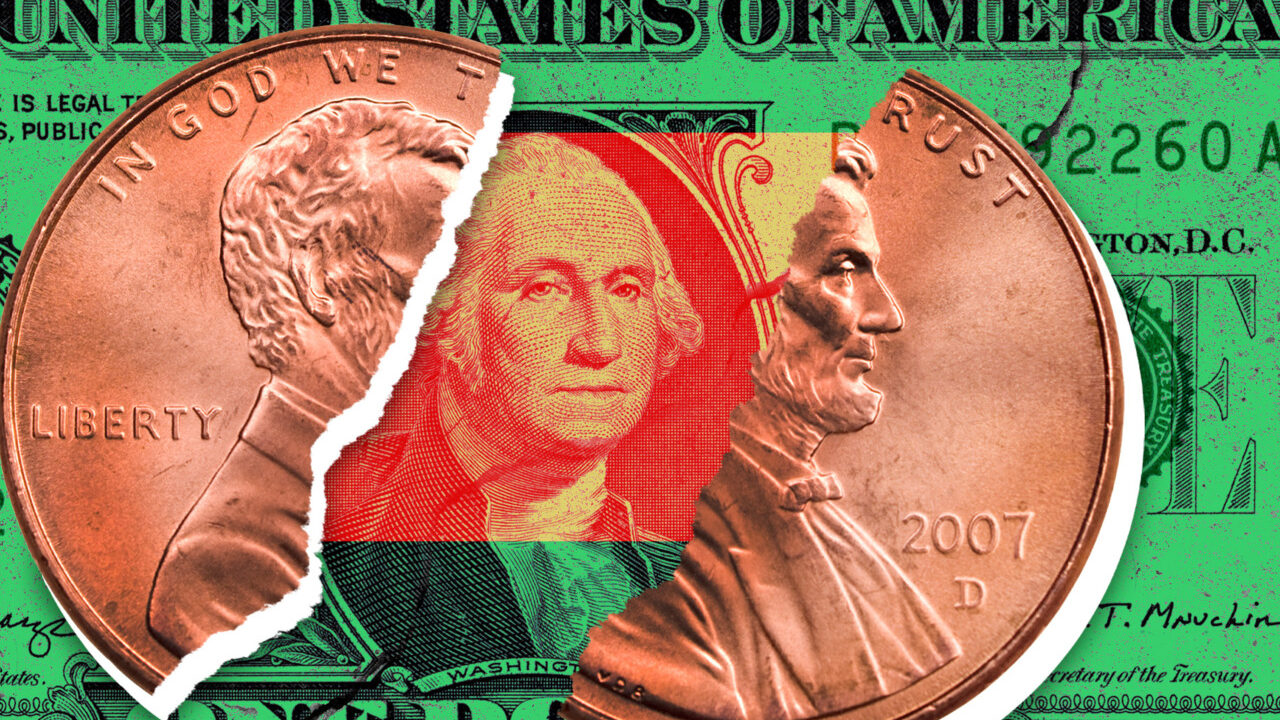
Congress Eliminates the Penny as Inflation Erodes Currency Value
TREE NEWS reports: Lawmakers have voted to phase out production of the U.S. penny, celebrating the move as a cost-saving measure. But the decision underscores a deeper, more troubling economic reality: persistent inflation has rendered the one-cent coin functionally obsolete. The same forces that made the penny worthless are steadily eroding the purchasing power of the dollar itself.
The U.S. Mint has long spent more than one cent to produce each penny—roughly 2.7 cents in recent years—making its continued minting a fiscal loser. Congress framed the move as prudent budgeting. Yet the underlying driver is not bureaucratic inefficiency but monetary debasement. Since 1913, the dollar has lost over 96% of its purchasing power. What once bought a loaf of bread now buys a fraction of a candy bar.
Market Implications: A Signal of Structural Inflation
For investors, the penny’s demise is not merely a curiosity—it is a symptom of the inflation regime that has defined markets since 2020. The episode reinforces several key macro themes:
- Stocks: Companies with pricing power—those able to pass rising costs to consumers—remain advantaged. Sectors like consumer staples, energy, and healthcare tend to outperform in inflationary environments. Conversely, firms dependent on discretionary spending may face headwinds as real incomes stagnate.
- Bonds: Persistent inflation keeps upward pressure on yields. Long-duration Treasuries remain vulnerable, while TIPS (Treasury Inflation-Protected Securities) and floating-rate notes offer better insulation. The Federal Reserve’s rate path remains data-dependent, with any sign of sticky inflation likely to delay cuts.
- Crypto: Bitcoin’s fixed supply of 21 million coins positions it as a direct hedge against fiat debasement. Narratives around “digital gold” gain traction when stories like the penny’s elimination highlight the structural decline of fiat currency. Expect renewed interest in hard-capped assets.
- Commodities: Gold and silver—traditional inflation hedges—could see safe-haven demand. The penny’s composition (97.5% zinc, 2.5% copper) is a footnote, but the broader signal supports precious metals.
- Currencies: The dollar’s reserve status remains intact, but its purchasing power continues to slide. The DXY may face pressure if inflation remains above target while growth slows.
Why This Matters for Investors
The penny’s elimination is a canary in the coal mine. It signals that inflation is not a transient phenomenon but a structural feature of modern monetary policy. Central banks have repeatedly demonstrated a willingness to tolerate above-target inflation to avoid deflationary spirals and manage debt loads. For investors, this means:
- Real returns matter more than nominal returns. A 5% portfolio gain in a 4% inflation environment is barely a win.
- Diversification beyond fiat-denominated assets is essential. Hard assets, inflation-linked bonds, and select cryptocurrencies can provide ballast.
- Policy risk is rising. As inflation erodes living standards, political pressure for price controls, wealth taxes, or other interventions may grow.
The penny is dead. The dollar is next on the watchlist.