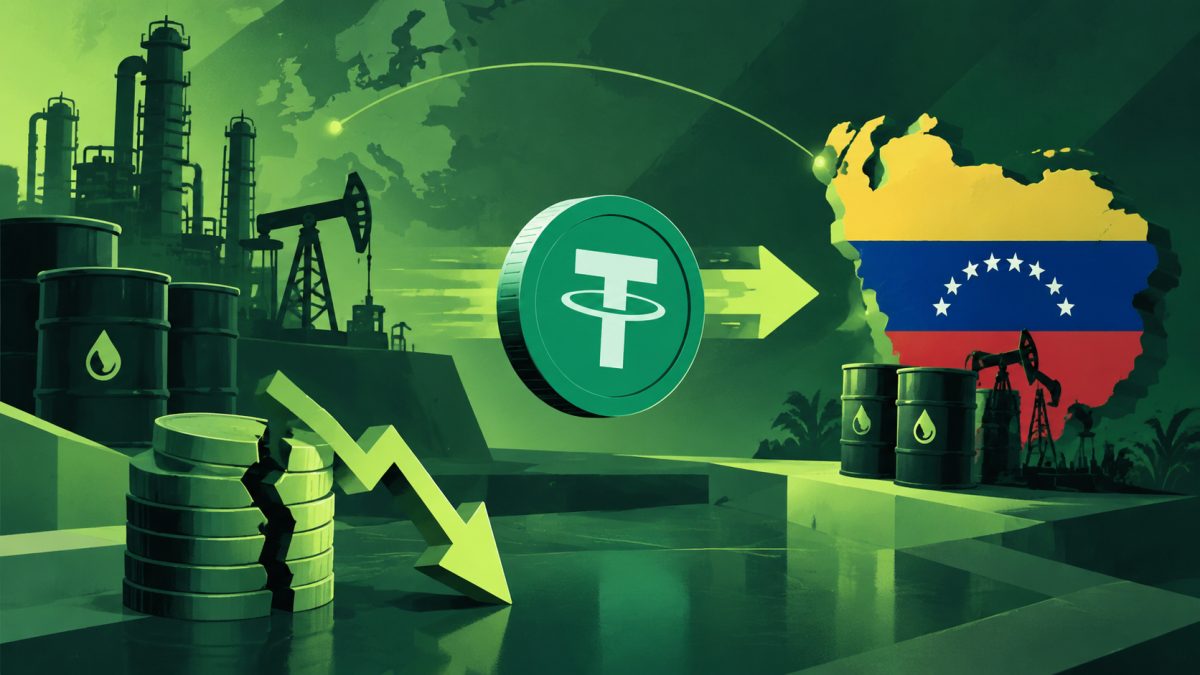
A State Energy Giant, a Dubai Trader, and a Missing $132 Million in Tether
TREE NEWS reports: Poland’s state-controlled energy company Orlen prepaid $230 million to Dubai-based trader Hannon International for roughly 6 million barrels of Venezuelan crude — but received only about 500,000 barrels of fuel oil. During the transaction, part of the funds was converted into USDT and routed through intermediaries to Venezuelan counterparties. Hannon says at least $132 million in USDT was handed to two middlemen who then disappeared. Including tanker charters and legal fees, the Polish government estimates Orlen’s total losses at no less than $424 million. Orlen is now pursuing arbitration to recover the prepayment.
Why This Matters for Crypto
The case is a stark illustration of how dollar-denominated stablecoins have become the settlement layer of choice for commodity trades that the conventional banking system is unwilling — or unable — to touch. Venezuela’s oil sector is subject to U.S. sanctions, which makes correspondent banking for such deals nearly impossible. USDT fills that gap: it moves in minutes, settles 24/7, and can be pushed through a chain of intermediaries with far less friction than a wire transfer.
But the same properties that make stablecoins useful for sanctioned trade also make them useful for fraud. Once USDT leaves a corporate treasury and enters a network of brokers, recovery depends almost entirely on counterparty trust and, in the worst case, on the willingness of exchanges and issuers to freeze funds. Tether has historically cooperated with law enforcement to blacklist addresses, but that only works if the funds are identified quickly and remain on-chain.
The Compliance Blind Spot
- KYC at the fiat on-ramp: The conversion from dollars to USDT is the critical control point. If that step is handled by loosely regulated over-the-counter desks, sanctions screening can be trivially bypassed.
- Intermediary opacity: Multi-hop payment chains obscure the ultimate beneficiary, which is precisely what sanctions regimes are designed to prevent.
- Corporate treasury risk: Orlen is a publicly listed, state-owned enterprise. Its loss shows that even sophisticated institutions can underestimate the legal and operational risks of crypto-settled commodity deals.
Forward Look
Expect two consequences. First, European regulators will likely cite this episode as evidence for tighter rules on stablecoin transfers under MiCA, particularly around unhosted wallets and intermediary reporting. Second, commodity traders will keep using stablecoins — the demand is structural — but the market may bifurcate into a compliant, auditable tier and a shadow tier. Orlen’s arbitration will be watched closely, not just for the money, but for what it reveals about who bears liability when crypto settlement goes wrong.