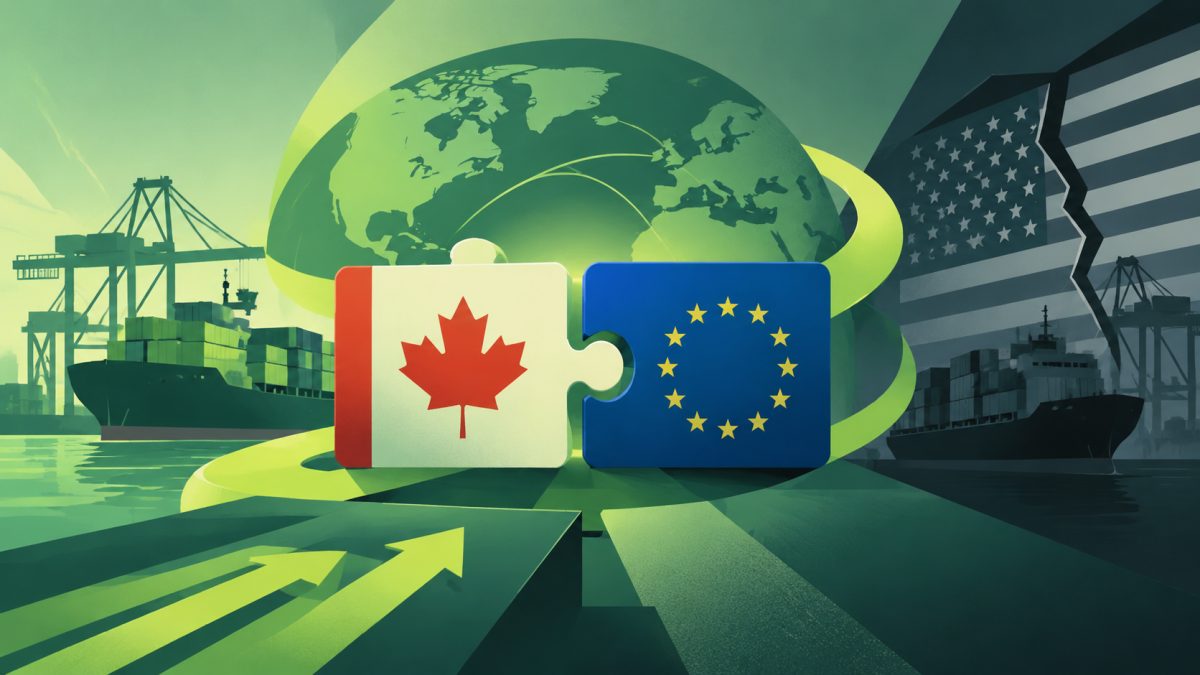
EU Proposes Unprecedented ‘Associate Member’ Status for Canada
TREE NEWS reports: European Commission President Ursula von der Leyen formally proposed inviting Canada to become the European Union’s first-ever “associate member,” delivering the offer in person to Canadian Prime Minister Mark Carney during her State of the Union address in Strasbourg. “In this new world, we must urgently rethink partnerships and build global alliances to protect our resilience and democracy,” von der Leyen said. “I want to open the door with you for Canada to become the EU’s first associate member.”
The proposal comes as US-Canada trade frictions intensify. Washington’s repeated suggestion that Canada become the 51st US state has been firmly rejected by Ottawa, which insists sovereignty is not negotiable. Carney’s three-day European tour — spanning Strasbourg and Liverpool — signals a deliberate pivot toward deeper transatlantic ties outside the US orbit.
What ‘Associate Membership’ Actually Means
The EU currently has no formal “associate member” category, making the concept a political innovation rather than an established legal framework. Full EU membership requires lengthy accession procedures, single-market access, and fiscal and legal obligations. Existing models — Iceland, Norway, Liechtenstein, and Switzerland — each rely on bespoke arrangements governing goods and labor mobility, with no unified template.
Analysts caution that the rights, obligations, and institutional mechanics of associate membership remain undefined and would require extensive negotiation. The proposal is best understood as a strategic signal of intent rather than an imminent institutional change.
CETA Ratification and Broader Cooperation
A more concrete near-term priority is completing ratification of the Comprehensive Economic and Trade Agreement (CETA), signed nearly a decade ago but still pending formal approval in 10 European countries. Outstanding issues include the application of the EU’s carbon border adjustment mechanism to Canadian imports, plus divergences on deforestation and pesticide regulations.
Progress is expected before an October summit in Montreal, where a digital trade agreement may also be signed. Canada has already secured access to the EU’s €150 billion SAFE defense procurement loan program, and defense cooperation continues to expand. Von der Leyen also flagged collaboration in manufacturing, technology, defense, and energy.
Market Implications
For investors, the headlines carry more strategic than immediate tactical weight, but several transmission channels matter:
- Currencies: A credible EU-Canada deepening reduces Canada’s economic dependence on the US, marginally supportive for the Canadian dollar over the medium term. Near-term CAD direction, however, remains dominated by oil prices and Fed-BoC rate differentials.
- Equities: Canadian energy, mining, and defense names with European exposure could benefit from procurement access and tariff relief. European industrials and defense contractors may gain a stable North American supplier base.
- Trade flows: Any acceleration of CETA ratification lowers tariff uncertainty for cross-border goods, a modest positive for logistics, agriculture, and manufacturing margins.
- Commodities: Closer EU-Canada energy cooperation could gradually redirect Canadian LNG and critical minerals toward Europe, competing with US buyers and reshaping North American energy logistics.
- Bonds: Limited direct impact, though reduced North American trade risk could trim term premia at the margin if it lowers broader geopolitical risk perception.
Key Takeaways for Investors
- Treat “associate membership” as a long-horizon political signal, not a near-term tradeable event — no legal framework exists yet.
- Watch the October Montreal summit for CETA ratification momentum and a possible digital trade pact.
- Position for gradual EU-Canada diversification in energy, defense, and critical minerals supply chains.
- Keep CAD exposure tied primarily to oil and rate differentials; the geopolitical story is a slow-burn tailwind at best.