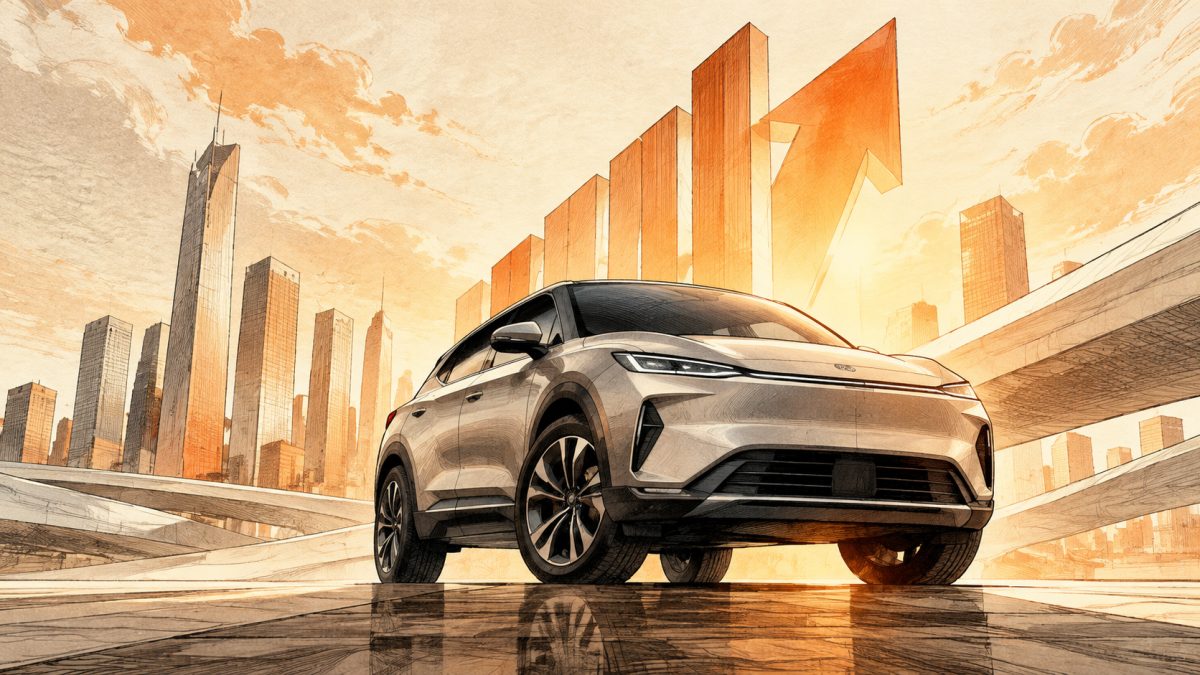
BAIC Arcfox Enters China’s Most Contested EV Segment With Alpha T7
TREE NEWS reports: BAIC Arcfox unveiled the Alpha T7 on September 16, launching nine variants priced between 136,800 and 172,800 yuan, with post-subsidy prices ranging from 132,800 to 168,800 yuan. The new large five-seat SUV fills a gap in the brand’s product lineup and enters China’s single largest new-energy vehicle (NEV) price band, where competition is fiercest and volumes are highest.
The Alpha T7 offers both battery-electric and range-extended powertrains. Some trims feature Huawei’s Qiankun ADS 5 Pro advanced driver-assistance system, capable of urban and highway navigation assistance as well as automated parking. The vehicle measures 5,020 mm in length with a 3,040 mm wheelbase. The range-extended version delivers 320 km of CLTC electric-only range and 1,315 km of combined range, while the pure-electric version offers 650 km and 715 km options on an 800V high-voltage platform.
Why the 150,000 Yuan Segment Matters
The 100,000–200,000 yuan NEV segment recorded 6.94 million units in sales in 2025, up 24% year-on-year. Within that, the 100,000–150,000 yuan band grew 59.5% to 3.55 million units. This price range captures first-time buyers and family upgrade demand, making it the most strategically important battlefield for mass-market automakers.
Competition in this segment has shifted from simple price and range comparisons to a broader contest encompassing cabin space, charging speed, intelligent driving capability, and dealer service networks. Rivals including Leapmotor’s C11, Deepal’s S07, and BYD’s Song Ultra have all been refreshed, pushing 800V platforms and urban navigation-assisted driving into what was once a budget category.
BAIC Arcfox’s Growth Trajectory
BAIC Arcfox sold 161,000 vehicles in 2025, nearly doubling from the prior year. In the first seven months of this year, cumulative deliveries reached 104,100 units, up 80.25%, with July alone seeing 23,500 deliveries, a 150.45% year-on-year jump. The brand has expanded its nationwide dealer network to over 700 stores and plans to grow its service network to more than 1,000 locations by year-end.
Parent company BAIC BluePark reported first-half sales of 98,900 units, up 47.27%, with revenue rising 21.86% to 11.6 billion yuan. Its net loss attributable to shareholders narrowed to 1.94 billion yuan from 2.31 billion yuan a year earlier, signaling that volume growth and product-mix improvement are gradually reducing cash burn.
Market Implications
- Margin pressure across the sector: The entry of another well-equipped, competitively priced large SUV into the 150,000 yuan band intensifies pricing pressure on incumbents. Automakers already operating on thin margins may face further profitability erosion.
- Huawei’s ecosystem expansion: The integration of Qiankun ADS 5 Pro into a mass-market vehicle reinforces Huawei’s position as a dominant intelligent-driving supplier, benefiting its partner network while pressuring independent ADAS developers.
- Supply-chain beneficiaries: Rising adoption of 800V platforms and advanced driver-assistance hardware in the 150,000 yuan segment supports demand for power semiconductors, high-voltage connectors, and sensor components.
- Consolidation risk: As product density increases and price competition persists, smaller EV makers with limited scale and weaker brand recognition face heightened risk of market exit.
Key Takeaways for Investors
The Alpha T7’s launch underscores that China’s NEV market growth is increasingly concentrated in the mass-market segment, where volume matters more than premium pricing. For equity investors, the key question is which automakers can sustain margins while scaling. BAIC BluePark’s narrowing losses suggest improving operational leverage, but the company remains unprofitable. Suppliers exposed to 800V architecture and intelligent-driving hardware stand to benefit regardless of which OEM wins. Meanwhile, the intensifying competition reinforces the case for consolidation, making scale and cost discipline the defining competitive advantages in the years ahead.