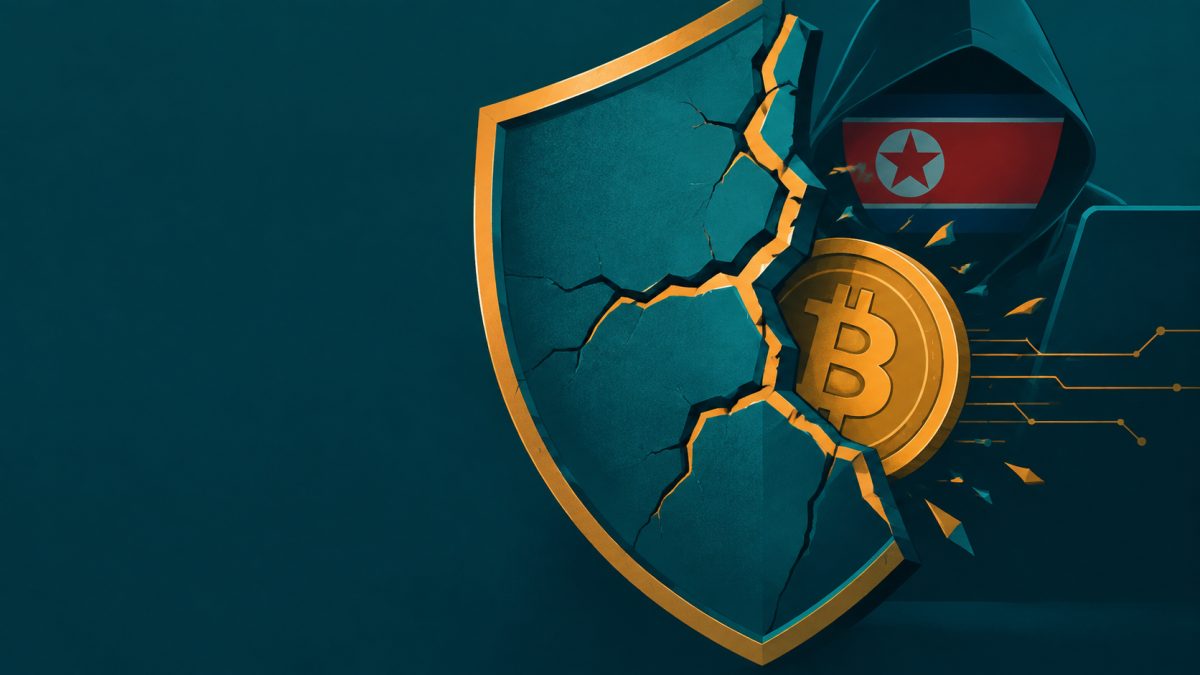
A Sophisticated Social Engineering Campaign Hits Crypto Users
TREE NEWS reports: A coordinated cyber campaign attributed to North Korea-linked actors has infected roughly 30,000 devices and drained approximately $10.7 million from cryptocurrency wallets. The attackers leveraged fake job offers — a now-familiar lure in the crypto crime playbook — to distribute malware that granted them access to victims’ devices and, ultimately, their digital assets.
How the Attack Worked
The operation relied on social engineering rather than a technical exploit of blockchain protocols. Victims, many of them developers, traders, and Web3 professionals, were approached with seemingly legitimate recruitment offers. Once they downloaded and ran malicious files disguised as coding tests, portfolio templates, or onboarding documents, the malware established persistence on their machines.
- Infection vector: Fake job offers delivered via messaging platforms and professional networks
- Scale: Approximately 30,000 compromised devices
- Losses: Roughly $10.7 million in crypto assets drained
- Attribution: North Korea-linked threat actors
From there, the malware targeted browser-based wallets, clipboard data, and stored credentials, allowing attackers to authorize transactions and sweep funds to controlled addresses.
Why Crypto Remains a Prime Target
Cryptocurrency’s irreversibility makes it uniquely attractive to state-sponsored and financially motivated hackers alike. Unlike a bank transfer, a confirmed on-chain transaction cannot be clawed back, and cross-chain bridges and mixers can obscure the trail of stolen funds. This combination of high value and low friction has made wallet-draining operations one of the most persistent threats in the ecosystem.
The incident also underscores a structural vulnerability: the security of a decentralized network is often only as strong as the endpoint — a laptop, a browser extension, a private key — that a user controls. Attackers increasingly bypass protocol-level defenses entirely by compromising the human layer.
Industry Implications
For exchanges, wallet providers, and DeFi protocols, the episode is a reminder that user education and endpoint security are now core infrastructure concerns. Hardware wallets, transaction simulation tools, and strict separation between work and personal devices can meaningfully reduce exposure. Security firms have urged users to treat unsolicited job offers with skepticism, verify recruiters independently, and never execute files from unverified sources.
What to Watch Next
On-chain investigators will likely track the movement of the stolen funds through mixers and bridges, while law enforcement agencies continue to grapple with the challenge of attributing and disrupting state-linked operations. For the broader market, the takeaway is clear: as crypto adoption grows, the attack surface expands with it — and the weakest link is often not the chain, but the person holding the keys.