China Accelerates Its Push Into the Global Space Economy
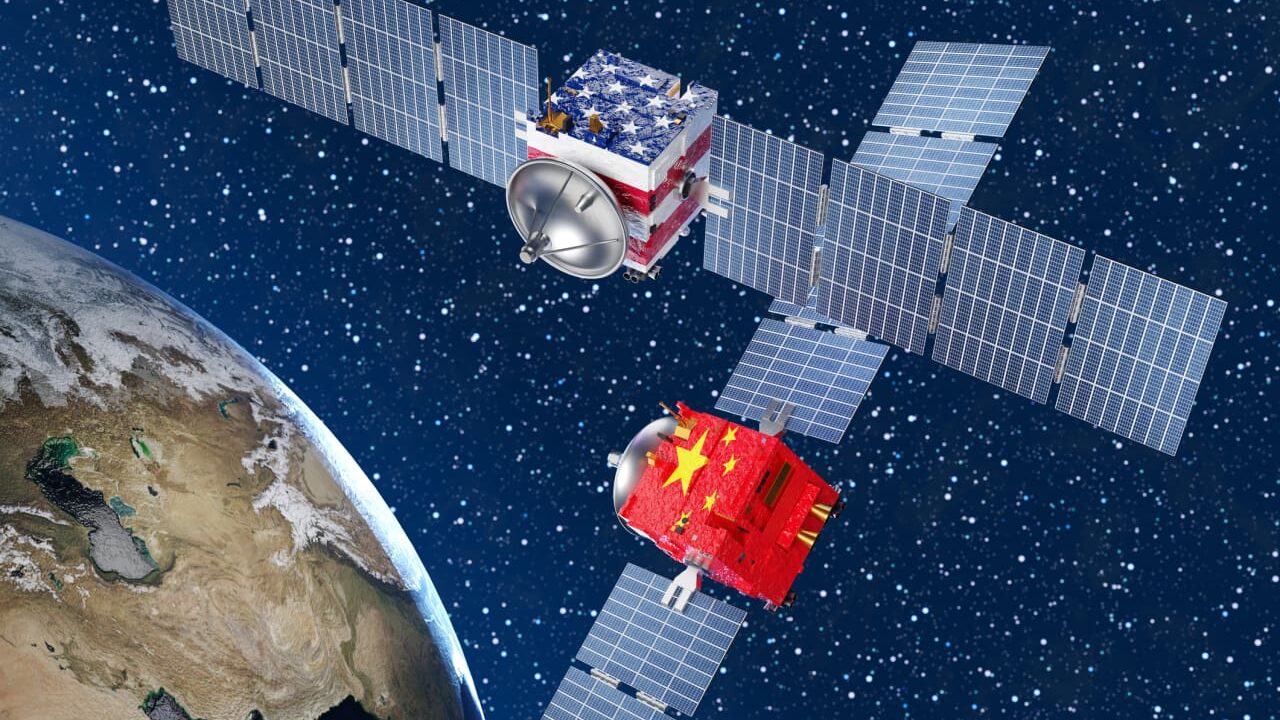
TREE NEWS reports: China’s space-technology sector is intensifying its challenge to Elon Musk’s SpaceX, with a growing roster of state-backed and private players aiming to capture a larger share of the fast-expanding global space economy. The push spans reusable rockets, satellite mega-constellations, commercial launch services and deep-space exploration, mirroring the playbook that turned SpaceX into one of the world’s most valuable private companies.
The ambition is not merely symbolic. Beijing has identified commercial space as a strategic industry in its five-year plans, and a wave of Chinese launch startups — alongside established state contractors — are testing reusable boosters and deploying broadband constellations intended to compete with Starlink. The goal is to secure both national-security advantages and commercial revenue streams in a domain projected to be worth trillions of dollars in the coming decades.
Why the Space Race Matters for Markets
The story is bigger than rockets. Space has become a capital-intensive, geopolitically charged industry whose ripples reach equities, bonds, commodities, currencies and even digital assets.
- Equities: A credible Chinese challenger pressures the valuation narrative around SpaceX’s private peers and publicly listed space names — satellite operators, launch providers, component suppliers and defense primes. Investors may rotate toward diversified aerospace and defense exposure rather than pure-play launch bets, while Chinese space-linked listings onshore and in Hong Kong could attract fresh domestic capital.
- Bonds: Space programs are effectively long-duration sovereign investments. Sustained state funding could keep upward pressure on Chinese government issuance, while U.S. defense and NASA budgets remain a swing factor for Treasury supply and duration appetite.
- Commodities: Rockets consume specialized alloys, titanium, rare earths, semiconductors and advanced composites. A widening launch cadence supports demand for these inputs, with rare-earth and specialty-metal supply chains particularly sensitive to U.S.-China competition.
- Currencies: Technological leadership is a soft-power asset. Visible progress in Chinese space capabilities can modestly support the yuan’s long-term narrative, though near-term FX moves remain dominated by rate differentials and trade flows.
- Crypto: Satellite broadband and space-based communications intersect with decentralized infrastructure — from remote connectivity for blockchain nodes to tokenized satellite-data markets. A more crowded orbital economy could accelerate these experiments, though the link remains speculative.
The Strategic Backdrop
Low Earth orbit is increasingly congested and contested. Satellite constellations serve civilian broadband, military surveillance and navigation, making launch capacity a national-security asset. Whoever controls reliable, low-cost access to orbit shapes standards for communications, imagery and positioning — the plumbing of the modern economy.
For China, closing the gap with SpaceX is about more than prestige. It is about ensuring that its companies and military are not dependent on foreign launch or connectivity. For the United States, it reinforces the case for sustained public and private investment in space infrastructure.
Key Takeaways for Investors
- Treat space as a long-duration thematic allocation, not a short-term trade; timelines are measured in years, and execution risk is high.
- Diversify across the value chain — launch, satellites, ground systems, components and defense — rather than betting on a single winner.
- Watch policy signals: budget lines, export controls and licensing regimes are the real catalysts for space equities.
- Monitor commodity inputs such as rare earths and specialty metals, where space demand overlaps with broader strategic competition.
- Stay alert to adjacent opportunities, including satellite connectivity’s potential role in decentralized communications and data markets.
The contest between China’s space champions and SpaceX is not a single headline — it is a multi-decade investment cycle. Investors who understand the industrial and geopolitical layers beneath the rockets will be better positioned than those chasing the launch itself.