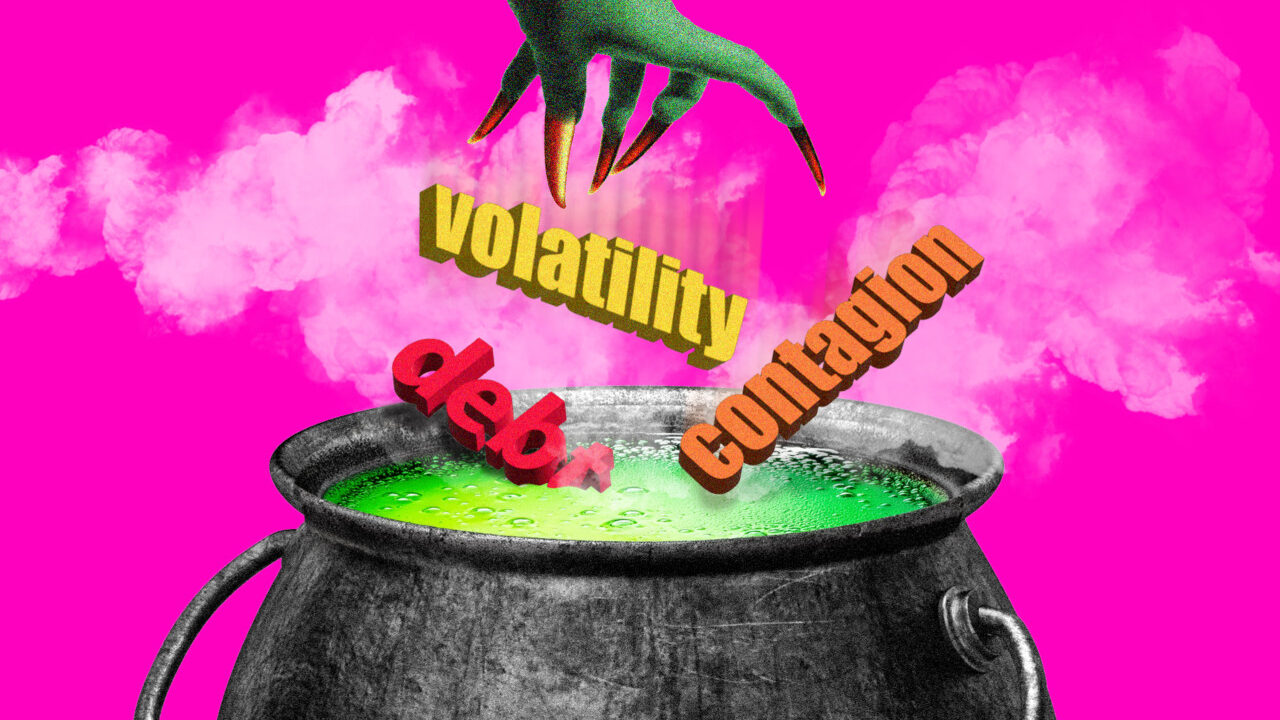
The Ingredients for a Market Crash Are All in Place
TREE NEWS reports: A dangerous combination of record debt loads, persistently higher borrowing costs and growing cross-market contagion risk is building across global financial markets. The warning centers on three interlocking forces: government and corporate debt levels that have climbed far beyond pre-pandemic norms, a cost-of-capital environment that is unlikely to return to the ultra-low rates of the 2010s, and tightening links between private credit, regional banks and leveraged investors that could turn a localized shock into a system-wide event.
Unlike previous cycles, this pressure is emerging while equity valuations remain elevated and credit spreads stay historically tight. That mismatch — rich asset prices against deteriorating fundamentals — is what makes the setup fragile. When borrowing gets more expensive, refinancing walls become harder to climb, and any single default or liquidity squeeze can ripple quickly through interconnected counterparties.
Why the Mix Is So Volatile
Three dynamics are feeding the risk:
- Debt overhang: Sovereign, corporate and household debt as a share of global GDP remains near record highs. Rolling over that debt at higher rates drains cash flow that would otherwise support spending and earnings.
- Higher cost of capital: Even if central banks cut policy rates, long-term yields and risk premiums are likely to stay above the post-2008 norm. That compresses valuations for long-duration assets and punishes highly levered business models.
- Contagion channels: Private credit funds, regional banks and non-bank lenders are now deeply intertwined. A shock in one corner can force selling in another, amplifying drawdowns.
Market Implications
Stocks: High-multiple growth and small-cap companies with floating-rate debt are most exposed. Defensive sectors, cash-rich mega-caps and dividend payers typically outperform when capital gets scarce. Volatility indices may stay structurally elevated.
Bonds: The long end of the curve faces conflicting forces. Safe-haven demand could push yields lower in a panic, but heavy issuance and sticky inflation keep a floor under yields. Credit spreads, especially in high yield and private credit, look vulnerable to widening.
Crypto: Digital assets have traded as a high-beta liquidity proxy. In a risk-off shock, bitcoin and ether would likely draw down alongside tech equities, though bitcoin’s growing institutional ownership could provide a partial cushion. Stablecoin flows and on-chain leverage are worth watching for stress signals.
Commodities: Industrial metals would suffer from slower growth expectations, while gold should benefit as a hedge against fiscal stress and currency debasement. Oil sits in the middle — supported by supply discipline but capped by demand worries.
Currencies: The dollar tends to strengthen in global risk-off episodes, pressuring emerging-market currencies and dollar-indebted borrowers. The yen could rally if carry trades unwind sharply.
Key Takeaways for Investors
- Stress-test portfolios for a world where capital stays expensive for longer, not just a mild slowdown.
- Watch refinancing calendars, private credit marks and bank funding costs — these are the early-warning indicators.
- Diversification into gold, short-duration quality credit and cash-like instruments can offset equity and credit risk.
- Avoid mistaking tight spreads and high valuations for safety; both can reverse quickly once liquidity tightens.
- Keep dry powder. Crashes are also opportunities, but only for investors who are not forced sellers.
The ingredients are assembled. Whether they ignite depends on the next shock — and on how much leverage the system is still carrying when it arrives.



