Karpelès Lab Uncovers Spy Implant in Additional Ledger Devices
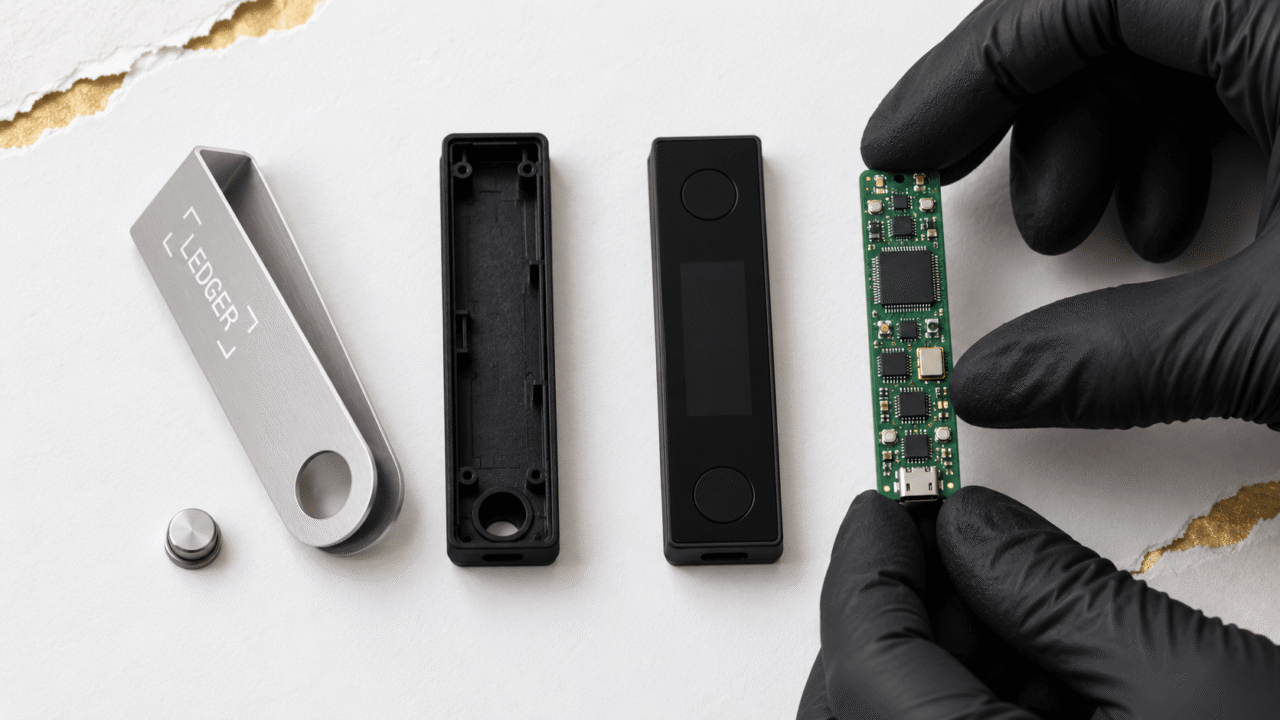
TREE NEWS reports: Mark Karpelès, the former Mt. Gox CEO who now leads Karpelès Lab, says a spy implant designed to intercept hardware wallet communications has now turned up in a Ledger Flex and a Nano X sourced from two additional authorized resellers. The newest version of the implant appears engineered for mass production, suggesting the tampering operation is scaling rather than winding down.
Ledger pushed back, stating that stock it inspected at a German retail location showed no signs of tampering. The conflicting accounts leave hardware wallet users in an uncomfortable middle ground: one party is finding compromised units, while the manufacturer says its inspected inventory is clean.
What the Implant Does
Hardware wallets are marketed as the gold standard for self-custody because private keys never leave the device. A physical implant that sits between the chip and the host machine can undermine that promise by capturing seed phrases or signed transaction data before they are encrypted. If such implants can be produced at scale, the threat model shifts from sophisticated targeted attacks to a supply-chain problem affecting ordinary retail buyers.
Why the Supply Chain Is the Weak Point
- Authorized resellers are not the manufacturer. Devices pass through distributors, warehouses, and retail storefronts before reaching users, creating multiple points where tampering can occur.
- Verification is fragmented. Ledger offers a genuine-check feature through its companion app, but users must actually run it, and a compromised host machine could theoretically interfere.
- Consumer trust is fragile. The hardware wallet market competes largely on the promise of physical security. Each new report of tampering erodes that differentiator.
Industry Implications
If Karpelès’s findings hold up, the hardware wallet industry faces a credibility test similar to what software wallets endured during the early DeFi exploit era. Competitors such as Trezor, Coldcard, and newer entrants may see demand shift toward devices with stronger tamper-evident packaging and open-source firmware verification. Resellers, meanwhile, could face pressure to implement chain-of-custody documentation and tamper seals that users can validate before first use.
Regulators have so far focused on exchange custody and stablecoin reserves rather than retail hardware integrity. A confirmed mass-production implant could change that calculus, potentially triggering product-safety scrutiny in the EU and US.
Forward Look
The key question is whether Ledger’s clean German inspection reflects a limited incident or a broader blind spot in its quality assurance. Independent teardowns of devices purchased from multiple regions would help settle the dispute. Until then, users should buy directly from manufacturers where possible, verify device integrity on first setup, and treat any pre-initialized wallet as compromised. For the industry, the episode is a reminder that self-custody security depends not just on cryptography, but on the physical journey of the device itself.