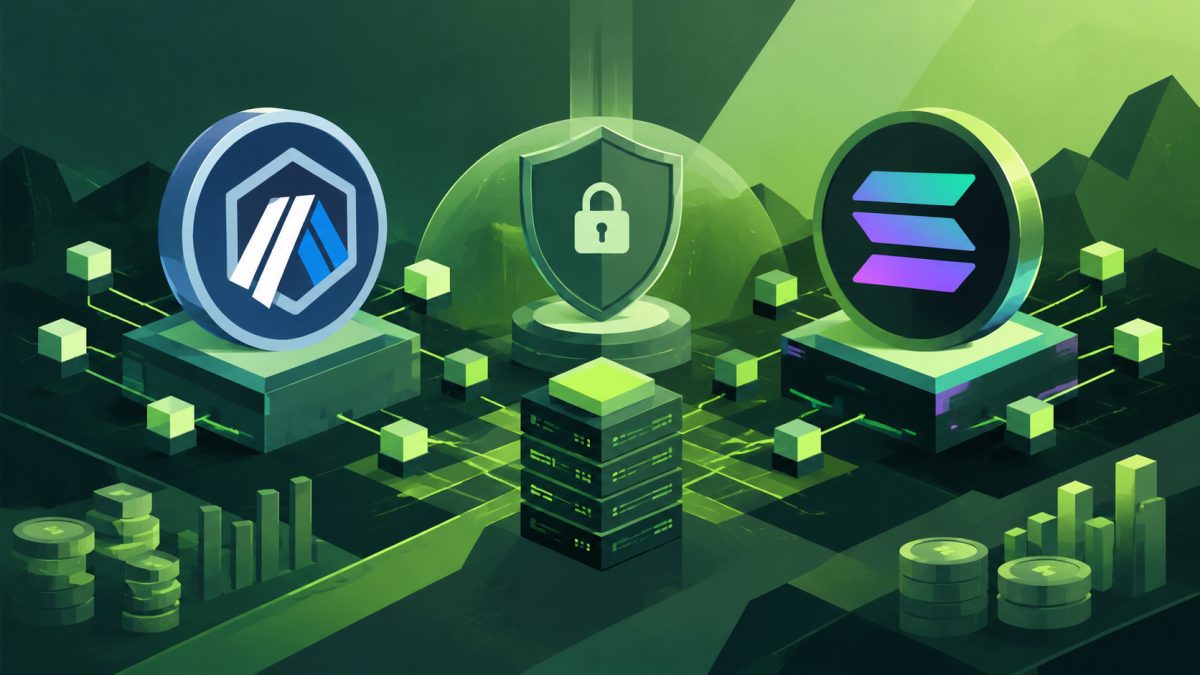
Arbitrum vs. Solana: The Real Cost of MEV Protection and Single Sequencer Debate
TREE NEWS reports: On September 6, Arbitrum co-founder Steven Goldfeder and Solana co-founder Toly engaged in a heated public debate over transaction fees, MEV protection, and the merits of single-sequencer versus permissionless models. The exchange highlights a fundamental tension in blockchain design: how to balance low visible fees against hidden costs like sandwich attacks and adverse price slippage.
News Summary
Goldfeder argued that comparing surface-level transaction fees is misleading. He pointed out that Arbitrum One and Robinhood Chain actively protect users from front-running and most harmful MEV, whereas some low-fee chains may impose higher implicit MEV costs on retail traders through sandwich attacks. Toly countered by citing data that Arbitrum’s current bid-ask spreads are wider and its fees higher. He estimated that even just the 10% fee split on Arbitrum exceeds the cost of sandwich attacks by roughly 10 times, before accounting for slippage. Toly further argued that a single sequencer maximizing shareholder value cannot outperform a permissionless, competitive market.
Industry Analysis
The debate underscores a critical trade-off in L2 and high-throughput chain design. On one hand, single sequencers (like Arbitrum) offer predictable ordering and can implement MEV mitigation strategies, such as encrypted mempools or sequencing auctions that internalize MEV. On the other hand, they introduce centralization risks and potential rent extraction by the sequencer operator. Solana’s approach—allowing anyone to participate in transaction ordering through a competitive validator set—aims to minimize such rents but may expose users to more competitive MEV extraction, including sandwich attacks.
Toly’s point about bid-ask spreads is crucial. Even if a chain has zero explicit fees, if the execution price is poor due to MEV or liquidity fragmentation, users end up paying more. Arbitrum’s fee model, which includes a 10% cut to the sequencer, might indeed be higher than the average MEV loss on Solana, especially for retail-sized trades. However, the comparison is not purely quantitative: MEV protection also provides a better user experience and predictability, which can be valuable for institutional adoption.
Forward-Looking Perspective
This debate is far from settled, but it signals a maturing market where users and developers are becoming more sophisticated about total cost of ownership. As L2s and high-performance chains compete for liquidity, we may see hybrid models emerge—such as based rollups or shared sequencers—that combine the benefits of competitive ordering with MEV internalization. For now, the ‘cheapest’ chain is not necessarily the most economical, and the industry is still learning how to measure true user costs.