PolyFlow App Launches: One App for Global Assets, Bridging Fiat, Stablecoins, and On-Chain Finance
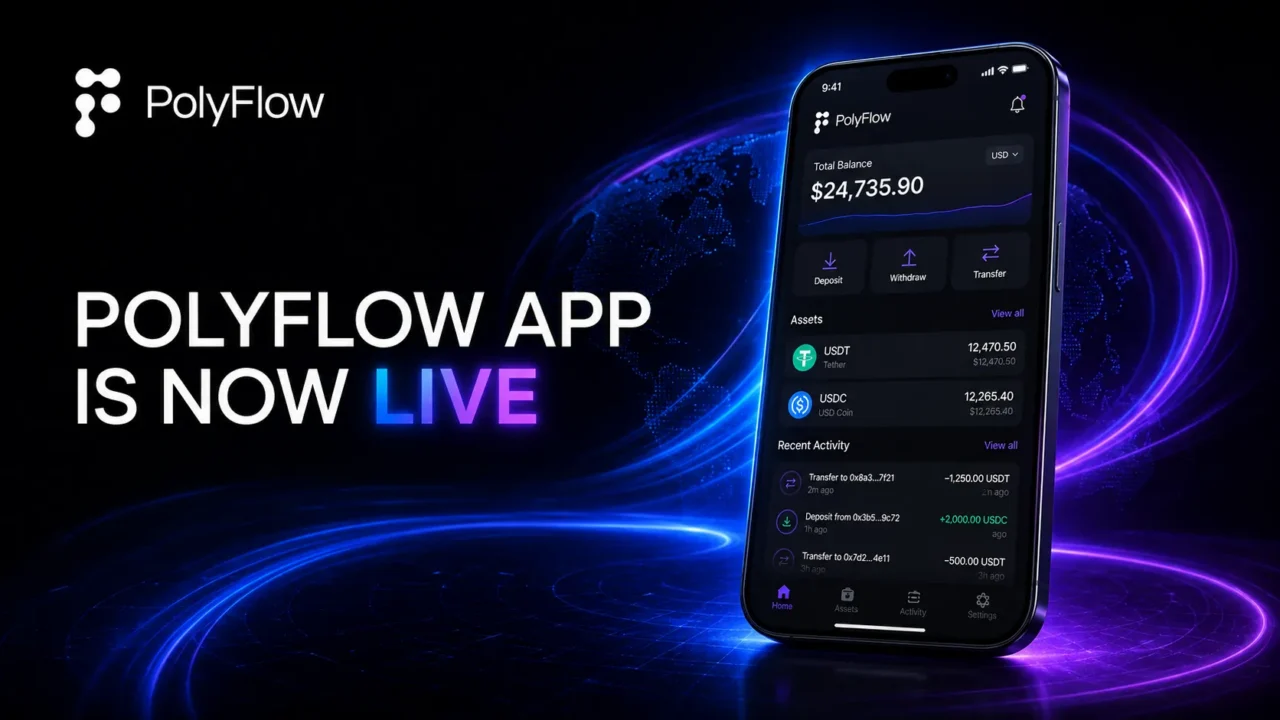
PolyFlow has officially launched its flagship application, promising users a unified gateway to fiat currencies, stablecoins, global payments, and a suite of on-chain financial services. The app aims to collapse the traditional barriers between conventional banking and decentralized finance (DeFi), offering a single account to manage a diversified global portfolio.
News Summary
The PolyFlow App is now live, marking a significant step in the convergence of traditional finance (TradFi) and blockchain-based assets. With one account, users can reportedly connect their fiat banking rails, hold and transact in stablecoins, execute cross-border payments, and access various decentralized financial products. This launch positions PolyFlow within the rapidly growing Real World Asset (RWA) tokenization sector, which seeks to bring real-world value onto blockchain rails for increased efficiency, transparency, and accessibility.
Industry Analysis
The launch of PolyFlow reflects a broader industry trend: the blurring line between CeFi and DeFi. By integrating fiat on-ramps with on-chain yield opportunities, PolyFlow addresses a critical pain point for users—the fragmented nature of current financial tools. Traditionally, investors must juggle multiple platforms: a bank account for fiat, an exchange for crypto, and separate wallets for DeFi protocols. PolyFlow’s ‘all-in-one’ approach could significantly lower the barrier to entry for mainstream adoption, particularly for users who are curious about digital assets but are deterred by the technical complexity.
Moreover, the app’s emphasis on global payments and stablecoin support aligns with the growing demand for faster, cheaper cross-border transactions. In a world where remittances and international business payments are still plagued by high fees and slow settlement times, solutions like PolyFlow could offer a compelling alternative. From a regulatory perspective, offering both fiat and on-chain services in a single platform necessitates robust compliance frameworks, and PolyFlow’s success will partly depend on its ability to navigate diverse jurisdictional requirements while maintaining a seamless user experience.
The move also underscores the increasing institutional and retail interest in RWA tokenization. By providing an accessible interface to assets like tokenized money market funds, treasuries, or even real estate, PolyFlow could help bridge the gap between the $400+ trillion traditional asset market and the relatively nascent DeFi ecosystem. This isn’t just about convenience; it’s about unlocking liquidity and creating new investment opportunities that were previously inaccessible to the average user.
Forward-Looking Perspective
As PolyFlow scales, the key metrics to watch will be user adoption, transaction volumes, and the diversity of on-chain services offered. The app’s roadmap will likely include deeper integrations with major DeFi protocols, lending markets, and perhaps even tokenized securities. If successful, PolyFlow could serve as a blueprint for other fintech companies looking to merge the best of both financial worlds.
However, challenges remain, including security risks inherent to smart contracts, potential regulatory crackdowns, and competition from established players like banks and crypto exchanges that are also expanding their offerings. The future of finance may not be a single ‘super app’ but an ecosystem of interoperable platforms. Yet, with its ambitious vision, PolyFlow is positioning itself at the forefront of this evolution, potentially reshaping how we think about and manage our global assets.