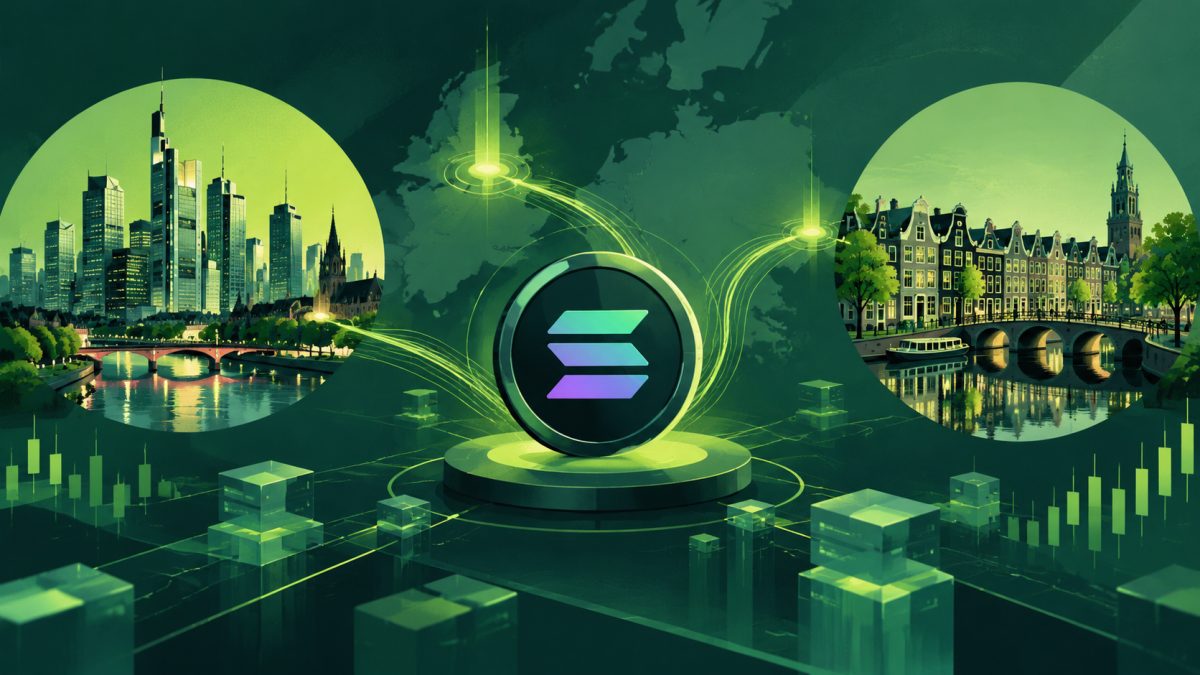
Solana’s Geographic Concentration Raises Decentralization Questions
TREE NEWS reports: New data from on-chain analytics firm Glassnode reveals that over half of all Solana blocks are now generated from just two European cities: Frankfurt and Amsterdam. Frankfurt accounts for 33% of block production, while Amsterdam contributes 19%. Together, these cities host 310 validators, representing 46% of the network’s total validator count.
What This Means for Solana’s Decentralization
This geographic clustering is a double-edged sword. On one hand, it highlights the robust institutional interest in Solana from European hubs, which often have favorable regulatory environments and advanced digital infrastructure. On the other, it raises concerns about resilience. If a regional event—such as a power outage, a regulatory crackdown, or a geopolitical crisis—were to disrupt these areas, a significant portion of the network could be at risk.
Decentralization is a core tenet of blockchain technology, and such concentration in a single region contradicts the ideal of a globally distributed network. While Solana’s architecture is designed for high throughput, its reliance on a relatively small number of validators in a concentrated area could be a point of vulnerability.
Industry Implications
- Validator Diversity: The data underscores the need for greater geographic diversity among validators. Projects and community initiatives might incentivize validators in other regions, such as Asia or North America, to balance the network’s footprint.
- Regulatory Risk: With European regulators increasingly scrutinizing crypto, a concentration of validators in EU jurisdictions could expose the network to specific regulatory actions. For example, if the EU imposes stricter operational requirements on validators, it could affect a large share of the network.
- Infrastructure Resilience: The findings may prompt discussions about failover mechanisms and the importance of distributed cloud providers. Currently, many validators may be hosted on centralized cloud services, which could create additional points of failure.
Looking Ahead
As Solana continues to grow its ecosystem, the geographic distribution of its validators will be a critical metric to watch. The network has already faced outages in the past, and addressing these centralization risks is essential for long-term stability. Community governance may need to consider proposals that encourage broader participation, while service providers could explore more resilient hosting options.
Ultimately, the Glassnode data serves as a wake-up call for the Solana community to actively foster a more decentralized and resilient network infrastructure.