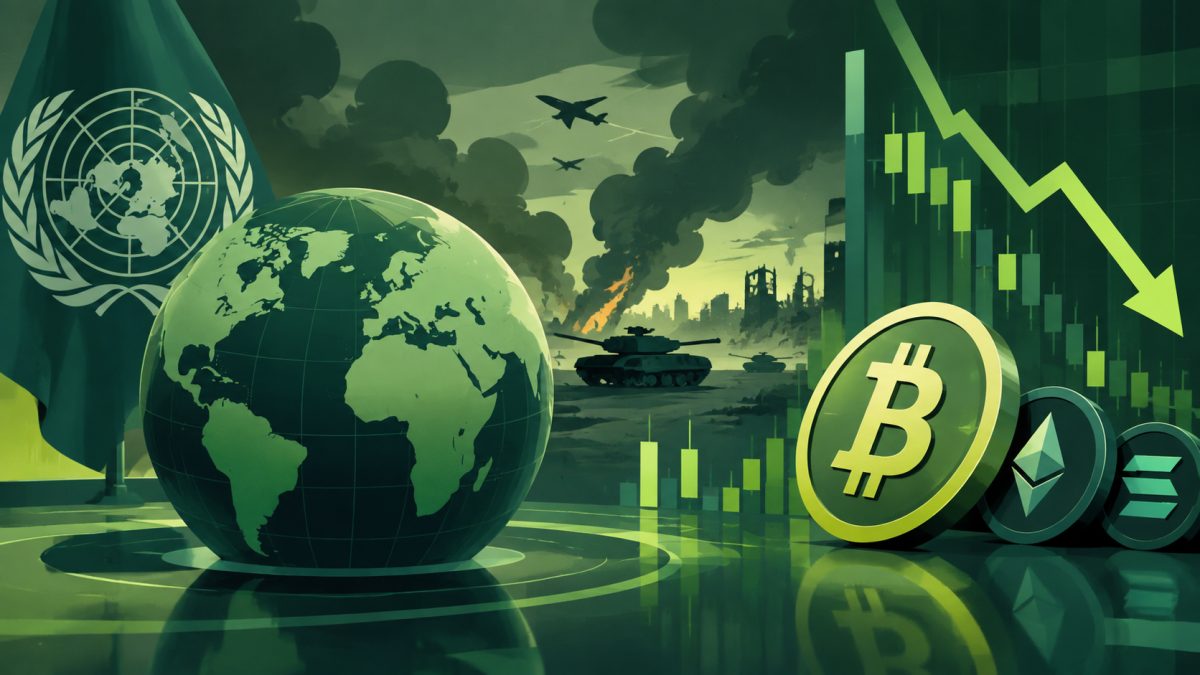
UN Report Flags War as Fastest-Rising Global Risk
TREE NEWS reports: A United Nations global risk survey has found that the risk of a large-scale war climbed 16 places in its ranking versus the 2024 edition — the largest jump of any of the 28 risks tracked. Among roughly 1,300 respondents drawn from governments, business, civil society and the UN system, 36% said a major war could occur within one year, while 76% expected one within seven years. Global financial crisis, supply-chain breakdown and cyber insecurity also rose in the rankings, while environmental risks such as biodiversity loss and resource scarcity slipped — though climate inaction remained a top concern.
Why This Matters for Digital Asset Markets
Geopolitical risk is now a first-order variable for crypto pricing, not a background noise. Bitcoin has repeatedly traded as a high-beta proxy for global liquidity and a hedge-of-last-resort narrative during conflict escalations. A world in which 76% of institutional and policy respondents expect a major war within seven years implies structurally higher defense spending, more fragmented supply chains and persistent inflation pressure — all of which feed into the macro backdrop that has driven crypto’s correlation with risk assets.
Key Transmission Channels
- Safe-haven bid: Escalation events have historically produced sharp, short-lived BTC rallies followed by drawdowns as liquidity tightens.
- Sanctions and settlement: War risk accelerates interest in non-dollar settlement rails, stablecoins and tokenized treasuries as neutral collateral.
- Cyber risk: The report’s rising cyber insecurity ranking directly implicates blockchain infrastructure, custody and exchange security budgets.
- Supply chains: Commodity and shipping shocks feed inflation, complicating central bank rate paths that crypto liquidity depends on.
Positioning Implications
For allocators, the report argues against treating crypto as a pure risk-on trade. The asset class increasingly sits at the intersection of macro hedging and technology exposure. Protocols with real revenue, stablecoin issuers with regulatory clarity, and tokenized real-world asset platforms are likely to attract capital that wants crisis resilience with yield. Meanwhile, defense-adjacent and cyber-security narratives may pull speculative flows away from long-tail altcoins.
Forward Look
Watch how this risk framing filters into sovereign wealth fund mandates, insurance pricing for digital asset custodians, and stablecoin reserve composition. If war risk keeps climbing in future surveys, expect more institutional demand for permissionless, censorship-resistant settlement — and more regulatory scrutiny of the same rails. The crypto market’s next major regime shift may be driven less by halving cycles than by geopolitics.



