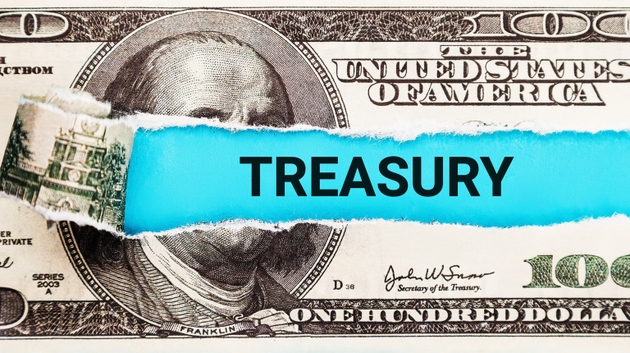
Long-Bond Yields Break to Two-Decade Highs
TREE NEWS reports: The U.S. 30-year Treasury yield climbed to 5.6%, its highest level since 2002, extending a relentless climb in long-dated borrowing costs. The move caps a period in which the long end of the curve has been repriced sharply higher, driven by a combination of heavy government issuance, sticky inflation expectations, and a reassessment of how high the Federal Reserve will need to keep policy rates for how long.
Unlike a simple risk-off episode, this is a term-premium story. Investors are demanding more compensation to hold duration — the sensitivity of a bond’s price to changes in interest rates — at a time when the supply of Treasuries is growing and the buyers who once absorbed that supply at low yields (notably foreign central banks and price-insensitive asset managers) are proving less reliable.
Why the Long End Is Selling Off
Three forces are doing most of the work:
- Supply and deficits: Persistent fiscal deficits mean the Treasury must issue a steady stream of coupons. When supply rises faster than demand, prices fall and yields rise.
- Inflation uncertainty: Even as headline inflation has cooled from its peak, services inflation and wage growth remain firm enough to keep the market skeptical that 2% is a durable destination.
- Term premium repricing: After more than a decade of quantitative easing suppressing long yields, the market is rebuilding the extra yield investors demand for holding long bonds instead of rolling short ones.
A 5.6% 30-year yield is not merely a number. It is a new discount rate for every long-duration asset in the world.
Market Implications
Equities
Higher long yields compress equity valuations, especially for growth and technology names whose cash flows sit far in the future. The pressure is most acute for unprofitable, high-multiple stocks and for sectors that behave like bond proxies — utilities, REITs, and consumer staples. Banks can benefit from a steeper curve, but only if the move reflects growth rather than fiscal stress. Broadly, expect rotation away from duration-sensitive equities and toward cash-generative, shorter-duration businesses.
Bonds
The long end is now offering real income not seen in a generation. That is a double-edged sword: it attracts yield buyers, but it also raises the risk of mark-to-market losses for anyone who bought duration earlier. The curve is likely to stay steep and volatile until either inflation convincingly falls or fiscal issuance slows.
Crypto
Crypto trades as the ultimate long-duration, liquidity-sensitive asset. When the risk-free rate rises, the opportunity cost of holding non-yielding assets like Bitcoin increases, and speculative capital tends to retrench. A sustained move above 5.5% on the 30-year is a headwind for crypto beta, though Bitcoin’s growing role as a portfolio diversifier and its halving-driven supply dynamics can partially offset the macro drag.
Commodities
A stronger dollar and higher real yields are typically negative for gold, which pays no yield. Industrial metals are caught between higher financing costs and any growth signal embedded in the yield rise. Oil remains more supply-and-geopolitics driven, but demand expectations will be tested if higher yields slow the economy.
Currencies
Higher U.S. yields tend to support the dollar, particularly against low-yielding currencies like the yen and the euro. The risk is that a disorderly rise in long yields eventually undermines confidence in U.S. fiscal sustainability, which would paradoxically weaken the dollar even as rates rise.
Key Takeaways for Investors
- Duration is expensive again. Long bonds now carry real income, but also real mark-to-market risk. Laddering and shorter maturities reduce that risk.
- Valuation discipline matters. In a 5.6% long-bond world, the bar for owning high-multiple equities is higher.
- Watch the term premium, not just the Fed. The long end is being driven by supply and inflation expectations as much as by policy rates.
- Diversification still works, but correlation risk is rising. Stocks and bonds can fall together when yields rise for fiscal reasons.
- Cash is a real asset again. Yields at these levels make short-duration instruments a legitimate portfolio allocation rather than a parking spot.
The 5.6% print is a milestone, not a terminus. What matters next is whether this is a repricing toward a new equilibrium or the start of a disorderly bond market. Investors should position for the former while hedging against the latter.