Longtime Tech Bull Dan Ives Says AI Spending Wave Is Bigger Than Investors Think
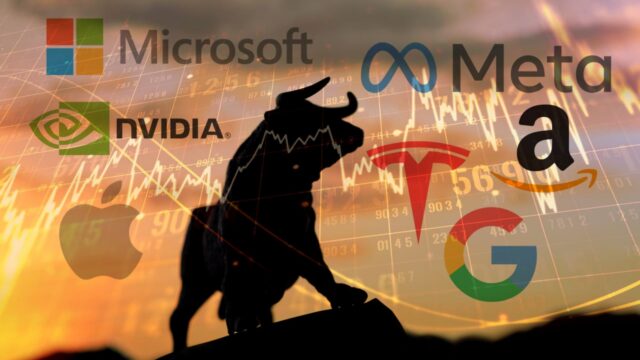
TREE NEWS reports: Veteran technology analyst Dan Ives has issued a bullish call on the next leg of the artificial-intelligence trade, warning that investors are “underestimating the scale and scope” of the AI spending wave and laying out five stocks he believes are best positioned going into 2027. The call arrives as megacap technology names continue to dominate index returns and as debate intensifies over whether AI capital expenditures can keep growing at their current pace.
Ives’ thesis rests on a straightforward premise: the buildout of AI infrastructure — data centers, chips, networking, power, and software — is not a one- or two-year cycle but a multi-year capital deployment program that will touch nearly every layer of the technology stack. He frames the current environment as an early- to mid-innings opportunity rather than a late-cycle bubble, arguing that consensus earnings estimates for AI-exposed companies still fail to capture the magnitude of spending commitments already announced by hyperscalers and enterprises.
Why the Call Matters for Markets
Analyst commentary from high-profile bulls rarely moves markets on its own, but it can matter at the margin when it reinforces an existing narrative. Ives’ comments land in a market that has been unusually concentrated, with a handful of AI-linked megacaps driving a disproportionate share of index gains. If his view is right, the implications ripple well beyond a single stock pick.
- Equities: A sustained AI capex cycle would favor semiconductor designers, cloud hyperscalers, networking and optical component makers, power and cooling suppliers, and enterprise software vendors embedding AI into their products. It would also support the broader S&P 500 and Nasdaq-100, given the heavy index weight of AI leaders.
- Bonds: Massive data-center and power infrastructure spending requires financing. Heavy investment-grade issuance from hyperscalers and utilities could pressure long-dated yields at the margin, though strong demand for high-quality credit has so far absorbed supply.
- Commodities: AI is an electricity story as much as a semiconductor story. Rising power demand supports natural gas, uranium, and copper — the latter essential for grid buildout and data-center wiring.
- Crypto: Miners with access to cheap power and existing data-center footprints have been repositioning toward AI hosting and high-performance computing. A durable AI capex wave could accelerate that pivot, tightening the link between certain crypto-linked equities and the AI trade.
- Currencies: Continued US leadership in AI investment tends to support the dollar via capital inflows, though any shift in rate expectations could offset that dynamic.
The Bear Case Worth Watching
The obvious risk to Ives’ thesis is that AI spending is front-loaded and that returns on invested capital disappoint. If enterprise adoption lags the infrastructure buildout, or if hyperscalers signal a pause, the same names that led the rally could lead a drawdown. Valuation, concentration risk, and the circular nature of some AI investment flows — chipmakers investing in customers who buy their chips — are all legitimate concerns that bulls tend to downplay.
There is also a macro dimension. AI enthusiasm has helped equities shrug off higher-for-longer interest rates and geopolitical uncertainty. If rate expectations shift materially or growth slows, even a strong secular theme can be overwhelmed by multiple compression.
Key Takeaways for Investors
- The AI trade is being reframed as a multi-year capex cycle, not a single product launch — which argues for patience over timing.
- Diversification across the AI stack (chips, power, networking, software) may reduce single-name risk in a concentrated theme.
- Watch hyperscaler capex guidance and enterprise adoption data as the real scorecard, not analyst price targets.
- AI’s commodity footprint — especially electricity and copper — is an underappreciated second-order trade.
- Concentration cuts both ways: the same leadership that drives index gains can amplify drawdowns if the narrative cracks.