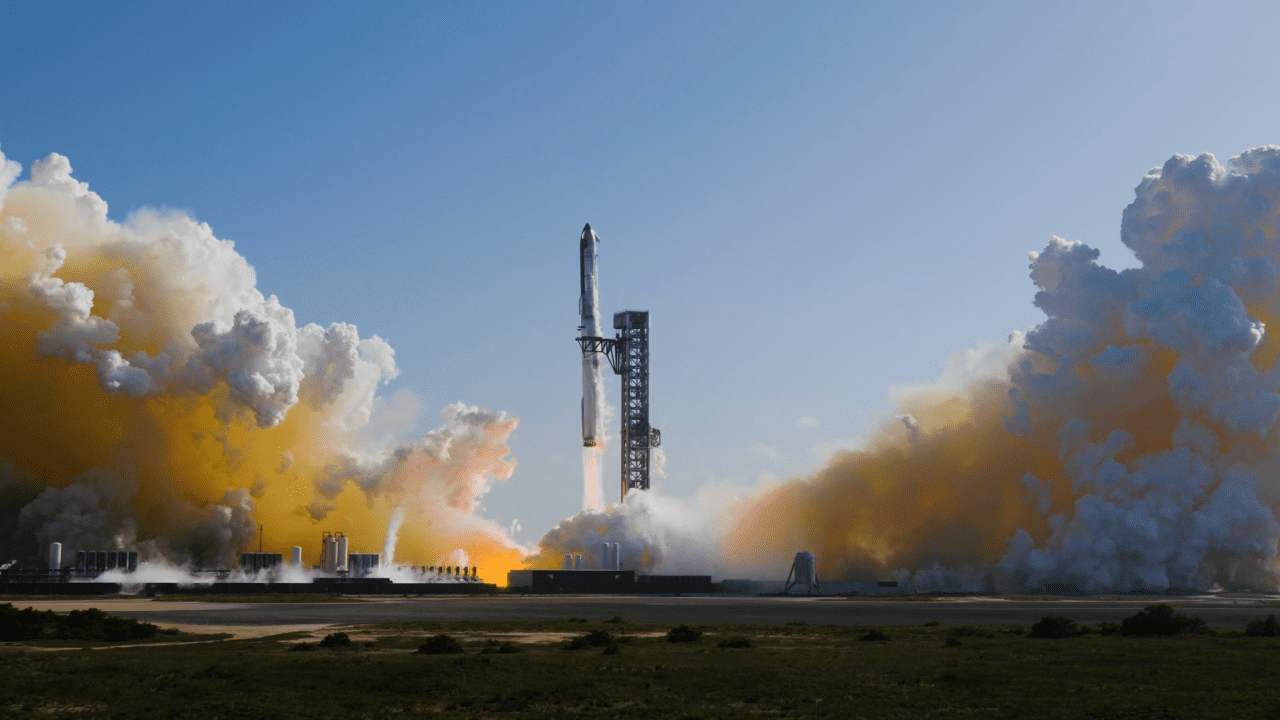
A Launch Bottleneck Becomes a Capital Magnet
TREE NEWS reports: A widening shortage of commercial rocket launches has triggered an unprecedented wave of capital deployment into space infrastructure and applications, with investors committing roughly $100 billion to the sector. The dynamic is straightforward: demand for orbital access — driven by satellite broadband constellations, Earth-imaging networks, defense payloads and scientific missions — has outrun available launch capacity, and that imbalance is forcing capital to flow toward anyone who can add supply or monetize the constraint.
SpaceX remains the dominant launch provider, but its manifest is effectively booked out for years, and rival operators have yet to scale reliably. The result is a seller’s market for launch slots, which in turn has made downstream space businesses — satellite manufacturers, ground-station operators, component suppliers and data-analytics firms — suddenly investable at scale.
Why the Bottleneck Is Bullish for the Whole Value Chain
When launch capacity is scarce, economics shift in three distinct ways:
- Launch providers gain pricing power. Scarcity lets operators raise per-kilogram prices, improve margins and prioritize the highest-value payloads, which tends to lift valuations across publicly traded and private launch names.
- Downstream players get a demand tailwind. Satellite operators that already have hardware in orbit can monetize connectivity and imagery today while competitors wait in the queue.
- Enabling technologies attract capital. Reusable rockets, in-space manufacturing, orbital servicing, laser communications and small-sat buses all become strategic bottlenecks worth funding.
The $100 billion figure matters less as an absolute number than as a signal: institutional capital has decided that space is no longer a speculative theme but an infrastructure asset class with identifiable cash flows.
Market Implications Across Asset Classes
Equities
The clearest beneficiaries are aerospace and defense primes with launch or satellite exposure, satellite communications operators, and specialized component makers. Pure-play space names and space-focused ETFs are likely to see elevated flows and volatility. Defense-linked contractors may benefit disproportionately as governments treat launch access as a national-security asset.
Bonds and Credit
Capital-intensive space infrastructure — ground stations, manufacturing facilities, constellations — will increasingly be financed with debt. Expect more project finance and convertible issuance from space companies, which could pressure credit spreads in the sector if leverage climbs faster than revenue.
Crypto and Adjacent Markets
Space and crypto intersect at the edges: satellite-based connectivity for remote blockchain nodes, decentralized physical infrastructure networks (DePIN) that sell bandwidth and compute, and tokenized space-data marketplaces. These remain small, but they are a growing destination for risk capital that would otherwise sit in speculative crypto assets.
Commodities and Currencies
Rising launch cadence supports demand for specialized materials — titanium, carbon composites, rare-earth elements used in avionics and propulsion. The dollar remains the settlement currency for most aerospace contracts, reinforcing its role in a capital-intensive, geopolitically sensitive industry.
Key Takeaways for Investors
- Scarcity is the trade. The launch bottleneck, not launch success, is what is repricing the sector right now.
- Look downstream. Companies already operating in orbit can generate revenue while new entrants wait for slots.
- Watch government demand. Defense and civil space budgets are the most durable source of launch demand.
- Beware execution risk. Space remains capital-hungry, technically unforgiving and prone to delays; not every funded company will reach orbit.
- Position for volatility. Space equities are likely to trade on headlines — test flights, contract awards, budget decisions — rather than steady fundamentals.
The launch shortage is not a temporary glitch. It is a structural mismatch between ambition and capacity, and capital is responding accordingly. For investors, the opportunity lies less in picking the next rocket and more in owning the infrastructure that every rocket depends on.