Korea’s 10th Circuit Breaker of the Year Exposes a Buyers’ Strike
October 15 was labeled a “Black Thursday” by Korean media. The KOSPI opened down 5.59%, extended losses past 8% in the afternoon to trigger a circuit breaker, halted trading for 20 minutes, and closed at 5,554.22. The headline number is the drop. The more important number is who stopped bidding.
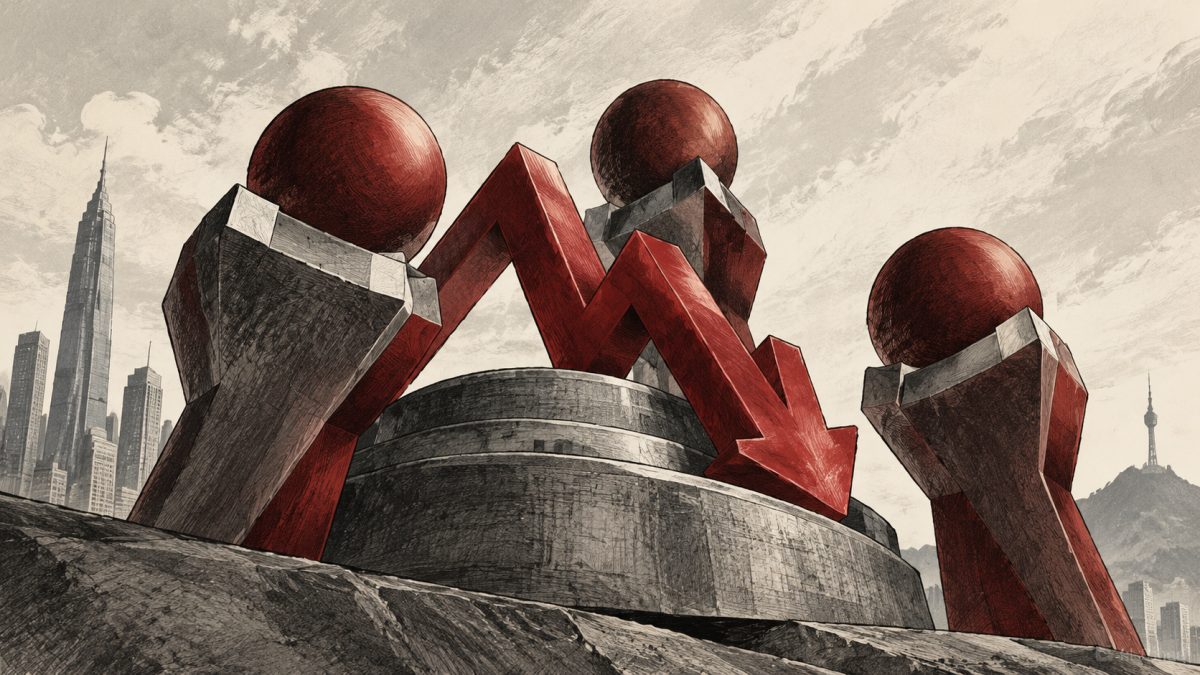
Three Pools of Demand, Draining Simultaneously
- Foreign investors: roughly $131 billion has exited Korean equities year-to-date, one of the largest outflows on record for the market.
- Corporate buybacks: the two chip giants have run roughly 55 trillion won of repurchases close to completion — a mechanical bid that is now fading.
- Retail leverage: margin balances have fallen from a June peak of 38.6 trillion won to about 33 trillion won, meaning retail is deleveraging rather than buying the dip.
When the price falls, what is missing is the counterparty. Foreigners are selling, corporates are done buying, and retail is being forced to reduce exposure. That is not a valuation problem; it is a market-microstructure problem, and it is far harder to fix with policy rhetoric.
Why Asia Is Being Dragged In
Korea is the highest-beta expression of the AI semiconductor trade in Asia. Its two chip champions are levered to the same capex cycle that drives Taiwan, Japan’s semiconductor supply chain, and — increasingly — crypto’s AI-compute narrative. When the marginal buyer of AI hardware exposure steps back, the correlation across Asian tech indices tightens. A KOSPI circuit breaker is not a local event; it is a signal about global risk appetite for the AI trade.
The Crypto Read-Through
For digital-asset markets, the lesson is about liquidity reflexivity. Crypto has spent 2024–2025 pricing in the same AI-adjacent growth story through tokenized compute, GPU networks, and chip-linked equities. If the equity bid for that narrative is thinning, crypto’s high-beta AI proxies will feel it first. Meanwhile, the deleveraging in Korean retail margin accounts rhymes with what happens on-chain when funding rates normalize and perp open interest unwinds — the same three-way retreat of foreign flow, corporate bid, and retail leverage.
What to Watch
Three things matter from here: whether foreign outflows stabilize after the circuit breaker, whether the chip giants announce a new repurchase tranche to replace the expiring one, and whether Korean retail margin balances find a floor. Until at least two of those three turn, rallies in Korean equities — and by extension in Asia’s AI-linked crypto complex — are more likely to be sold than bought. The market does not need a new narrative. It needs a bid.