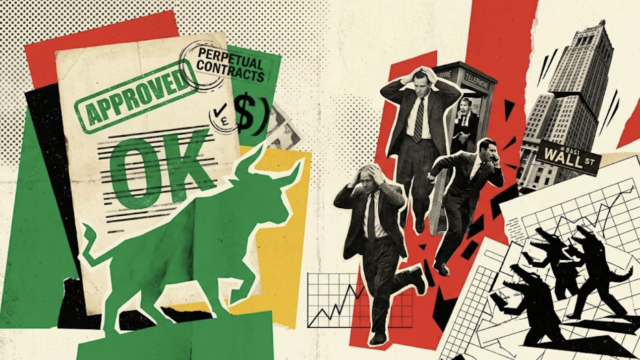
Cboe and Citadel Challenge CFTC’s Approval of Single-Stock Perpetual Derivatives
TREE NEWS reports: Cboe Global Markets, Citadel Securities, and the Healthy Markets Association have filed a lawsuit against the U.S. Commodity Futures Trading Commission (CFTC) in the Southern District of New York, seeking to vacate the agency’s approval of perpetual futures contracts tied to individual U.S. equities. The group, operating under the newly formed Capital Markets Alliance (CMA), argues that these products are legally security-based swaps and should fall under the jurisdiction of the Securities and Exchange Commission (SEC), not the CFTC.
The Legal Battle Over Product Classification
The dispute centers on whether single-stock perpetual contracts—derivatives that track the price of a single equity without an expiry date—constitute futures or security-based swaps. The CFTC’s approval, reportedly granted to an exchange earlier this year, has raised alarms among traditional market participants who fear regulatory arbitrage and potential risks to market integrity.
The CMA’s complaint asserts that the CFTC exceeded its authority by approving products that exhibit the characteristics of security-based swaps, which are subject to SEC oversight under the Dodd-Frank Act. The alliance is also requesting a stay of the approval during the litigation.
Industry Implications and Market Impact
This lawsuit underscores growing tensions between traditional financial institutions and crypto-native trading venues that are pushing the boundaries of derivative products. Single-stock perpetuals have gained traction in offshore crypto markets, offering leveraged exposure without expiration. If allowed to trade on U.S. regulated venues, they could blur the lines between traditional finance and decentralized finance.
- Regulatory turf war: The case could set a precedent for how novel derivatives are classified, impacting future product approvals.
- Market structure: A victory for the CMA would reinforce the SEC’s authority over equity-linked products, potentially slowing the introduction of innovative derivatives.
- Crypto convergence: The outcome may influence how DeFi protocols design tokenized derivatives for U.S. users.
Forward-Looking Perspective
As the lines between traditional and digital asset markets continue to blur, this legal challenge highlights the need for clearer regulatory frameworks. The court’s decision will likely have far-reaching consequences for product innovation, investor protection, and the competitive landscape among U.S. exchanges. Market participants should monitor the case closely, as it may reshape the boundaries of derivatives regulation for years to come.