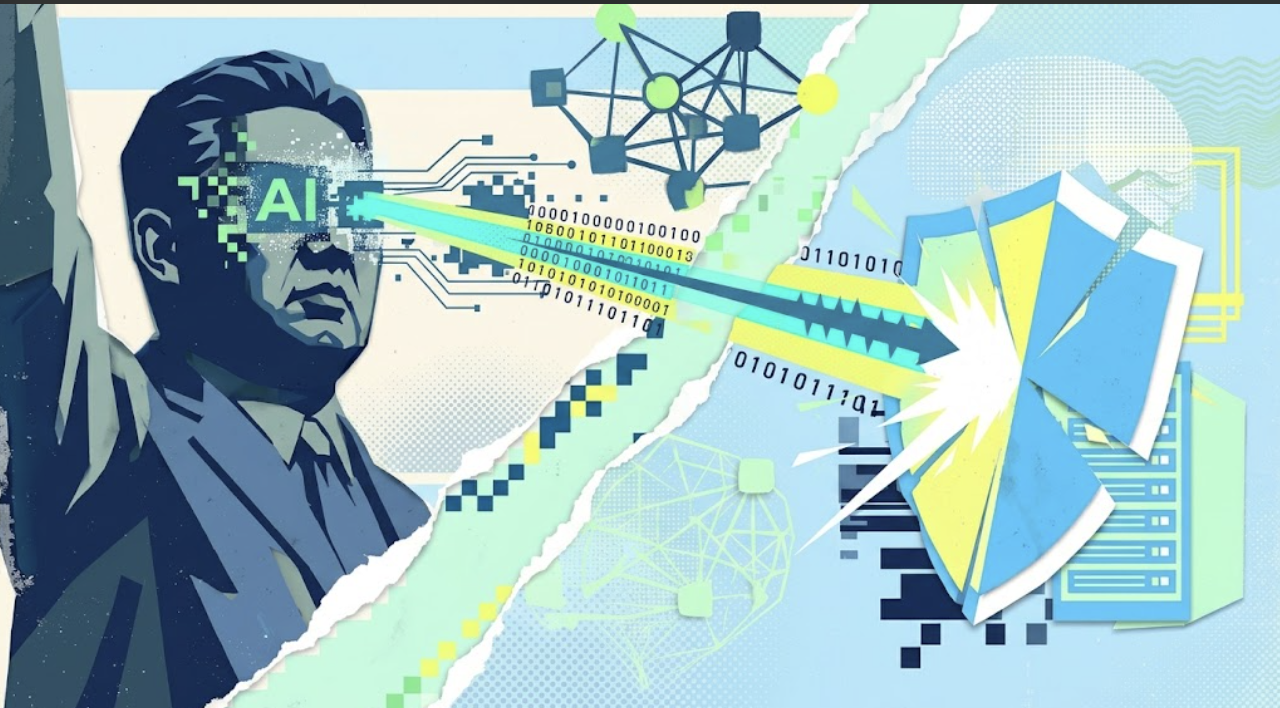
North Korea’s $11.8 Billion Crypto Heist: An AI-Powered Asymmetric War
North Korean state-backed hackers have stolen $11.87 billion in cryptocurrency to date, with losses attributed to Pyongyang accounting for nearly 89% of all reported crypto theft incidents in 2025. The figure is roughly equivalent to 45% of North Korea’s GDP, underscoring how digital asset theft has become a core revenue stream for the sanctioned regime.
From Resume Fraud to AI-Generated Phishing
The Lazarus Group and its subunits have long relied on social engineering—fake LinkedIn profiles, bogus job offers, and malware-laced coding tests—to infiltrate crypto exchanges, DeFi protocols, and wallet providers. But the playbook is evolving. Investigators now point to AI-generated phishing content, deepfake video calls, and tampered developer tools as force multipliers that lower the cost and raise the success rate of attacks.
The use of AI to alter software development kits and open-source dependencies is particularly alarming, as it allows attackers to compromise multiple targets through a single poisoned update. This shifts the threat from isolated exploits to systemic supply-chain risk.
An Asymmetric Battlefield
The economics of this conflict are starkly asymmetric. A single successful bridge exploit can net hundreds of millions of dollars, while defenders must secure every endpoint, smart contract, and employee. North Korea’s ability to fund operations with stolen assets—often laundered through mixers and over-the-counter brokers—creates a self-reinforcing cycle.
Industry analysts note that the $11.8 billion figure likely underestimates total losses, as many incidents go unreported or are classified as insider theft. The concentration of losses in 2025 suggests both an intensification of attacks and improved attribution capabilities by blockchain forensics firms.
Implications for the Industry
- Supply-chain security: Projects must audit third-party dependencies and enforce code-signing, as AI-assisted tampering becomes more common.
- AI-driven defense: Security firms are deploying machine learning to detect anomalous on-chain behavior and phishing patterns in real time.
- Regulatory pressure: Expect tighter know-your-customer rules for developers and stronger sanctions enforcement on mixers and OTC desks.
- Insurance and risk models: DeFi protocols may face higher premiums and stricter underwriting as state-sponsored threats grow.
Looking Ahead
The AI arms race between North Korean operators and crypto defenders is only beginning. As generative models become cheaper and more accessible, the barrier to entry for sophisticated social engineering drops. The industry’s response—greater information sharing, AI-native threat detection, and coordinated international sanctions—will determine whether the asymmetric advantage shifts back toward defenders. For now, the $11.8 billion tally stands as a stark warning that crypto’s security model must evolve as fast as its adversaries.