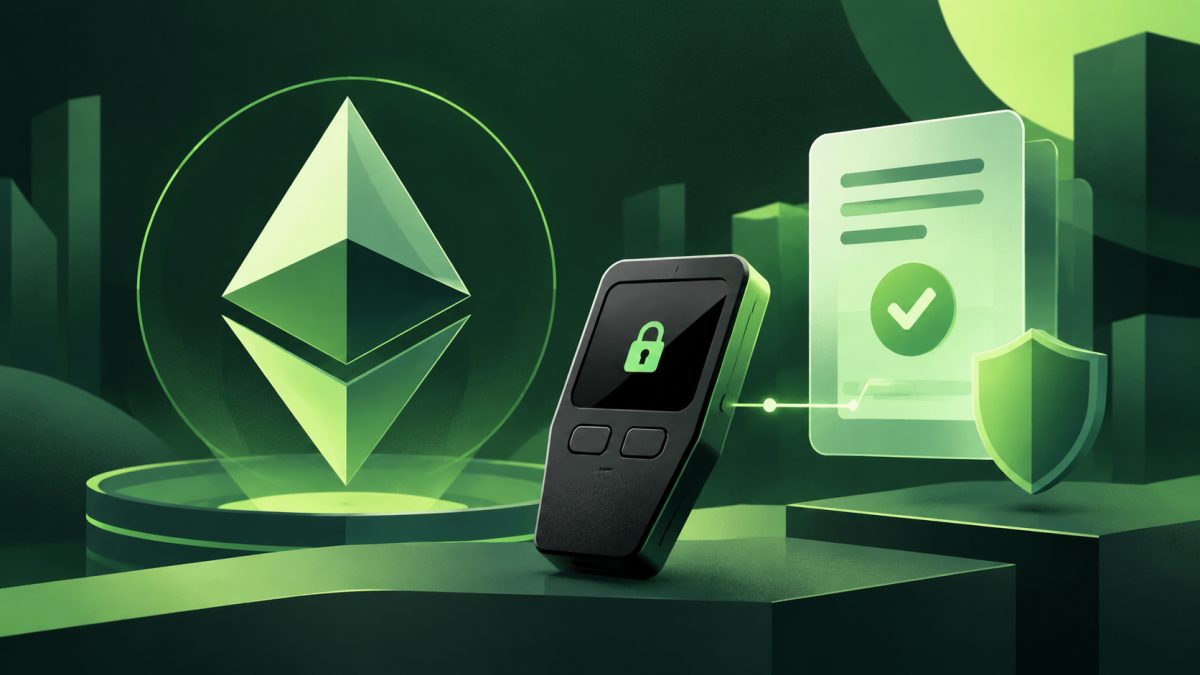
Ethereum Foundation: Trezor Now Supports ERC-7730 Clear Signing Standard
TREE NEWS reports: The Ethereum Foundation announced that hardware wallet provider Trezor has implemented ERC-7730, enabling Clear Signing for supported EVM transactions. With this integration, Trezor devices can parse and display transaction operations, token details, and other critical information directly on their trusted screens, significantly reducing the risk of blind signing attacks.
Why Clear Signing Matters
Clear Signing is a security mechanism designed to make transaction details transparent to users before they approve them on a hardware wallet. In traditional setups, users often sign opaque data blobs, which malicious dApps or compromised frontends could exploit to drain funds. By presenting human-readable transaction semantics on the device screen, ERC-7730 bridges the gap between complex smart contract interactions and user comprehension.
For Ethereum and other EVM-compatible chains, this is a pivotal step toward mainstream adoption. Hardware wallets are considered the gold standard for self-custody, but their usability has suffered from the “black box” problem—users must trust that the bytes they sign correspond to the intended action. ERC-7730 changes that by standardizing a machine-readable format that wallets can interpret and display.
Industry Implications
Trezor’s adoption of ERC-7730 could pressure competitors like Ledger and others to follow suit. The standard, proposed by the Ethereum Foundation and industry partners, aims to become the universal language for clear transaction rendering across all hardware wallets. This move also aligns with broader regulatory trends, as clear signing can help demonstrate user protection and reduce fraudulent transactions—a key concern for regulators.
Moreover, Clear Signing enhances the DeFi experience by enabling users to verify complex operations such as token swaps, approvals, and yield farming strategies directly on their device. This could reduce costly errors and phishing incidents, boosting confidence in decentralized applications.
Forward-Looking Perspective
As ERC-7730 gains traction, we can expect more wallet providers and dApp developers to integrate the standard. The next logical step is extending support to multi-chain EVM networks and non-EVM ecosystems like Solana or Polkadot. Additionally, the standard could evolve to include richer display formats, such as images or dynamic data, further enhancing user clarity.
For the broader crypto ecosystem, this development signals a maturation of security practices—moving from “don’t trust, verify” to “don’t sign, understand.” With hardware wallets becoming more transparent, the industry takes another significant stride toward institutional-grade security and user-friendly self-custody.