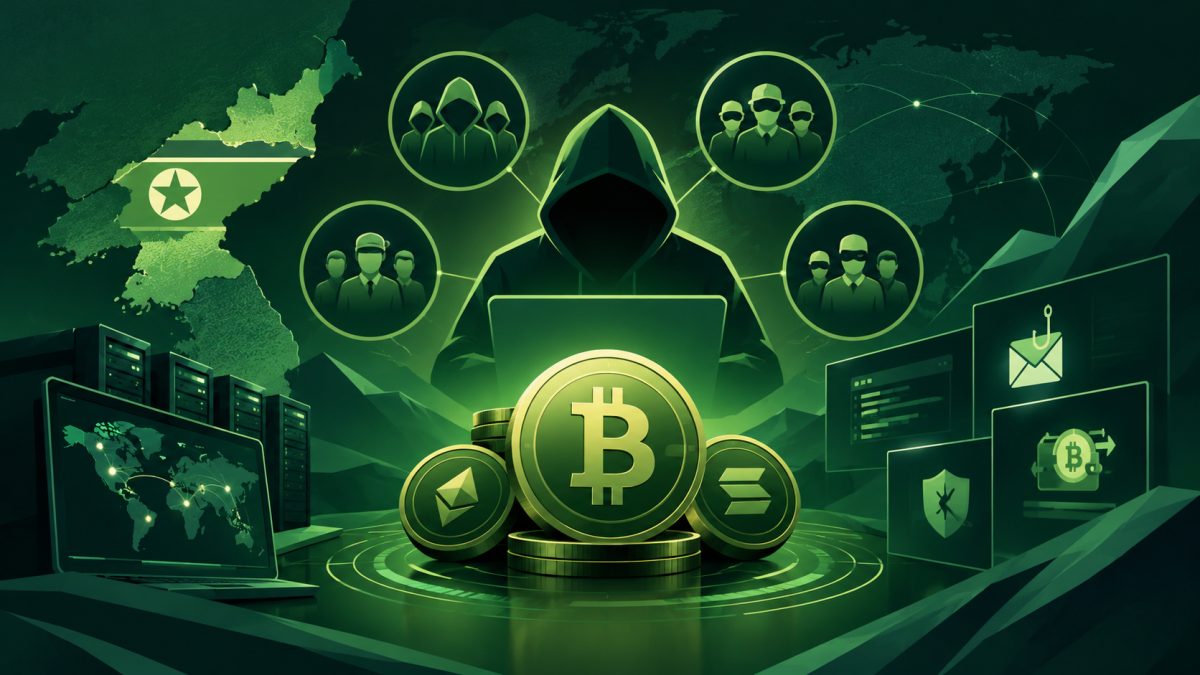
Breaking Down the DPRK’s Cyber Threat Landscape
TREE NEWS reports: A contributor to SEAL 911, the emergency response service for crypto exploits, has shed light on the organized cyber threat posed by North Korea to the cryptocurrency industry. The analysis, shared by the pseudonymous researcher tanuki42, clarifies that the commonly used label ‘Lazarus’ actually encompasses a spectrum of distinct threat actors, each employing unique methodologies and targeting strategies.
Beyond the ‘Lazarus’ Moniker
For years, the crypto community has attributed major hacks—from the $1.5 billion Bybit breach to smaller DeFi exploits—to the Lazarus Group. However, tanuki42’s research indicates that this is an oversimplification. The DPRK’s cyber operations are compartmentalized into multiple specialized units, each with its own command structure, toolkits, and objectives. Some groups focus on large-scale exchange heists, while others specialize in social engineering, fake job offers, or supply chain compromises.
Implications for Crypto Security
This granular understanding is critical for both security professionals and everyday users. It means that defense strategies must be more nuanced than simply ‘block Lazarus IPs.’ The diversity of attack vectors—ranging from malware-laced DeFi protocols to sophisticated phishing campaigns targeting individual holders—demands a multi-layered security approach. Exchanges and protocols must conduct continuous threat modeling that accounts for these distinct adversaries.
Forward-Looking Perspective
As North Korea continues to fund its weapons programs through crypto theft, the industry’s response must evolve. Expect increased collaboration between blockchain analytics firms, law enforcement, and security researchers like those at SEAL 911. The deconstruction of the ‘Lazarus’ umbrella is a positive step—it enables more precise attribution, better threat intelligence sharing, and ultimately, more effective countermeasures. For individual users, the key takeaway remains: verify every interaction, use cold storage, and remain skeptical of unsolicited offers, as the threat is not a monolith but a hydra with many heads.