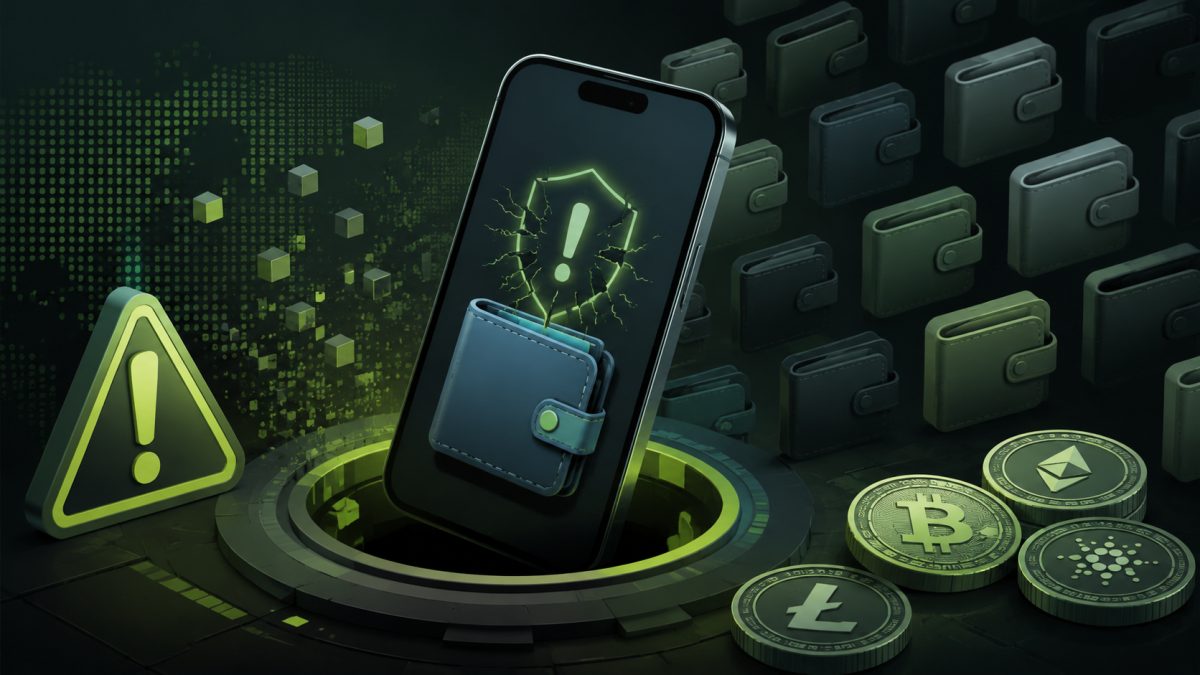
BlueWallet CTO Flags 45 iOS Crypto Wallets Over Severe Security Risks
TREE NEWS reports: BlueWallet’s Chief Technology Officer has completed a sweeping security review of iOS crypto wallets on the App Store, and the findings are uncomfortable for an industry that asks users to trust software with irreversible keys. The audit screened 904 apps labeled as non-custodial wallets, drilled into 494 of them, and ultimately flagged 45 as carrying severe or high-risk security problems. Twenty-three were marked as potentially critical, while 22 were rated high-risk.
What the Red Flags Look Like
The issues identified cut across several categories of wallet design failure:
- Mnemonic phrases or private keys suspected of being uploaded off-device
- Weak random number generation used to create wallets
- Keys stored on a server rather than on the user’s device
- Hardcoded encryption keys embedded in the app
- Unsigned JavaScript loaded at runtime with access to sensitive wallet data
Each of these is a potential single point of failure. Weak randomness can make seed phrases predictable. Server-side key storage directly contradicts the non-custodial label. Hardcoded encryption keys mean every installation shares the same secret. And unsigned remote JavaScript gives an attacker a live channel into the wallet’s most sensitive data.
The CTO also cautioned that the analysis may contain false positives, and stressed that App Store approval and an app’s popularity are not proof of security. That caveat matters: a wallet with millions of downloads can still ship a fatal flaw, and Apple’s review process is not a cryptographic audit.
Why This Matters for the Wallet Market
Self-custody wallets are the front door to crypto. As more users move assets on-chain and as real-world asset tokenization pushes more value into wallets, the cost of a compromised key grows. A seed phrase leaked by a wallet app is not a recoverable event — it is permanent loss of funds.
The audit also highlights a structural problem: the App Store is a distribution channel, not a security certification body. Users have no easy way to distinguish a wallet that has been independently reviewed from one that merely passed a generic app review. That information asymmetry favors malicious or negligent developers.
Forward-Looking Perspective
Expect pressure to build for third-party wallet security ratings, reproducible builds, and open-source verification as standard practice. Hardware wallet makers and established software wallets may lean into audit transparency as a differentiator. For users, the practical takeaway is straightforward: check the randomness source, verify whether keys ever leave the device, and prefer wallets with public code and independent reviews. App Store badges and download counts are marketing signals, not security guarantees.