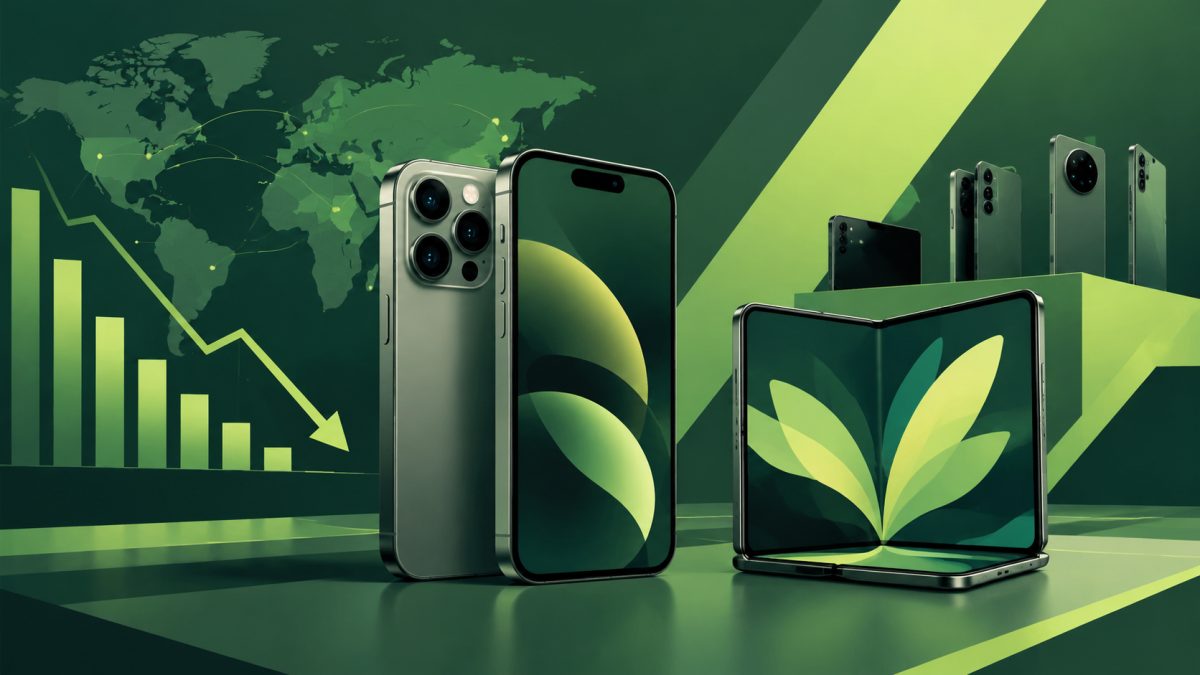
iPhone 18 Pro Pre-Order Data Points to Softening Overseas Demand
TREE NEWS reports: Apple’s iPhone 18 Pro and Pro Max opened for pre-order on September 12 at 8:00 a.m. Eastern Time, and just two days of delivery lead-time data are already flashing a warning signal. Delivery wait times for the iPhone 18 Pro Max in the United States, United Kingdom, Germany, and Japan have shortened by 5 to 11 days versus the same period last year. For the iPhone 18 Pro, wait times have contracted sharply across nearly all tracked markets, with the United States requiring no waiting period at all.
Jefferies analysts argue that with production pacing broadly in line with the prior generation, shorter wait times are a reliable indicator of softer demand. The firm maintained its Underperform rating on Apple with a 12-month price target of $263.66, implying roughly 21% downside from the current share price of $332.27.
Mainland China and Hong Kong: The Exception
Mainland China and Hong Kong stand out as the exceptions. iPhone 18 Pro Max wait times in those markets reached 24.5 days each, up from 19.8 days and 17.2 days a year earlier. However, Jefferies cautioned that both markets have historically seen elevated speculative buying activity, and part of the extended wait times may reflect channel stockpiling rather than genuine end-user demand. The analysts said resale premiums in the secondary market after the first shipments on September 18 will be the key test of real demand — narrowing premiums or prices falling below retail would indicate speculative demand is fading quickly.
India, newly added to the tracking this year, showed wait times of just 2 to 3 days for the 18 Pro and about 12 days for the 18 Pro Max, both significantly shorter than in China, making it difficult to characterize as strong demand.
Duo Foldable: Software Praised, Hardware Lags
Apple’s foldable device, the Duo, opens for pre-order on October 16. Early reviews circulating online are broadly positive, with praise centered on the iOS foldable adaptation experience — smooth inner-outer display switching, native split-screen logic, app continuity, and dual-app multitasking.
Criticism focuses on hardware shortcomings: a limited number of floating windows, a two-app limit for simultaneous multitasking (versus three on Samsung’s Galaxy Z Fold 8), and a lack of PC-like functionality.
The Duo starts at $1,999, weighs 254 grams, and measures 11.3mm thick when folded. Samsung’s Galaxy Z Fold 8 weighs 201 grams, is 9.7mm folded, and starts at $1,899. Xiaomi’s 18 Fold weighs 219 grams, is 10.68mm folded, and starts at approximately RMB 10,999.
On cameras, the Duo carries only a 48MP main sensor and a 48MP ultra-wide, with no dedicated telephoto. Samsung also uses a dual-camera setup, while Xiaomi’s 18 Fold features a triple-camera system with a 200MP Leica main sensor and a 50MP 3.5x optical zoom lens. For processors, the Duo runs Apple’s in-house A20 Pro on a 2nm process, while Samsung and Xiaomi use 3nm chips.
Market Implications
Apple’s stock has been one of the market’s strongest large-cap performers, and the pre-order data introduces a near-term demand question mark that could weigh on sentiment. The key issue is whether shorter wait times reflect genuine demand weakness or simply improved supply chain execution — a distinction that will become clearer once first shipments land and secondary-market pricing emerges.
- Apple equity: The Underperform rating and 21% downside target from Jefferies contrast sharply with the stock’s recent strength. If demand signals weaken further, expect pressure on Apple shares and potentially on the broader tech sector, given Apple’s heavy weighting in major indices.
- Supply chain: Apple suppliers across Asia — particularly in Taiwan, South Korea, and mainland China — could see sentiment impact if order cuts follow. Watch for revisions to production forecasts in the coming weeks.
- Competitors: Samsung and Xiaomi could benefit if the Duo’s hardware gaps deter high-end foldable buyers. The premium foldable segment is small but strategically important for brand positioning.
- Broader market: Apple is a bellwether for consumer spending and global demand. Weak iPhone demand signals could reinforce concerns about consumer health in a higher-for-longer rate environment.
Key Takeaways for Investors
- Shortened delivery wait times across major overseas markets are a reliable demand warning signal, though China and Hong Kong data are distorted by speculation.
- The September 18 first shipment and subsequent secondary-market resale premiums will be the critical validation point for real demand.
- The Duo’s hardware disadvantages versus Android foldables may limit its ability to convert high-end users at a $1,999+ price point.
- Jefferies’ $263.66 target implies meaningful downside; investors should weigh this against Apple’s services growth and AI roadmap.
- Watch for supply chain order revisions and any changes to Apple’s production guidance as leading indicators.