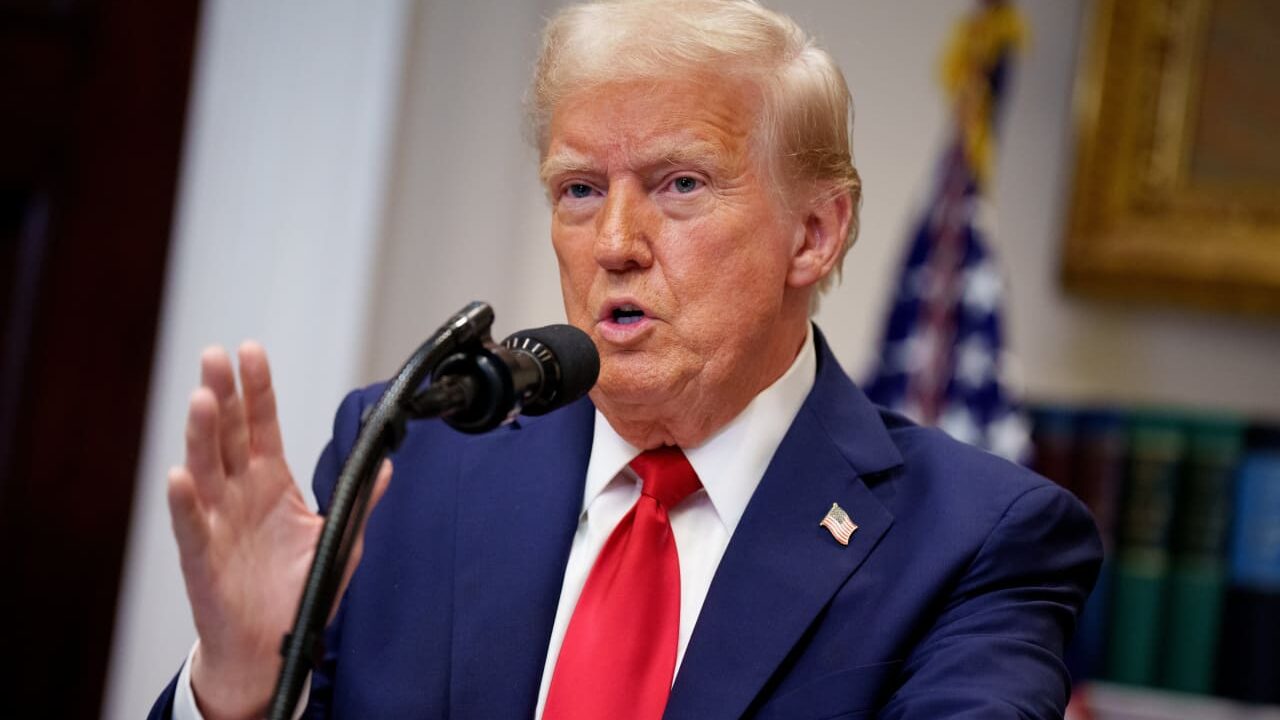
AI Safety Debate Erupts as Burry and Trump Push Back on Anthropic CEO’s Slowdown Call
TREE NEWS reports: A public dispute over the pace of artificial-intelligence development intensified this week after Anthropic CEO Dario Amodei reiterated that AI companies should adopt stronger safety measures and consider slowing the release of increasingly capable models. The comments drew sharp criticism from investor Michael Burry and former President Donald Trump, who dismissed the push for restraint as a “sick conspiracy” and accused safety advocates of trying to stifle American technological leadership.
The exchange has quickly become a proxy battle over the future of the AI trade, pitting safety-focused researchers and some regulators against investors and politicians who argue that any slowdown would hand an advantage to foreign competitors and undercut the enormous capital spending now flowing into data centers, chips and energy infrastructure.
What Happened
Amodei, whose company builds the Claude family of models, has consistently argued that frontier AI systems pose systemic risks and that developers should be required to test and disclose capabilities before deployment. His latest remarks renewed calls for voluntary and regulatory guardrails. Burry, best known for his prescient bet against mortgage-backed securities before the 2008 crisis, used the moment to question the economics of the AI boom, arguing that hype and spending are outrunning real returns. Trump, meanwhile, framed the safety push as an attempt to sabotage U.S. innovation and promised a deregulatory posture if returned to office.
The result is a widening split between two camps: those who see AI safety as a precondition for sustainable growth, and those who see it as a competitive liability.
Market Implications
Equities. The most immediate impact is likely to be felt in AI-linked megacaps and semiconductor names, where valuations already embed aggressive growth assumptions. Any sign that Washington could impose licensing, testing or disclosure requirements on frontier models would introduce regulatory risk into a trade that has been driven almost entirely by demand expectations. Conversely, a deregulatory political shift would be read as bullish for capex-heavy hyperscalers and chipmakers.
Bonds. The AI buildout has become a meaningful driver of corporate issuance and electricity demand forecasts. If safety-driven slowdowns delay data-center projects, the long-duration investment-grade paper tied to that spending could see spread widening, though the effect would likely be gradual rather than abrupt.
Crypto. Digital-asset markets have increasingly traded as a high-beta proxy for technology risk appetite. A credible political threat to AI expansion would likely pressure crypto alongside growth equities, while a deregulatory outcome could reinforce the “innovation asset” narrative that has supported bitcoin and AI-adjacent tokens.
Commodities. Data centers are voracious consumers of electricity, copper and cooling equipment. A slower AI rollout would soften incremental demand expectations for power and industrial metals, though the effect would be modest relative to broader macro drivers.
Currencies. The dollar has benefited from the perception that the U.S. leads in frontier technology. If policy uncertainty undermines that narrative, the greenback could give back some of its AI-premium gains, particularly against the euro and the yen.
Why This Matters for Investors
- Policy risk is now a first-order variable. The AI trade is no longer purely about earnings; it is increasingly about who writes the rules.
- Volatility around political statements. Expect headline-driven swings in chipmakers, hyperscalers and crypto as the election cycle progresses.
- Watch the capex pipeline. Any actual delay to data-center construction would be the clearest signal that safety rhetoric is translating into economic reality.
- Diversification still matters. Concentrated exposure to a single thematic trade leaves portfolios vulnerable to a regulatory shock that few models currently price.
The debate over AI speed versus safety is no longer confined to research labs. It has moved into boardrooms, campaign trails and trading desks — and investors should expect it to remain a source of market volatility for the foreseeable future.