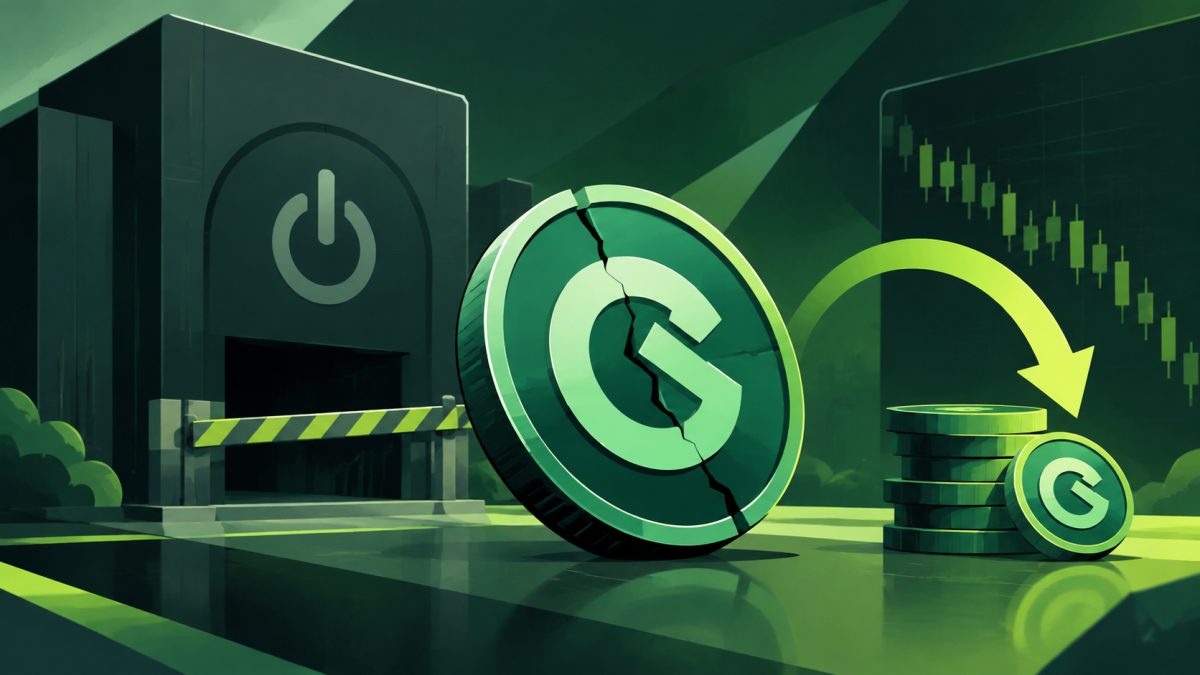
CoinEx Announces Orderly Shutdown After Nine Years
TREE NEWS reports: CoinEx, the cryptocurrency exchange launched on December 22, 2017, will officially close its doors on December 22, 2026 — exactly nine years after its debut. Founder Yang Haipo confirmed the decision in a statement, framing it as a deliberate and dignified exit rather than a forced collapse.
The exchange will repurchase its native CET token at its initial listing price of 0.005 USDT per token, with no cap on the number of tokens bought back. Yang said user assets will be fully withdrawable, employees will receive a proper send-off, and CET holders will be given a clear, responsible settlement plan.
Why Walk Away Instead of Selling?
Yang revealed he seriously considered selling CoinEx but ultimately rejected the idea. His reasoning: users entrusted their assets to the platform based on trust in the exchange and in him personally. Handing that trust to a new owner, he argued, would not be the right way to end the journey. “A clean ending is the correct ending,” he said.
He also acknowledged that CoinEx never became a leading exchange, and that the safety and compliance risks of running a crypto trading venue have become increasingly difficult to control. Revenue can decline, he noted, but responsibility does not — and bearing unlimited risk on limited income is no longer rational.
Industry Implications: A Template for Responsible Exit
CoinEx’s wind-down stands in sharp contrast to the wave of collapses that have scarred the industry — from Mt. Gox to FTX — where users faced frozen withdrawals, protracted bankruptcy proceedings, and partial recoveries. A voluntary, pre-announced shutdown with a fixed timeline and a token buyback at the original listing price is virtually unprecedented in crypto.
- For users: A 15-month runway provides ample time to withdraw assets, reducing panic-withdrawal risks.
- For CET holders: The 0.005 USDT buyback sets a floor, though it is far below CET’s historical highs — a reminder that exchange tokens carry both platform and governance risk.
- For the industry: It signals that mid-tier exchanges face mounting pressure from compliance costs, thinning margins, and intensifying competition from top-tier venues and decentralized alternatives.
Forward-Looking Perspective
CoinEx’s exit may not be an isolated case. As global regulatory frameworks — MiCA in Europe, evolving SEC and CFTC postures in the U.S., and licensing regimes across Asia — raise the fixed cost of operating an exchange, smaller platforms with limited liquidity and revenue will struggle to justify staying in business. The coming years could see more orderly shutdowns, consolidations, or acquisitions among tier-two exchanges.
Yang’s decision to prioritize a clean exit over a sale may also set a reputational benchmark. In an industry where trust is scarce, how founders handle failure could matter as much as how they handle success. CoinEx may not have won the race, but its founder’s insistence on finishing with dignity could leave a more lasting legacy than its trading volume ever did.