SEC Sets On-Chain Securities Standard While CLARITY Act Stalls
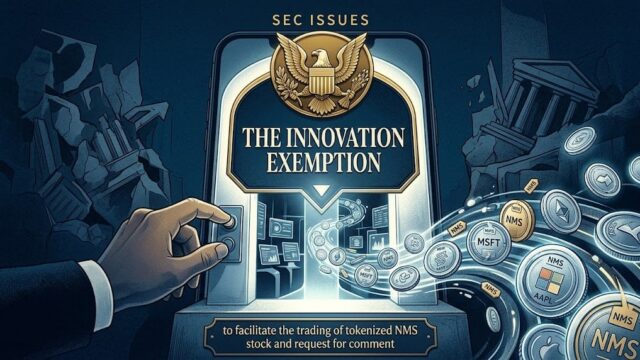
On September 17, the U.S. Securities and Exchange Commission unveiled new standards for on-chain securities, laying out how tokenized equity rights and issuance processes should be regulated. The framework does not target existing overseas products offered by brokers such as Robinhood. The move comes as the CLARITY Act remains stuck in the Senate, prompting the SEC to advance crypto oversight through administrative authority rather than waiting for Congress.
What the SEC’s New Standards Actually Cover
The guidance draws a line between tokenized representations of public equities and other digital asset activities, and it explicitly distinguishes certain DeFi business models from traditional securities intermediation. Key elements include:
- Recognition of tokenized equity as a representation of underlying shareholder rights, with corresponding disclosure and custody expectations.
- Clarification of issuance workflows for firms seeking to bring listed shares on-chain.
- A signal that the regulator will treat some decentralized protocols differently from broker-dealers, though the boundaries remain undefined.
Notably, the SEC did not take aim at Robinhood’s existing tokenized stock offerings in Europe, suggesting the agency is focused on setting domestic infrastructure rules rather than punishing offshore experimentation.
Why This Matters for Tokenized Equities
The absence of the CLARITY Act has left a legislative vacuum. By acting unilaterally, the SEC is effectively writing the rulebook for how U.S. equities might migrate onto public blockchains. This puts traditional exchanges, custodians, and crypto-native platforms in a race to build compliant tokenization rails.
For DeFi, the distinction between protocols and intermediaries could open doors for on-chain trading venues, but only if they can satisfy the SEC’s evolving expectations. For issuers, the ability to represent shares on-chain could reduce settlement times, broaden access, and create new collateral use cases — provided legal clarity holds.
Yet uncertainty persists. The SEC’s standards are administrative guidance, not statute. A future change in leadership or a court challenge could reshape them. The CLARITY Act, if passed, would provide firmer ground, but its Senate path remains unclear.
The Road Ahead
Tokenized equities are entering an infrastructure competition phase. The winners will be those that can marry regulatory compliance with blockchain efficiency. Watch for:
- Whether the SEC formalizes these standards through rulemaking or enforcement.
- How the CLARITY Act evolves in the Senate and whether it supersedes administrative guidance.
- Which exchanges and custodians announce tokenized equity pilots under the new framework.
- How DeFi protocols adapt to the SEC’s distinction between decentralized and intermediary activities.
The SEC has effectively told the market: while Congress debates, the agency is already moving U.S. stocks on-chain. The rules are still forming, but the direction is clear.