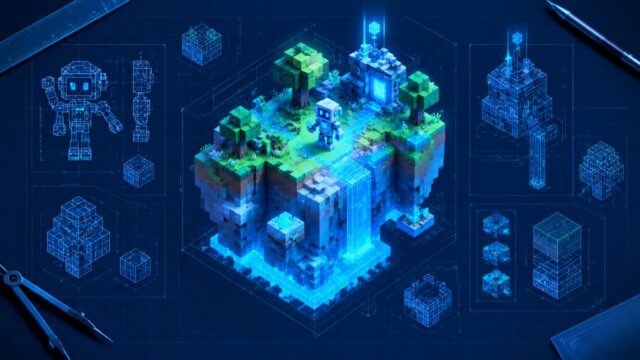
The Virtual World Finds New Inhabitants
The metaverse never became the place humans wanted to live. But the infrastructure built for it — simulation engines, spatial mapping, digital twins, real-time rendering pipelines — is finding an unexpected second life. Robots are the new natives. Rather than humans donning headsets to inhabit virtual worlds, machines are using those same virtual worlds to train, simulate, and then deploy into physical reality.
From Avatar to Embodiment
The core insight driving this shift is that training embodied AI in simulation is orders of magnitude cheaper and faster than training in the physical world. A robot can crash a million times in a virtual warehouse without cost. Companies building humanoid robots and autonomous systems are leveraging the photorealistic environments, physics engines, and digital twin infrastructure originally designed for consumer metaverse experiences.
This is where the crypto and blockchain angle becomes material. Decentralized physical infrastructure networks (DePIN) are emerging as coordination layers for robot fleets, sensor data, and spatial mapping. Projects like Hivemapper and Helium have demonstrated that token incentives can crowdsource physical-world data at scale. The same model is now being applied to robotics: tokenized data marketplaces where robot operators contribute training data, simulation environments, or compute in exchange for on-chain rewards.
Why This Matters for Crypto
- Data provenance: Blockchain provides verifiable records of where training data came from — critical for regulatory compliance in autonomous systems.
- Compute markets: Decentralized GPU networks are positioning themselves as the backbone for robot simulation workloads, competing with centralized cloud providers.
- Machine-to-machine payments: Robots transacting with each other — paying for charging, maintenance, data — require programmable money, and stablecoins and micro-payment rails are the natural fit.
The Road Ahead
The metaverse narrative failed because it asked humans to leave reality. The robotics narrative may succeed because it asks machines to enter it. For crypto, this represents a genuine intersection of AI, physical infrastructure, and on-chain coordination — not a speculative overlay but a functional requirement. The rails laid for virtual worlds are being repurposed for something far more tangible: autonomous machines that need identity, payments, and verifiable data to operate in the real world.
Investors and builders who dismissed the metaverse as a dead narrative may want to look again. The infrastructure didn’t disappear. It just got new users — ones that don’t need a headset.