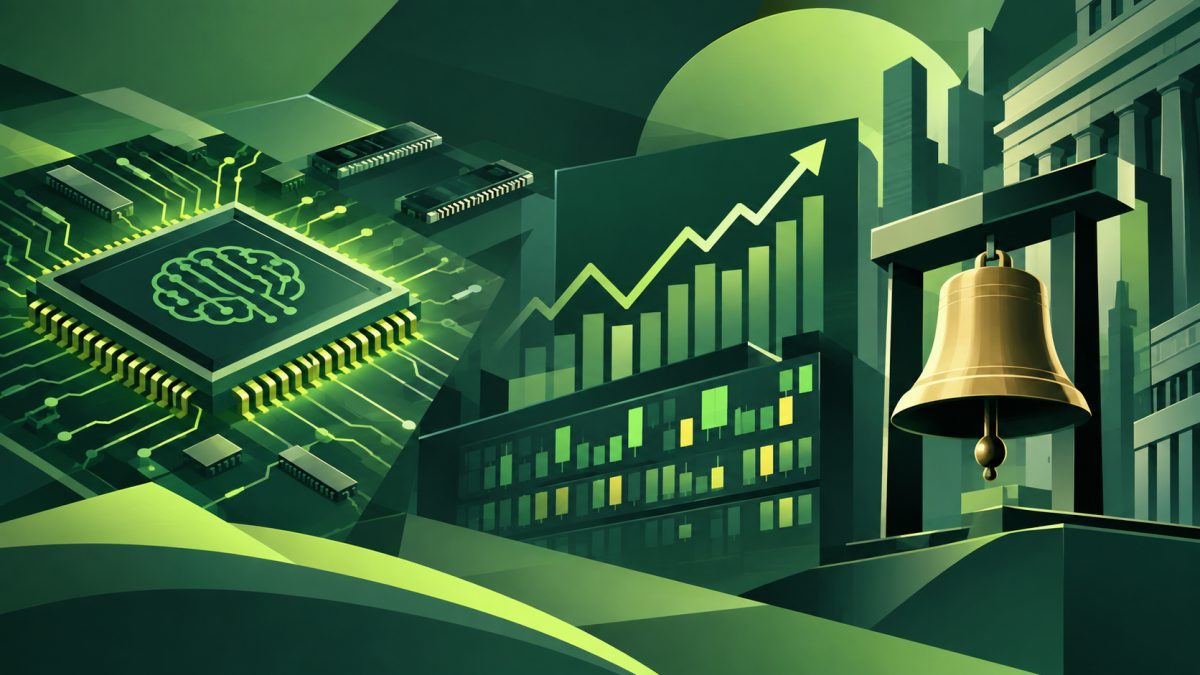
AI Capex Ripple Effects: Memory Chips, Index Additions, and the Opening Bell
As US equity markets prepare to open, a confluence of AI-driven catalysts is reshaping the investment landscape. Memory chip stocks are rallying collectively, while Bloom Energy’s addition to the S&P 500 and Dell’s inclusion in the S&P 100 signal a broadening of AI’s market impact. These moves come on the heels of Nvidia’s latest acquisition, which is forcing a reallocation of memory production capacity, and underscore how AI capital expenditure is now rippling from individual earnings into the core indices.
News Summary
Nvidia’s recent acquisition has triggered a strategic shift in memory chip supply, as HBM (High Bandwidth Memory) capacity is prioritized for AI accelerators. This has tightened supply for conventional DRAM and NAND, lifting prices and boosting the outlook for memory makers. Simultaneously, index inclusions—Bloom Energy into the S&P 500 and Dell into the S&P 100—reflect their growing relevance in the AI infrastructure buildout, from power generation to server manufacturing.
Industry Analysis
The memory chip surge is a classic supply-demand imbalance. Nvidia’s move to secure HBM supply for its next-generation GPUs means memory producers are reallocating wafer starts, reducing output of commodity DRAM. This is bullish for companies like Micron, SK Hynix, and Samsung, which are seeing improved pricing power. For investors, this is a reminder that AI’s impact extends beyond chip designers to the entire semiconductor supply chain.
Index additions are equally telling. Bloom Energy’s fuel cell technology is increasingly viewed as a solution for powering data centers, a critical bottleneck for AI expansion. Dell’s inclusion in the S&P 100 recognizes its role in providing the servers and storage that underpin AI workloads. These additions are not just symbolic; they trigger passive fund buying, providing a short-term price boost and long-term visibility.
Forward-Looking Perspective
Looking ahead, the interplay between AI capex and market structure will intensify. As hyperscalers continue to spend heavily on AI infrastructure, we can expect more companies in the power, cooling, and networking sectors to be re-rated. The memory chip cycle, however, remains volatile—while current tightness is supportive, any slowdown in AI demand could reverse the trend quickly.
For investors, the key is to distinguish between secular winners and cyclical beneficiaries. Index additions provide a tailwind, but fundamentals will ultimately drive performance. As the opening bell approaches, the market is pricing in a future where AI is not just a sector but the backbone of the entire tech ecosystem. That narrative is powerful, but it also carries risk if expectations outpace reality.