Citi Flags a Rare Macro Window for Latin America
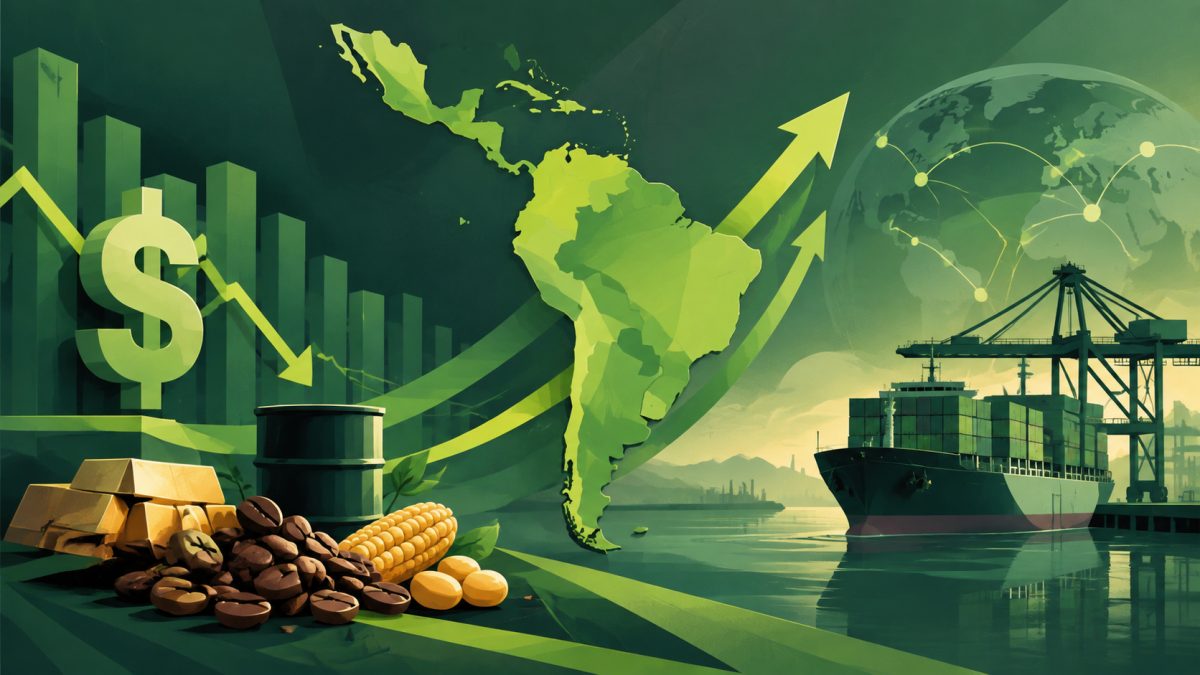
TREE NEWS reports: Latin America is entering one of its most favorable macroeconomic setups in decades, which argues that a weak US dollar, firm commodity prices, a global supply-chain realignment and a regional political shift to the right are converging to create a historic window for faster growth.
Citi’s chief Latin America economist, Ernesto Revilla, writes that these external and internal tailwinds are aligning in a way rarely seen in the region’s modern history. The report lands as the MSCI Emerging Markets Latin America Index tests a key resistance level around 3,000 points — a ceiling that has repeatedly capped rallies since roughly 2014. Whether the index can turn that level into new support will be a critical gauge of whether this cycle has legs.
Weak Dollar Is the Core Driver
Reviewing nearly a century of Latin American growth history, Citi concludes that a weak dollar is the common denominator behind the region’s high-growth and income-convergence phases. A softer greenback loosens financial conditions across emerging markets: capital inflows rise, debt-servicing costs fall and commodity prices tend to climb. With the world in a dollar-weakening cycle that could persist over the medium term, Latin America faces an external backdrop reminiscent of the 2003–2008 supercycle.
Yet history also exposes the region’s deeper trap. In 1990, Latin America’s GDP per capita was about 28% of the United States’; by 2024, that ratio had slipped to 26.4%. Emerging Asia, by contrast, converged sharply over the same period. Citi calls the current conditions a rare chance to break out of this “non-convergence trap” — but stresses that opportunity alone does not guarantee success.
Commodities and Trade Realignment Add Support
Commodity prices are the second pillar. Latin America’s terms of trade have risen to their highest level since the 2000s supercycle, providing resource-exporting economies with substantial external income support.
At the same time, the reshaping of global trade is delivering a structural dividend. Since trade tensions intensified in 2016, Latin America has been one of the few regions to expand its import share in both the US and Chinese markets. Citi attributes this to the region’s unique geographic position — far from the core of geopolitical conflict and home to many of the minerals and commodities needed for the global energy transition. In the wave of nearshoring, Latin America’s proximity gives it a natural advantage that could attract sustained foreign direct investment.
Political Shift Lifts Policy Credibility
The report also cites the region’s political cycle as a meaningful tailwind. A shift toward more business-friendly, reform-oriented right-wing governments has improved domestic investment climates and aligned the region more closely with a US administration that is taking a more active interest in Latin America.
Revilla notes that more pragmatic policy frameworks and improved macroeconomic management have already been validated in the fight against post-pandemic inflation — several Latin American countries have handled inflation better than some developed and emerging peers. Still, Citi flags key risks: fiscal pressures in several countries require forceful action but face political constraints and institutional rigidities. Complex security conditions that worry voters remain a structural challenge.
Opportunity Exists, but It Is Not Guaranteed
Despite the rare confluence of tailwinds, Citi remains cautious. Regional growth is still hovering near a trend rate of about 2%, below potential, with no meaningful acceleration yet.
Revilla says the bullish case for Latin America is not built on current growth data but on valuations, currency levels, credit spreads, terms of trade, policy credibility and a combination of favorable factors unseen in more than a decade. He emphasizes that some tailwinds are cyclical rather than structural and depend on external conditions beyond the region’s control.
“The opportunity is there, but it must be seized through action and reform,” Revilla writes. Citi frames the stakes as far-reaching: the welfare of Latin America’s 660 million people, the interests of investors levered to the region’s future, and the foundation of political stability across the Western Hemisphere.
Key Takeaways for Investors
- Watch the 3,000 level on the MSCI LatAm index. A clean break and hold above this multi-year resistance could signal a durable regime shift.
- The dollar is the master variable. Continued greenback weakness would loosen financial conditions, support commodities and favor regional assets.
- Commodities and nearshoring are structural themes. Resource exporters and economies integrated into North American supply chains stand to benefit most.
- Policy execution is the swing factor. Fiscal discipline, reform progress and security improvements will determine whether cyclical tailwinds become lasting gains.
- Valuations and positioning still look favorable. The bull case rests on cheap assets and wide spreads, not on already-strong growth.