Kazakhstan Pivots From Grid Strain to Stranded Gas
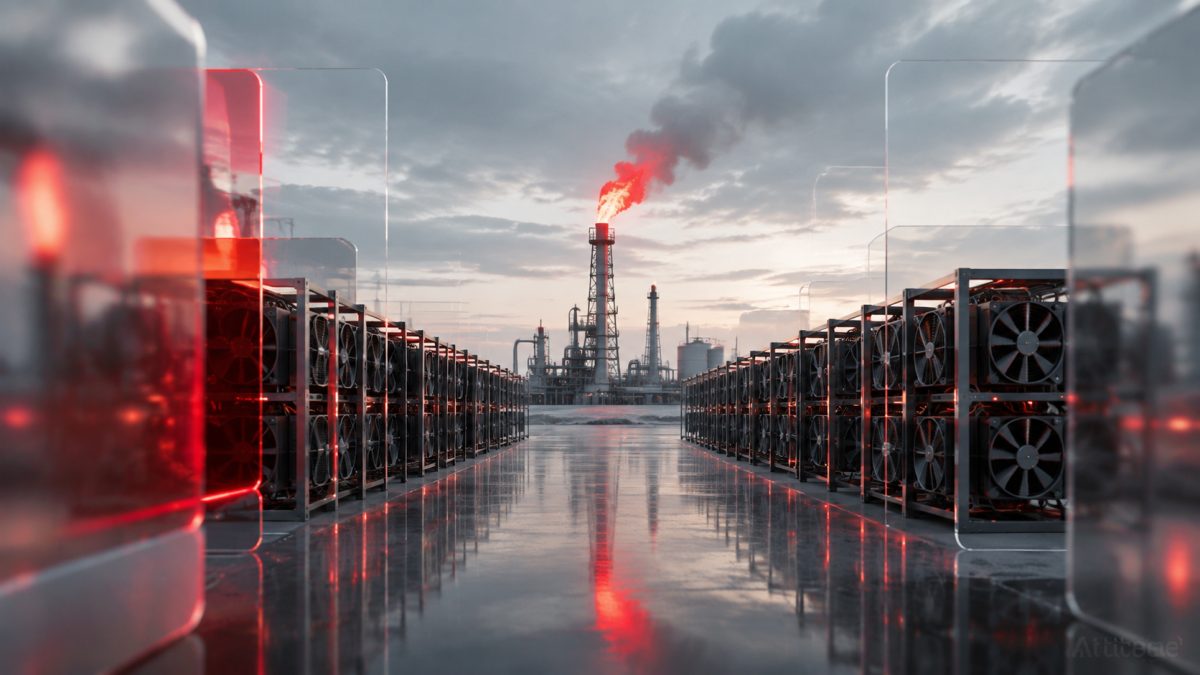
TREE NEWS reports: Kazakhstan is drafting rules that would allow cryptocurrency mining firms to generate their own electricity from associated petroleum gas — the byproduct flared at oil extraction sites — in a bid to cut emissions, lower miner power costs and relieve pressure on the national grid. The energy ministry estimates that roughly 40 to 60 oilfields currently flare associated gas, and that about 300 million to 340 million cubic meters were burned in 2024. Converted to electricity, that volume could yield an estimated 1.2 to 1.3 terawatt-hours of power. The ministry of artificial intelligence and digital development says the legal framework to define the model’s regulatory rules is now being prepared.
Why Flared Gas Is Suddenly an Asset
The logic is straightforward: associated gas is a nuisance for oil producers, who often lack the infrastructure to capture, process or transport it, so it is burned at the wellhead. For miners, that same gas is a stranded energy source that can be combusted on-site in generators to run ASICs, sidestepping transmission bottlenecks entirely. This is not a novel concept — flare-gas mining has been deployed in the United States, Canada, Russia and the Middle East — but Kazakhstan’s endorsement would make it a matter of national industrial policy rather than a niche workaround.
A Reversal After Years of Restriction
The shift is notable given Kazakhstan’s recent history. The country became a major mining destination after China’s 2021 crackdown, only to see rapid growth strain its power supply, prompting authorities to impose limits on miner electricity use and tighten registration requirements. By redirecting miners toward off-grid, self-generated power from gas that would otherwise be flared, the government appears to be trying to capture the economic upside of mining — tax revenue, investment, technical talent — while decoupling it from the public grid that households and industry depend on.
- Emissions angle: Flaring produces methane and black carbon; capturing gas for combustion in generators can reduce the volume flared, though it does not eliminate emissions.
- Grid angle: On-site generation means miners draw little or nothing from the national network, removing a key source of political friction.
- Cost angle: Flared gas is often priced at a discount or treated as waste, giving miners a cheaper energy input than grid tariffs.
What to Watch
The critical unknowns are the regulatory details: how the government will license gas-to-power mining, how it will measure and verify emission reductions, whether it will impose caps or location restrictions, and how it will tax the electricity produced. Kazakhstan’s experience will also be watched by other hydrocarbon-heavy jurisdictions — from Iraq to Nigeria to Venezuela — that flare large volumes of gas and are weighing whether crypto mining can monetize what is otherwise wasted. If the framework is workable, it could establish a template for turning an environmental liability into a digital-asset revenue stream.