DoubleLine’s Gundlach Says Market Is ‘Rotten Inside’ Despite Record-High Index
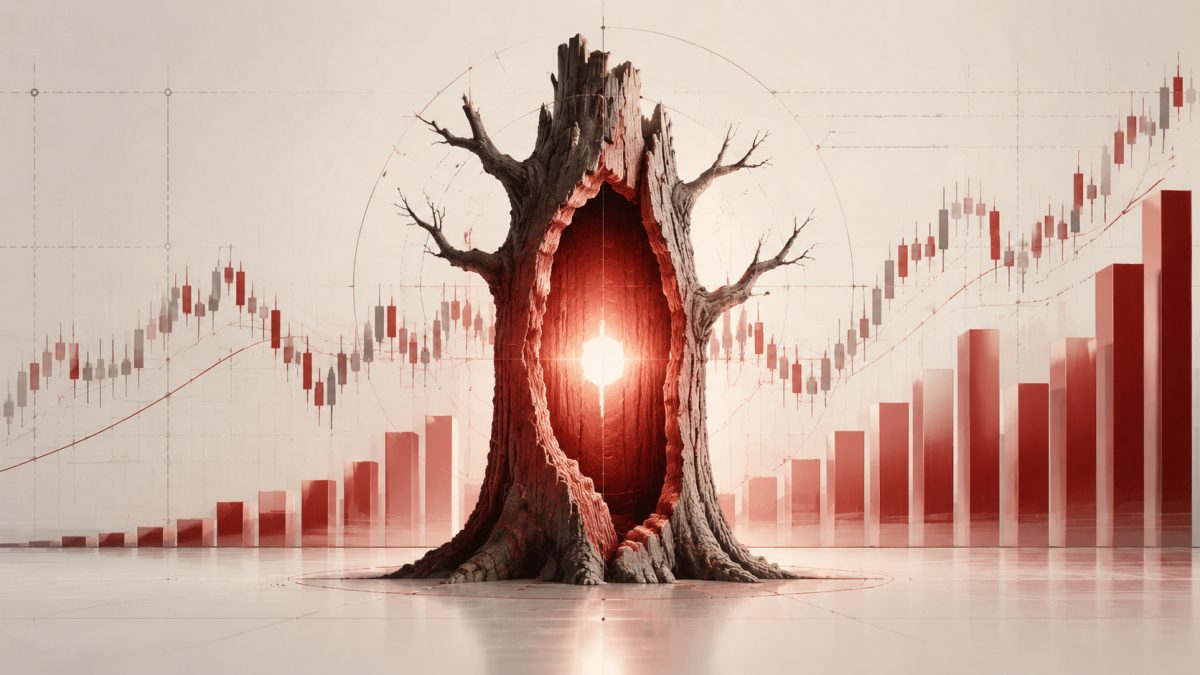
TREE NEWS reports: Jeffrey Gundlach, chief executive and chief investment officer of DoubleLine Capital, has issued a stark warning about the US stock market, describing it as a “hollow tree” — outwardly healthy but rotting from within and liable to snap without notice. In an interview with Rosenberg Research founder David Rosenberg, the investor known as the “Bond King” said the S&P 500’s proximity to record highs masks severe internal deterioration, with market breadth steadily worsening.
Gundlach illustrated the point with a personal anecdote about a century-old silver maple at his Buffalo, New York home. The tree appeared sound until a massive branch suddenly broke and nearly struck his chimney, revealing a trunk that had been completely hollowed out. “It suddenly occurred to me that this is exactly the state of the market we’re in today,” he said.
The Data Behind the Warning
The numbers support his case. Roughly 80% of S&P 500 constituents have fallen at least 10% from their 52-week highs, putting them in technical correction territory, while 39% are down more than 20%, meeting the definition of a bear market. A handful of mega-cap names have kept the headline index elevated, concealing broad-based weakness underneath.
“There is a lot of rot inside the S&P 500, but it isn’t visible,” Gundlach said. “You have to wait for the branch to fall before you realize the market is hollow, just like that tree.”
Private Markets and Hidden Losses
Gundlach extended the warning to private markets, pointing to circular investment structures in which private equity firms acquire private credit units, which acquire insurance companies, which in turn buy loans originated by affiliated private credit lenders. Quarterly reports from these vehicles rarely surface problems, he argued, citing one private credit fund whose assets were marked at 100 at the end of last year and had fallen to between 77 and 78 by the first quarter — an implied decline of roughly 23% in the underlying portfolio. Because such funds hold thousands of diversified loans, the move points to substantial unrealized losses.
Deficits, Bonds and the Dollar
On the macro side, Gundlach expressed deep concern about the rapid expansion of US fiscal deficits, arguing Washington faces two unappealing options: print money or restructure debt by pushing holders into longer maturities or lower coupons. Both paths, he said, ultimately lead to higher inflation.
Bond yields are being pushed up by a confluence of forces — energy prices tied to the Iran conflict, a “staggering” volume of global bond issuance, and AI companies tapping debt markets to fund infrastructure buildouts. The resulting rise in interest expense could eventually force authorities to print money or intervene in long-end rates, weighing on the dollar.
Gundlach also flagged the breakdown of the dollar’s traditional safe-haven status. Across more than a dozen S&P 500 drawdowns since 2000, the dollar index rose 8% to 10% each time. In the April 2025 selloff, it fell — the first such divergence on record. “People realize we’ve entered a different regime, so in the next recession the dollar won’t go up, it will go down,” he said.
Key Takeaways for Investors
- Breadth is deteriorating: Index-level strength is being carried by a narrow group of mega-caps. Investors relying on headline S&P 500 performance may be underestimating the weakness in the average stock.
- Private credit deserves scrutiny: Mark-to-model valuations and circular ownership structures can delay recognition of losses. Watch for widening discounts and redemption pressure.
- Fiscal risk is a bond story: Ballooning issuance and rising interest costs threaten to push long-end yields higher and pressure the dollar.
- The dollar hedge may no longer work: If the historical dollar-up-in-a-selloff pattern has broken, traditional portfolio hedges may need rethinking.
Gundlach’s track record — he famously called the 2007 housing collapse — gives his warnings weight. Whether or not the tree snaps, the divergence between index levels and internal market health is a risk investors should not ignore.