A Divergence That Demands Attention
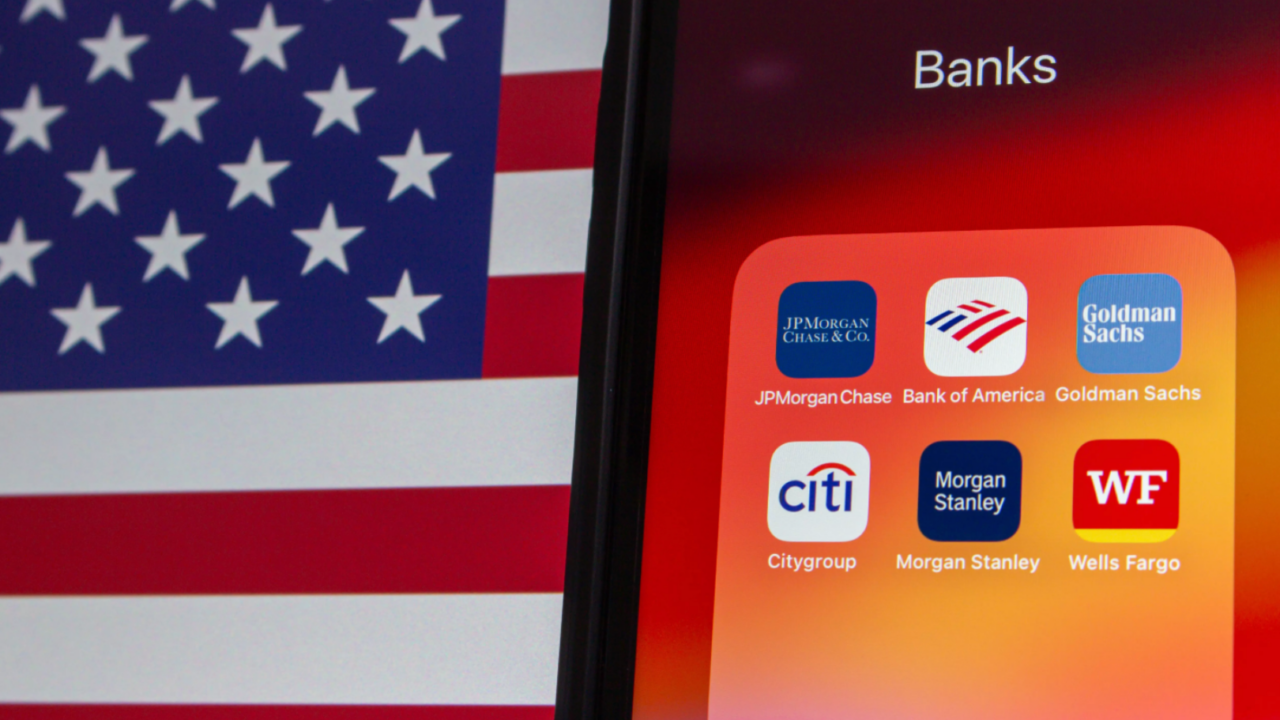
TREE NEWS reports: Six of the largest US banks will release third-quarter results within a 48-hour window. JPMorgan Chase, Goldman Sachs, Citigroup and Wells Fargo report on October 13, with Bank of America and Morgan Stanley following on October 14. Wells Fargo confirmed its release at roughly 7:00 a.m. ET, with a call at 10:00 a.m.
The setup is unusual: consensus estimates point to profit growth of up to 20% year over year, yet the KBW Bank Index has fallen about 13% from its August closing high and is down 6% for the quarter. The market is pricing a question the numbers have not yet answered — whether high rates are expanding net interest income or quietly raising deposit costs, slowing capital markets activity and stoking credit risk.
The Yield Curve Is the Source of the Split
The 10-year Treasury yield sits near 5.28%, with the 2-year at 4.77%. Long-end repricing lifts asset yields but crushes the market value of legacy securities portfolios. UBS analyst Erika Najarian attributed the sector pullback directly to rising yields, noting investors need confirmation on three fronts: a sufficiently deep capital markets pipeline, loan growth still on track, and controllable deposit costs.
Net Interest Income vs. Deposit Costs
Industry data leans optimistic. FDIC figures show the sector’s net interest margin rose 1 basis point to 3.32%, net income of $90.1 billion was up 12.0% quarter over quarter, and domestic deposits grew 0.8% — the eighth consecutive quarterly increase. Deposits are still flowing in, not out. But September’s rate hike has not fully passed through to deposit pricing, and that transmission typically lags by one to two quarters.
Investment Banking Guidance Diverges Sharply
JPMorgan expects third-quarter investment banking fees and trading revenue to grow in the mid-to-high teens year over year. Bank of America’s CEO Brian Moynihan warned investment banking fees would fall at least 10%. Goldman Sachs CEO David Solomon described a relatively flat quarter, with FICC soft and equities strong. This is not a cycle disagreement — it is market-share redistribution. Global M&A volume rose 28% to $3.9 trillion in the first nine months, yet deal counts fell 8%, and third-quarter volume dropped 41% sequentially to $993 billion.
Credit Quality and Capital Returns
Federal Reserve data show the credit card delinquency rate for all commercial banks at 2.85% in Q2 2026, down for eight straight quarters from a cycle high of 3.22%. The Fed’s June stress test found all 32 tested banks above minimum CET1 requirements under a severely adverse scenario, with capital requirements unchanged through 2027. That leaves buybacks and dividends driven by earnings, not regulation — Citigroup has guided to 2026 repurchases above 2025’s $13 billion.
What to Watch Next
The FOMC meets October 27-28, immediately after earnings week. Management commentary on fourth-quarter net interest margin, deposit costs and the deal pipeline will matter more than backward-looking quarterly figures. The key risk is timing: extrapolating third-quarter margin improvement into the fourth quarter, when deposit repricing has not yet been fully reflected, is the easiest mistake to make this season.