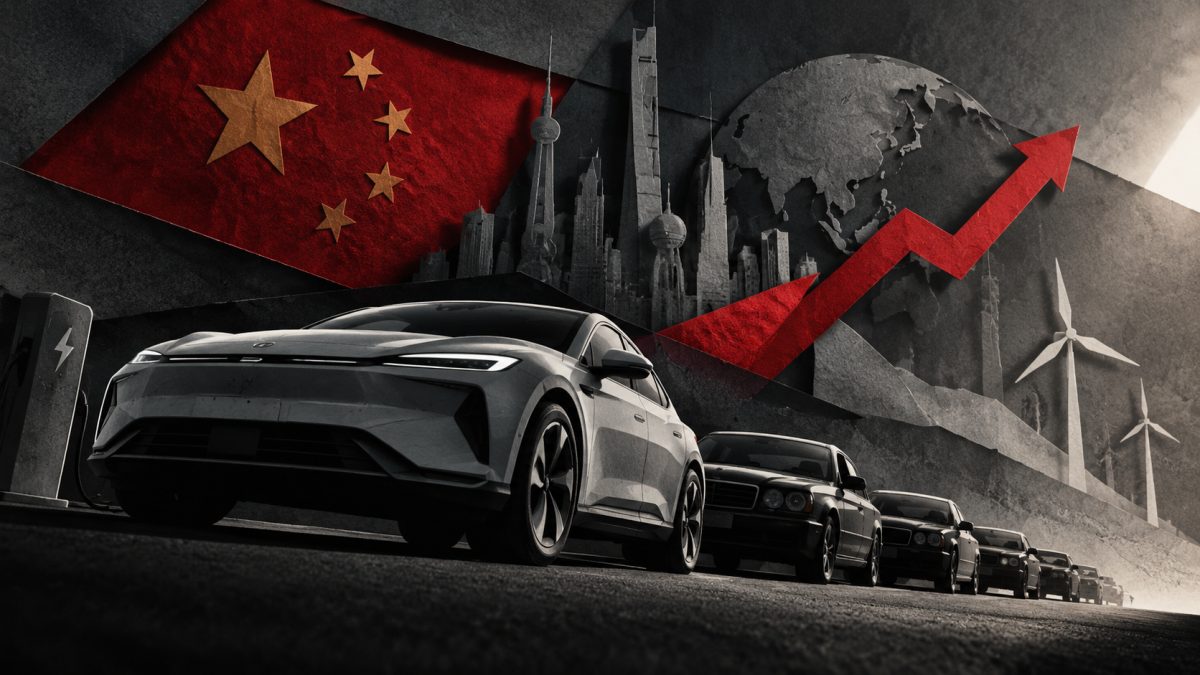
China’s Fuel Car Share Falls Below One-Third as EV Penetration Hits 67%
TREE NEWS reports: For the first time, the retail share of internal combustion engine (ICE) passenger vehicles in China has dropped below one-third of the market. In September 2026, the retail penetration rate of new energy passenger vehicles (NEVs) rose to 67%. Fuel car retail sales fell 43% year-on-year, with pure ICE vehicles down 49%, while conventional hybrid vehicles—which do not require external charging—grew 25%.
The shift comes amid a broader contraction in the Chinese auto market. Total passenger vehicle retail sales fell 28% to 1.618 million units in September, and NEV retail sales also declined 16.7% year-on-year. The faster decline in fuel cars pushed the NEV share higher, even as both segments shrank. The CPCA attributed the fuel car slump to high oil prices and a high base from last year when subsidies were phased out, which had pulled forward purchases.
Market Implications: Oil Demand and Beyond
The milestone caught the attention of Tesla CEO Elon Musk, who commented that “China’s dependence on oil is rapidly declining.” While the data reflects new car sales rather than the entire vehicle fleet—the replacement of existing stock will take much longer—the direction is clear. For energy markets, the continued electrification of China’s car fleet could weigh on global oil demand growth, particularly for gasoline. China is the world’s largest oil importer, and a structural decline in fuel consumption would have significant implications for crude oil prices and refining margins.
For equity markets, the data underscores the divergent fortunes of traditional automakers and their electrified rivals. Joint venture brands, which have been slower to electrify, saw retail sales plunge 36% year-on-year in September, and their NEV penetration rate stands at just 15.9%—far below the overall market’s 67%. This suggests that legacy automakers with heavy exposure to ICE vehicles face continued market share losses and potential restructuring costs, including plant closures and dealer network adjustments. Meanwhile, companies that have successfully transitioned to NEVs or hybrids, such as Geely with its new Xingrui L PLUS offering both hybrid and fuel powertrains, may be better positioned to retain customers.
The rise of conventional hybrids (25% growth) indicates that fuel demand is not disappearing uniformly. For consumers without convenient charging access, hybrids offer fuel savings without the need for plug-in infrastructure. This creates a potential bridge for traditional automakers, but also means that the decline in oil demand may be more gradual than pure EV adoption alone would suggest.
Investor Takeaways
- Oil and energy: The structural shift away from fuel cars in China, the world’s largest auto market, is a long-term headwind for gasoline demand. Investors with exposure to oil refiners or gasoline-heavy producers should monitor this trend, though the full impact will be gradual given the existing fleet.
- Automakers: The divergence between joint ventures and domestic EV leaders is likely to persist. Companies with strong hybrid and EV lineups may outperform, while those lagging in electrification face earnings pressure and potential write-downs.
- Battery and EV supply chain: Despite the overall market contraction, the rising NEV penetration supports long-term demand for batteries, charging infrastructure, and related components. However, near-term volatility from subsidy changes and consumer sentiment remains a risk.
- Macro: China’s oil import bill could decline over time, improving its trade balance and reducing vulnerability to oil price shocks. This is a slow-moving but strategically important shift for global energy geopolitics.
The milestone is not just about cars—it signals a deeper transformation in China’s energy consumption and industrial policy, with ripple effects across global commodities and equity markets.