China’s ‘Big 9’ SUV War: Sales Peak Fast, Profits Lag as Competition Intensifies
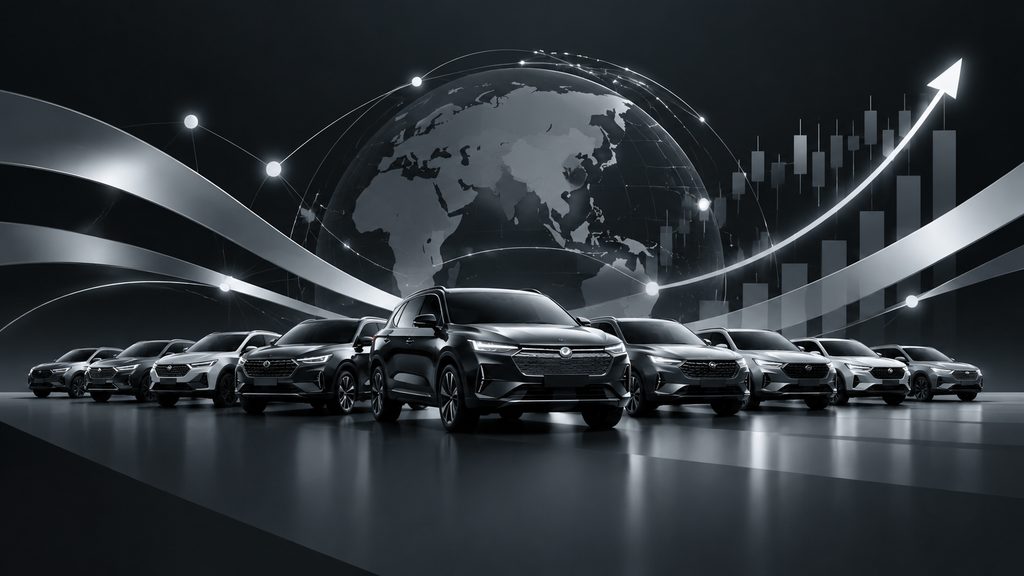
TREE NEWS reports: China’s premium SUV market is becoming increasingly crowded as automakers rush to launch flagship models, but early success is proving hard to sustain. On October 21, Zeekr announced that its 9X model, launched a year ago, has delivered over 85,000 units, with an average transaction price above 530,000 yuan. The model’s success has inspired a wave of competitors, but the market is now saturated with similar offerings, and sales are peaking faster than expected.
The Ministry of Industry and Information Technology’s latest product list includes five new “9-series” flagship SUVs from brands like Lynk & Co, Shangjie, Yijing, Fangchengbao, and Wey, all targeting the large SUV segment. This segment saw sales of about 350,000 units in the first half of 2025, nearly doubling year-on-year, with the number of models on sale rising from 24 in 2023 to 50 this year. However, not every model is sharing in the growth. Zeekr 9X, for instance, peaked at over 10,000 units in March but fell to 2,887 in August before recovering to 5,175 in September. Aito M9 has held steady around 10,000 units per month from June to September.
Market Implications: A Race to the Bottom?
The flood of new models is compressing the premium segment’s profitability. Automakers are finding it harder to differentiate through features alone, as competitors quickly replicate configurations. Li Bin, chairman of NIO, noted that making cars bigger and adding comfort features can be done quickly by others, and consumers are becoming desensitized to spec wars. Price competition is intensifying: Leapmotor’s D19 starts at 219,800 yuan, lowering the entry barrier for large six-seat SUVs. Even brands like Yijing, which positions itself as premium, are targeting families who previously bought 300,000-yuan joint-venture cars, hoping to trade profit margins for market share.
The sales trajectory is concerning. An analyst at a foreign investment bank noted that some models peak within three to six months and decline significantly after twelve months. With development costs running into hundreds of millions of yuan, a short sales life makes it difficult to recoup investments. This is squeezing automakers’ profitability. Li Auto’s CFO, Li Tie, said the new L9 helped improve gross margin sequentially to 9.4% in Q2, but this is still well below the 19.4% from a year earlier.
Investor Takeaways
- Margin pressure: The premium SUV segment is becoming a battleground where price cuts and feature wars erode profitability. Investors should watch for declining gross margins at automakers like Li Auto, NIO, and Zeekr.
- Sales volatility: Monthly sales figures may be misleading; sustainable demand is key. Models that spike and fade quickly signal weak order books and potential inventory issues.
- Brand differentiation: As configurations become commoditized, brand strength and service networks will be critical for long-term success. Companies with strong brand loyalty and efficient cost structures are better positioned.
- Supply chain beneficiaries: Suppliers of advanced components like air suspension (e.g., Baolong Technology) may benefit as more models adopt these features, but cost pressures will mount.
The premium SUV boom is a double-edged sword: it demonstrates Chinese automakers’ ability to move upmarket, but the intensifying competition and shorter product cycles may weigh on profitability. Investors should focus on companies that can balance volume growth with margin discipline and build enduring brand equity.