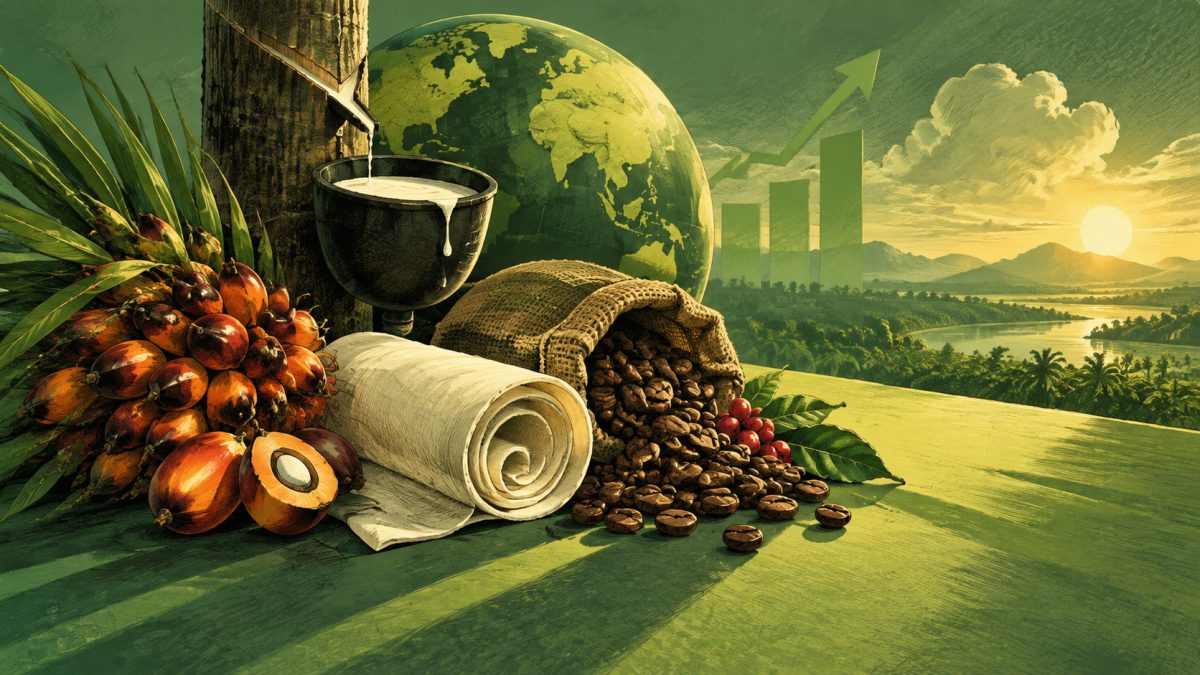
Super El Niño Looms: Barclays Warns of 30-40% Surges in Palm Oil, Rubber, Coffee
TREE NEWS reports: In a stark warning that has sent ripples through commodity markets, Barclays’ sustainable investment research analyst Craig Rye reported on August 30 that a historically powerful El Niño event is forming. The tropical Pacific El Niño index could peak near 3.2°C by late 2026 to early 2027, making it roughly 15% stronger than the 2015-16 super El Niño. This could trigger significant supply disruptions across global agriculture, energy, and industrial commodities, with palm oil, rubber, and coffee potentially surging 30-40% within 18 months.
Market Impact Analysis
Agricultural Commodities: The most immediate impact is expected in weather-sensitive crops. Southeast Asia, a key producer of palm oil, coconut oil, and rubber, is highly vulnerable to drought and abnormal rainfall. Barclays projects these commodities could rise 30-40% over the next 18 months. Robusta coffee, primarily grown in Vietnam, may see gains of 20-30%, while rice prices could climb 10-20% due to threats to crops and water supplies in Southeast Asia and Central America.
Industrial Metals and Energy: The shock is expected to spill over into industrial metals. Aluminum and copper could rally up to 20% in 18 months, while thermal coal may surge 20-40%. The transmission mechanism is clear: El Niño-induced droughts reduce hydropower generation, pushing up electricity prices and raising aluminum smelting costs. Extreme weather also disrupts mine operations and port logistics, tightening copper supply. Already, floods in Chile have halted some mines, and drought in Papua New Guinea has hampered copper shipments on the Ok Tedi River, with LME copper prices rising for nine consecutive weeks.
Broader Commodity Complex: This warning comes amid a broader tightening in commodity markets. The Quantix Commodity Index has surged over 22.5% since late June, hitting record highs across energy, agriculture, livestock, industrial metals, and precious metals. Former Goldman Sachs strategist Jeff Currie notes, ‘The illusion of abundance is likely a thing of the past.’
Key Takeaways for Investors
- Diversification: Commodities offer a hedge against inflation and supply shocks. Investors should consider adding exposure to agriculture and metals ETFs or futures.
- Timing: The peak impact is expected in 2026-2027, but markets often price in expectations early. Positioning ahead of the curve may be prudent.
- Risk Management: While the upside is significant, volatility will be high. Use options strategies or staged entries to manage risk.
- Watch Supply Chains: Companies reliant on these commodities (food producers, automakers, utilities) may face margin pressure. Conversely, producers of palm oil, rubber, and metals could benefit.
The convergence of El Niño, years of underinvestment in capacity, and declining inventories suggests a multi-year supply shock. As Jeff Currie puts it, the era of abundance may be over. For investors, understanding these dynamics is critical to navigating the next 18-24 months.