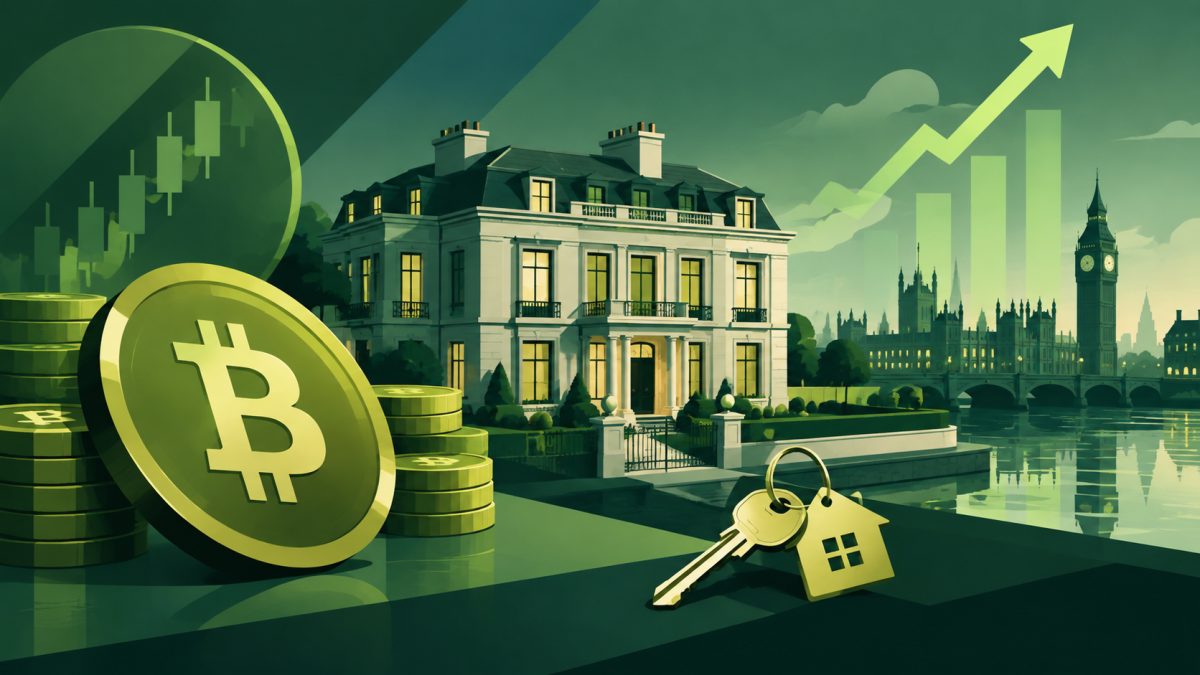
Huobi Founder Leon Li Sells London Mansion for £190M, Netting £51M in Under Two Years
TREE NEWS reports: Leon Li, the founder of crypto exchange Huobi (now HTX), has sold The Holme, a landmark mansion overlooking London’s Regent’s Park, for approximately £190 million. Li acquired the property in 2024 for £139 million, meaning the resale generated a gross gain of roughly £51 million in less than two years — one of the largest single residential property profits recorded in the UK capital in recent years.
A Rare Liquidity Event in a Soft Market
The transaction stands out because London’s prime residential market has been sluggish, weighed down by high interest rates, stamp duty surcharges on foreign buyers, and a broader repricing of trophy assets. Selling a property of this scale at a premium in such conditions signals both the scarcity value of Regent’s Park frontage and the seller’s willingness to convert a concentrated, illiquid holding into cash.
For observers of the crypto industry, the timing is notable. Li exited Huobi in 2022, selling his controlling stake to Justin Sun’s group, and has since kept a low public profile. The mansion trade is one of the clearest windows into how early exchange founders are now managing personal balance sheets built during the bull markets of 2017 and 2021.
What It Says About Crypto Wealth Management
Li’s round-trip is a case study in the maturation of crypto-derived wealth:
- Real assets as a store of value: Ultra-prime London property has functioned as a quasi-offshore vault for founders seeking to diversify out of token exposure.
- Active trading, not just parking: A £51 million gain in under two years suggests founders increasingly treat real estate as a tradable asset class rather than a permanent trophy.
- Regulatory optics: Large property deals in the UK trigger anti-money-laundering scrutiny, and clean, documented exits help founders normalize their public financial footprint.
It also reflects a broader pattern: as crypto exchanges consolidate and token prices swing, founders who cashed out near cycle peaks are rebalancing into hard assets — while those still operating exchanges face tighter margins and heavier compliance costs.
Forward-Looking Perspective
Expect more of these trades. If UK prime property continues to trade at a discount to global peers such as New York and Singapore, crypto founders holding London trophy assets may look to rotate capital into yield-bearing instruments or back into digital assets ahead of the next cycle. Conversely, a sustained recovery in sterling assets could pull more crypto wealth into European real estate. Either way, the line between crypto fortunes and traditional luxury property markets is blurring — and Li’s exit is a marker of how confidently that bridge is now being crossed.