Global Bond Markets Hit by ‘Perfect Storm’
TREE NEWS reports: The 10-year US Treasury yield broke through the 5% threshold on Tuesday, reaching 5.02% intraday — its highest level since 2007 and surpassing the 2023 peak. The milestone move sent shockwaves across global markets, triggering synchronized sell-offs in Asian equities and bonds while oil prices extended gains.
The immediate catalyst was a fresh surge in crude oil, with Brent climbing 1.6% to around $107.30 per barrel after a key Saudi pipeline remained offline following an attack, keeping Middle East supply risks elevated.
Market Impact: Bonds, Stocks, Commodities, Currencies
Bonds
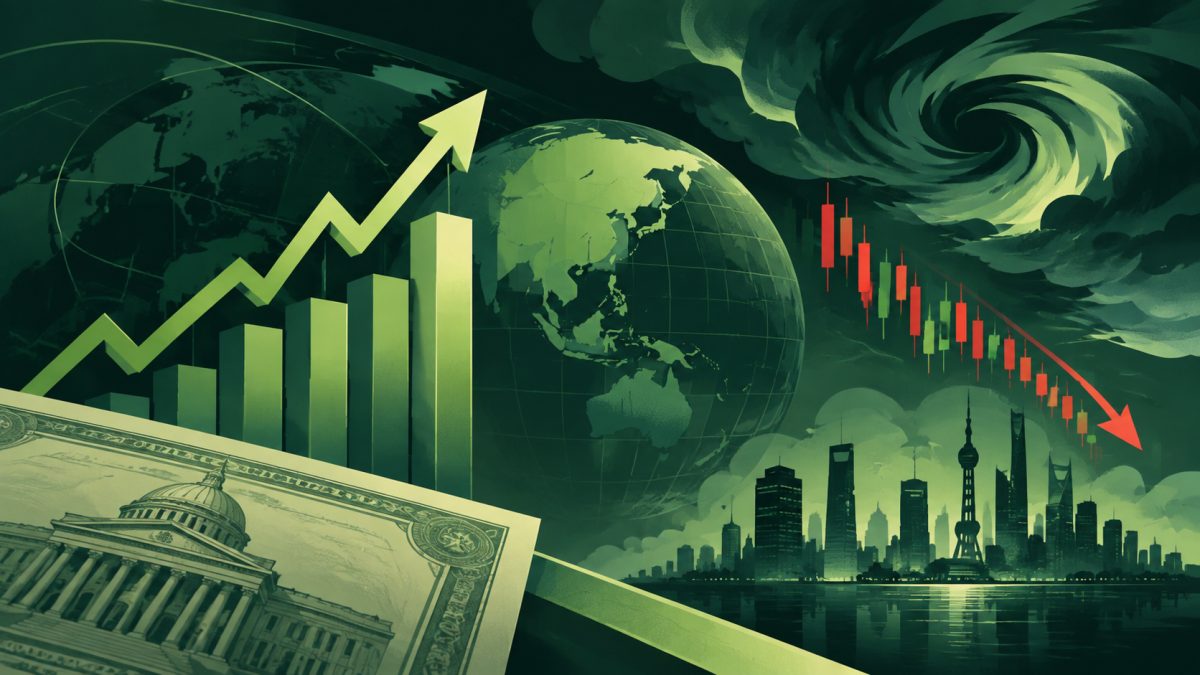
The sell-off in government debt has no clear borders. Japan’s 30-year yield rose 5.5 basis points to 4.12%, Australia’s 10-year jumped 9 basis points to 5.42%, and the US 10-year added 3 basis points to 5.02%. The global bond rout reflects a confluence of structural pressures rather than a single trigger.
Equities
Asian stocks fell broadly, with the Topix down 0.7%, South Korea’s KOSPI dropping more than 1.5% intraday, and Australia’s ASX 200 losing 1%. US equity futures also softened, with S&P 500 futures down 0.3%. European Stoxx 50 futures were roughly flat.
Commodities
WTI crude rose 1.8% to $103.17 per barrel, while Brent gained 1.6% to about $107.30. Spot gold was little changed at around $4,300 per ounce, though its divergence from oil is widening — a signal that cross-asset correlations are breaking down.
Currencies
The Bloomberg Dollar Spot Index edged up 0.1%. The euro slipped 0.1% to $1.1536, the yen weakened 0.3% to 154.75 per dollar, and the Australian dollar fell 0.3% to $0.7121.
Crypto
Bitcoin dropped 1.9% to $77,584.98, while Ethereum fell 3.1% to $2,491.97, as risk sentiment soured across the board.
Three Structural Forces Driving the Sell-Off
The bond rout is not driven by a single factor but by the collision of three structural pressures:
- Oil-driven inflation expectations: Since late February, Middle East supply disruptions have pushed energy prices higher, reinforcing inflation expectations and forcing bondholders to demand greater yield compensation.
- AI-driven corporate debt supply: Companies are issuing massive amounts of debt to fund AI spending, flooding the market with supply while stimulating an already robust US economy — a double blow of rising supply and pressured demand.
- Sovereign debt expansion: Governments continue to ramp up issuance to refinance maturing bonds and cover fiscal deficits, while central banks have exited quantitative easing. Traditional buyers have stepped back, leaving the market increasingly reliant on price-sensitive investors.
Phoebe White, head of US rates strategy at UBS, noted that with no signs of real-economy weakness and supply-demand dynamics vastly different from 2007, the downside for long-end yields is limited. Structural demand from traditional buyers such as foreign official investors has weakened markedly.
The 5% threshold is also shaking equity valuation logic. Grace Peters, global head of investment strategy at JPMorgan Private Bank, warned that if yields rise to 5% or even 5.25%, stocks will face significant indigestion. “The 5% number has important psychological significance,” she said.
Mark Cranfield, a market strategist at Bloomberg, pointed to the widening divergence between crude oil and gold, suggesting macro traders may need to navigate a prolonged period of broken cross-asset correlations. “They are losing confidence in some kind of ‘circuit breaker’ that can suppress oil prices and restore risk appetite,” he said.
Fed Decision in Focus
Wednesday’s Federal Reserve rate decision is the single biggest source of uncertainty. Traders are now pricing in more than a 90% probability of a rate hike. Vail Hartman, a strategist at BMO Capital Markets, said it would be extremely difficult for the Fed to avoid damaging its anti-inflation credibility if it holds rates steady this week. Markets are not only highly sensitive to a surprise pause but also vulnerable to a “dovish hike” that signals greater patience through the dot plot or press conference.
Xiao Cui, senior economist at Pictet Wealth Management, noted in a research report that Fed Chair Warsh has already lowered the bar for a hike at Jackson Hole. Not hiking now would damage institutional credibility and push long-end yields even higher. “We therefore expect Warsh to deliver a hawkish signal at the press conference — not to outpace market expectations for the rate path, but to reinforce the Fed’s commitment to price stability and anchor long-end yields,” Cui wrote.
Zach Griffiths, head of investment-grade and macro strategy at CreditSights, said there are many deep-seated factors supporting higher rates, making it the path of least resistance. He expects the 10-year yield could move toward 5.5%.
Key Takeaways for Investors
- The 5% yield is a psychological watershed. Equity valuations, especially for long-duration growth stocks, face mounting pressure as the risk-free rate resets higher.
- Cross-asset correlations are breaking down. The oil-gold divergence suggests traditional hedging relationships may be unreliable in the current environment.
- The Fed’s credibility is on the line. A hold or a dovish hike could trigger further long-end selling, while a hawkish signal may stabilize yields but weigh on risk assets.
- Structural forces are durable. Oil supply risks, AI-driven debt issuance, and sovereign borrowing needs are unlikely to reverse quickly, keeping upward pressure on yields.
- Diversification matters more than ever. With stocks, bonds, and crypto all under pressure simultaneously, investors should reassess portfolio resilience to a sustained higher-rate regime.