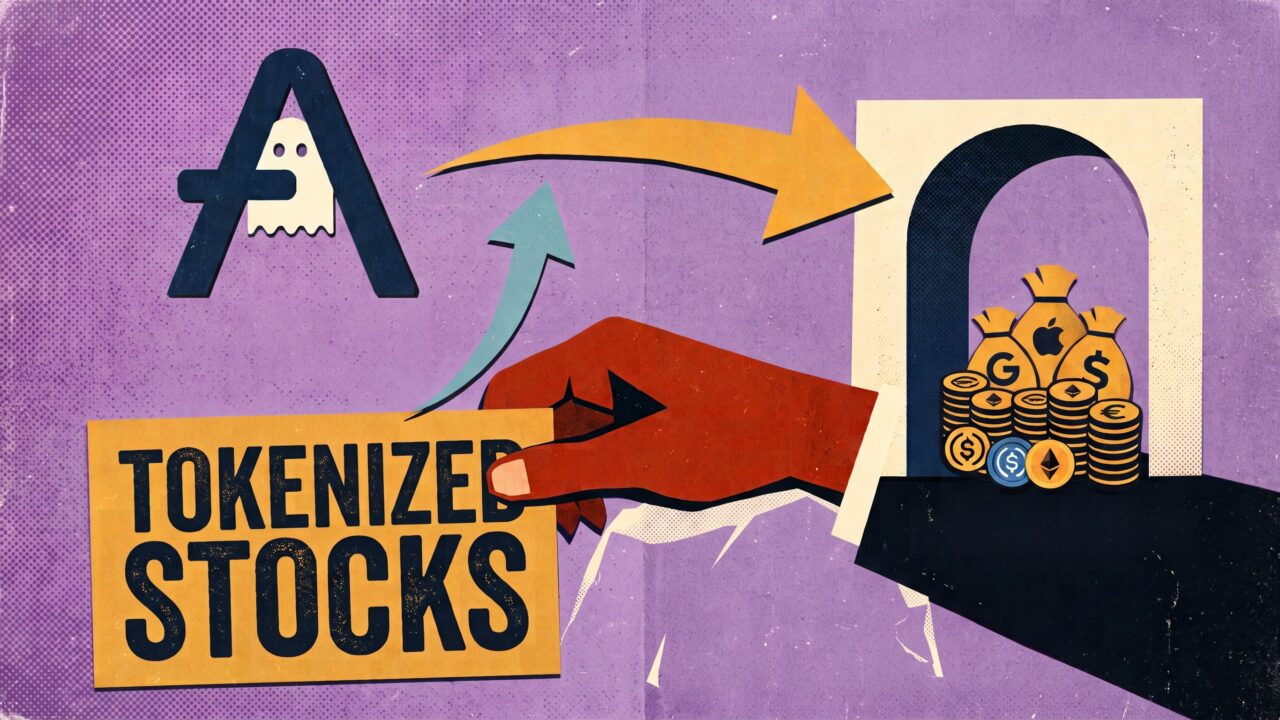
Aave Expands Collateral Boundaries with Tokenized Equities
Aave has begun accepting tokenized versions of major US equities — including Apple and Nvidia — as collateral for on-chain borrowing, a move that pushes decentralized lending deeper into traditional finance territory. The protocol is also weighing the introduction of a fee-switch mechanism that would burn AAVE tokens, a combination that has driven sustained strength in the token’s price.
Why Tokenized Stocks Matter for DeFi Lending
Collateral is the lifeblood of any lending market. For years, DeFi protocols have been constrained by a narrow universe of acceptable assets: ETH, BTC, stablecoins, and a rotating cast of governance tokens with volatile correlations. Tokenized equities open a fundamentally different door. Apple and Nvidia are among the most liquid, widely held securities on the planet, with deep off-chain order books and institutional-grade price discovery.
By accepting these as collateral, Aave effectively imports TradFi liquidity and volatility profiles into its money markets. Borrowers can now access stablecoins or other assets without selling their equity exposure — a familiar TradFi strategy (securities-backed lending) reconstructed on-chain, with smart contracts replacing prime brokers.
The AAVE Burn Question
The proposed burn mechanism would redirect a portion of protocol revenue toward buying back and destroying AAVE, tightening supply against a backdrop of growing protocol usage. Fee switches are notoriously contentious in DeFi governance because they shift value from the treasury to token holders. If executed, it would mark Aave’s transition from a pure growth-stage protocol to one with an explicit value-accrual story — a narrative shift that markets have historically rewarded.
RWA Momentum and the Competitive Landscape
Aave’s move lands amid a broader race to tokenize real-world assets. Competitors including MakerDAO/Sky, Compound, and various RWA-focused lending desks are all chasing similar collateral. The differentiator will be risk management: tokenized equities introduce oracle dependencies, custody risk, dividend and corporate-action handling, and regulatory exposure that crypto-native collateral never had.
- Oracle risk: Pricing tokenized equities requires robust feeds that account for market hours, halts, and after-hours gaps.
- Custody risk: The underlying shares sit with a custodian or issuer — a counterparty Aave cannot fully decentralize away.
- Regulatory risk: Securities-backed lending touches rules that vary sharply by jurisdiction.
Forward-Looking Perspective
If Aave can operationalize tokenized equities safely, it unlocks a collateral class measured in trillions, not billions. The near-term test is whether risk parameters hold through a volatility event — a single equity gap-down could stress liquidation engines in ways crypto markets haven’t yet seen. Longer term, the real prize is becoming the default settlement layer where TradFi assets and DeFi liquidity meet. The burn mechanism, if approved, would be the clearest signal yet that Aave intends to capture that value for its token holders rather than merely facilitate it.