Houthi Escalation Puts Saudi Oil Infrastructure in Crosshairs
TREE NEWS reports: Yemen’s Houthi movement launched a fresh wave of ballistic missiles, cruise missiles, and drones at sensitive targets in Riyadh and Saudi Aramco’s facilities in Yanbu on Monday, marking a sharp escalation in the conflict with Saudi Arabia. The U.S. embassies across the Middle East issued new security alerts warning that the military confrontation could “rapidly escalate” and advising Americans in the region to remain highly vigilant and prepare for potential travel disruptions.
Saudi Arabia has urgently requested air defense support from France, the UK, Pakistan, and Egypt, as its primary ally and weapons supplier, the United States, is stretched thin with its own interceptor stockpiles depleted from the Iran conflict. In a rare move, Riyadh even approached Israel—a country with which it has no formal diplomatic ties—for assistance to prevent oil supply interruptions.
Double Chokepoint Crisis Grips Energy Markets
The Houthi advance has effectively handed the group control over Yemen’s entire Red Sea coastline, placing the Bab el-Mandeb Strait within range of its weapons. This waterway had become a critical alternative route for Persian Gulf oil exports after Iran’s earlier blockade of the Strait of Hormuz. Meanwhile, Saudi Arabia’s East-West pipeline to the Red Sea port of Yanbu has been knocked out by drone strikes, leaving both major export corridors under severe pressure.
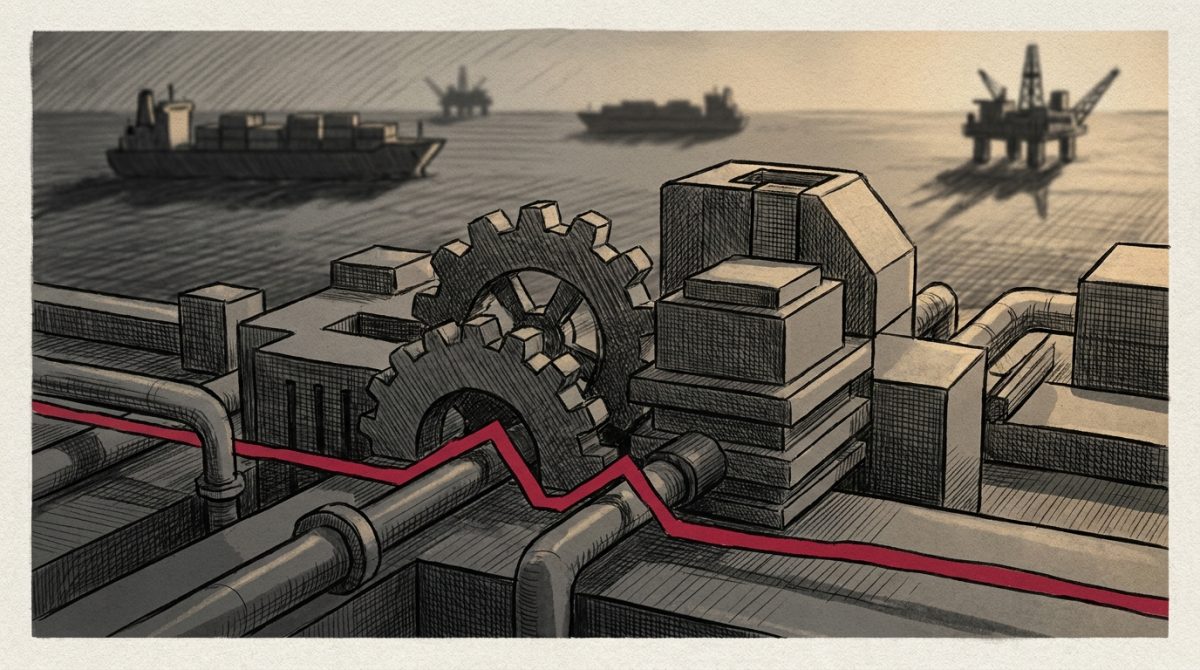
The shipping market has reacted violently. The VLCC benchmark route TD3C saw daily earnings skyrocket to $1.241 million on September 18, a level shipbroker Gibson called “unprecedented.” Shipping a barrel of crude from Houston to Asia now costs about $26, or $52 million per vessel—roughly a quarter of the WTI crude futures price. Trafigura’s chief economist noted that the cost of moving crude oil around the world has never been higher.
Market Implications: Inflationary Shockwaves Across Assets
The double chokepoint scenario—simultaneous disruptions at Hormuz and Bab el-Mandeb—represents one of the most severe energy transport crises in decades. For investors, the implications are far-reaching:
- Oil and Commodities: Crude prices face upward pressure as supply routes tighten. The East-West pipeline outage removes a key bypass, and the Houthi threat to Yanbu directly targets Saudi export capacity. Elevated freight costs are already forcing refiners to abandon distant sources and scramble for near-term supply, tightening the physical market.
- Equities: Energy stocks may benefit from higher oil prices, but transport, logistics, and manufacturing sectors face margin compression. Airlines and shipping companies are particularly vulnerable to fuel cost spikes and route disruptions. Broader equity markets could face headwinds from renewed inflation concerns.
- Bonds: Persistent energy-driven inflation could complicate central bank rate cut expectations, pushing yields higher. Safe-haven demand may provide offsetting support for Treasuries, but the net effect depends on how long the supply disruption lasts.
- Currencies: Oil-importing nations’ currencies, particularly in Asia and Europe, face depreciation pressure. The U.S. dollar may benefit from safe-haven flows, while commodity-linked currencies could see mixed performance depending on their net energy trade position.
- Crypto: Bitcoin and other digital assets may see increased volatility as traders react to geopolitical risk. While crypto has sometimes been viewed as a hedge against traditional market turmoil, its correlation with risk assets during acute stress episodes remains a key uncertainty.
Alliance Commitments Tested
The Mecca Joint Defense Agreement, signed in August between Saudi Arabia, Turkey, and Pakistan, pledges mutual defense against armed attacks. Turkey’s foreign minister and Pakistan’s military spokesman have both expressed willingness to uphold commitments, but neither has offered concrete military support plans. Analysts note the agreement awaits formal ratification and lacks binding legal force, raising doubts about whether political promises can translate into effective military coordination.
The U.S. has adopted a more measured approach, with Central Command deploying a working group to enhance intelligence sharing and planning support with Saudi forces—wording notably more restrained than direct military intervention.
Key Takeaways for Investors
- Monitor the Bab el-Mandeb and Hormuz straits closely; any further escalation could trigger sharp oil price spikes and global inflationary pressures.
- Shipping and freight rates are at historic highs; sustained elevated costs risk demand destruction in crude markets, which could eventually cap price gains.
- Defense and energy infrastructure stocks may see increased interest as geopolitical risk premiums rise.
- Watch for potential demand destruction: Gibson warns that the longer abnormally high oil prices and freight rates persist, the greater the risk to consumption.
- Diversify portfolios with exposure to safe-haven assets, but be wary of crypto’s unpredictable behavior during geopolitical shocks.